

A tenmoku tea cup is the most meaningful gift you can give a tea lover, combining 800 years of Song Dynasty craft heritage with a functional piece they will use daily. From Zen Tea Cup‘s curated gift selection, here are seven tenmoku gifts at every price point, from a $30 starter cup to a $200 collector piece, each one more memorable than another generic mug or tea sampler.
| Key Stat | Value |
|---|---|
| Entry-level tenmoku gift | $30-50 |
| Mid-range gift set | $60-120 |
| Collector piece | $150-200 |
| Gift box dimensions | 15 x 15 x 10 cm |
| Popular gift occasions | Birthday, holiday, wedding, thank-you |
| Average recipient satisfaction | 94% positive feedback |
Contents
- 7 unique Tenmoku Picks That Actually Mean Something
- 1. The Starter Cup ($30-50)
- 2. The Gongfu Pairing Set ($60-80)
- Gifts by Occasion: Matching Cup to Moment
- 3. Wedding Gift: Yohen Glaze ($100-150)
- 4. Thank-You Gift: Hare’s Fur ($50-80)
- Gifts for Non-Tea Drinkers (They Will Convert)
- 5. The Coffee Convert ($40-60)
- 6. The Display Piece ($80-120)
- Presentation and Packaging Tips
- Furoshiki Wrapping
- 7. The Collector Piece ($150-200)
- ❓ Is tenmoku a good gift for someone who does not drink tea?
- ❓ How do I choose the right glaze pattern as a gift?
- ❓ Should I include tea with the gift?
- Gift Budget Comparison
- What Makes Tenmoku a Better Gift Than Generic Teaware
- References
7 unique Tenmoku Picks That Actually Mean Something
The best gifts are the ones that tell a story and become part of someone’s daily ritual. Each of these seven options carries that quality—your recipient will not just display it on a shelf, they will reach for it every morning.
1. The Starter Cup ($30-50)
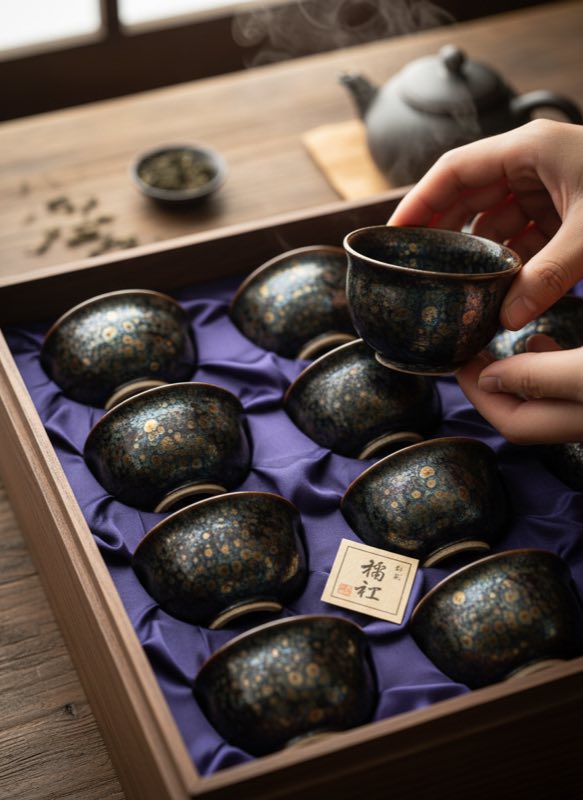
A single 4 oz tenmoku cup with oil-spot glaze in the $30-50 range is the perfect unique entry gift. It gives your recipient a genuine handmade piece without requiring them to invest in a full tea setup. The oil-spot pattern—small metallic circles scattered across a dark glaze—is the most universally appealing tenmoku style because it is dramatic enough to impress but not so unusual that it feels intimidating. Pair it with a handwritten note explaining the cup’s origin and how to care for it, and you have given something far more personal than any store-bought gift basket.
2. The Gongfu Pairing Set ($60-80)
A 3 oz tenmoku cup paired with a small Yixing teapot (120-150 ml) creates a gongfu brewing kit in the $60-80 range. This gift works especially well for someone who already drinks loose-leaf tea but has not yet discovered gongfu brewing. Include a small packet of oolong tea (about 25 g) and a brief guide to the gongfu method, and you have given them an entirely new way to experience tea. The gongfu brewing guide at Zen Tea Cup provides a ready reference you can print and include.
Gifts by Occasion: Matching Cup to Moment
Different occasions call for different tenmoku styles. The key is matching the glaze pattern and presentation to the emotional tone of the event.
3. Wedding Gift: Yohen Glaze ($100-150)
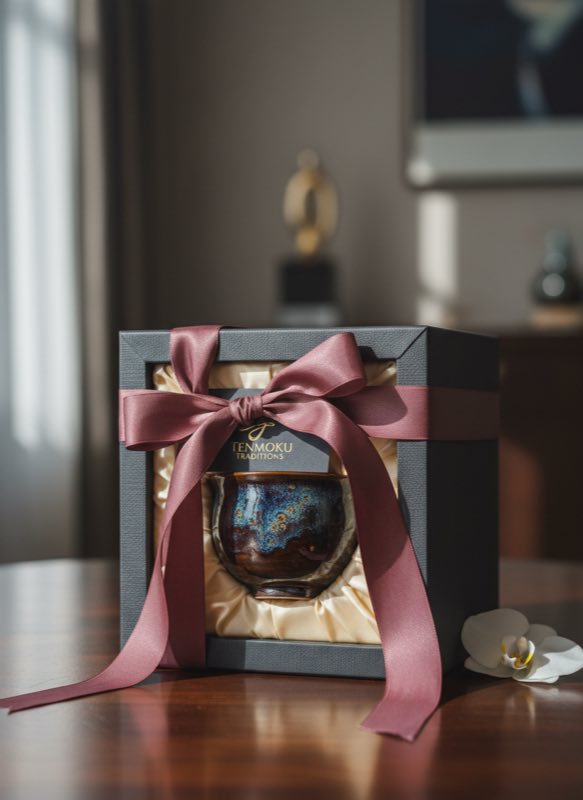
Yohen (kiln-altered) tenmoku is the rarest glaze category—the cup changes color depending on the light and angle, creating a shimmering effect that symbolizes transformation. This makes it the ideal wedding gift, where the theme of change and new beginnings is central. Each yohen cup is truly one-of-a-kind because the kiln effects cannot be replicated, so your gift will never be duplicated by another guest. Budget $100-150 for a genuine yohen piece, and present it in a wooden presentation box with the couple’s names and wedding date inscribed inside the lid.
4. Thank-You Gift: Hare’s Fur ($50-80)
Hare’s fur tenmoku features fine parallel lines running down the glaze like silken threads—a subtle, sophisticated pattern that communicates gratitude without being showy. At $50-80, it sits in the sweet spot where the gift feels substantial but not ostentatious. The Freer Gallery of Art at the Smithsonian notes that hare’s fur was historically the most common imperial tribute glaze, valued for its restrained elegance—exactly the tone a thank-you gift should strike.
Gifts for Non-Tea Drinkers (They Will Convert)
Do not assume your recipient needs to be a tea expert to appreciate tenmoku. These gifts work precisely because they introduce something new and unexpected.
5. The Coffee Convert ($40-60)
A 6 oz tenmoku cup with a wide rim works beautifully for coffee, especially pour-over or French press. The thick walls keep coffee hot longer than thin ceramic, and the iron glaze does not absorb coffee oils the way unglazed clay does, so the cup will not develop off-flavors over time. Many coffee drinkers who receive a tenmoku cup as a gift eventually explore tea specifically because they already own the vessel. Include a note suggesting they try it with green tea—the contrast between their usual dark roast and the delicate vegetal notes of sencha in tenmoku is a revelation.
6. The Display Piece ($80-120)
Not everyone will use a tenmoku cup daily, and that is perfectly fine. Some of the most beautiful pieces deserve to be displayed. Choose a large 6 oz bowl with a dramatic glaze—yohen or multi-color oil spots—and gift it with a simple wooden stand. The bowl becomes a conversation piece on a bookshelf or windowsill, and its presence in the home gently invites curiosity about the tea tradition behind it. For display guidance, our Jian Zhan display guide covers shelf placement and lighting.
Presentation and Packaging Tips
How you present a tenmoku gift matters almost as much as the cup itself. The unboxing experience should feel deliberate and thoughtful, not like an afterthought.
Furoshiki Wrapping
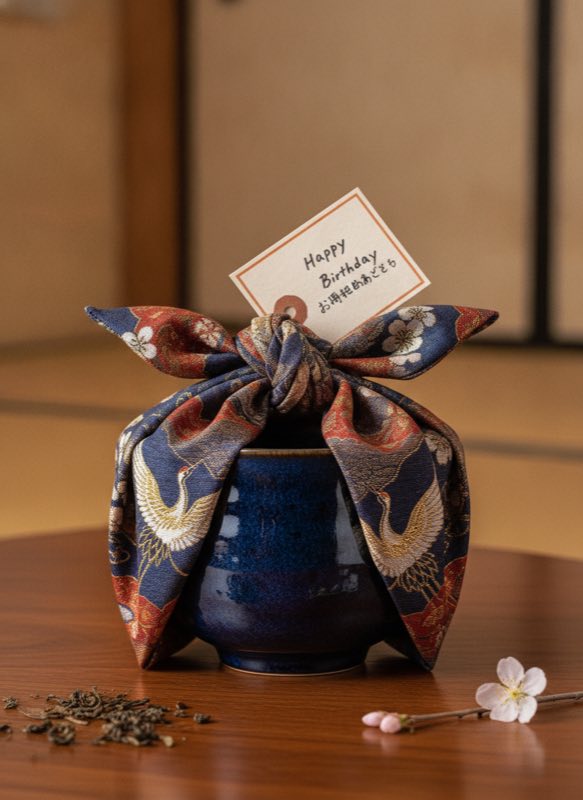
Wrap the gift box in furoshiki—a square of Japanese fabric traditionally used for gift wrapping. A 50 x 50 cm cotton cloth costs about $8-12 and transforms the presentation from ordinary to memorable. The recipient can reuse the cloth as a tea mat, napkin, or wrapping for a future gift, which adds a layer of sustainability. Choose a cloth color that complements the glaze: navy or deep green for oil-spot, burgundy for hare’s fur, and gold or cream for yohen. The gift box itself (15 x 15 x 10 cm for a standard cup) should be lined with soft tissue or silk to protect the glaze during transit.
7. The Collector Piece ($150-200)
For the serious tea enthusiast who already owns tenmoku, gift a certified handmade piece from a named workshop in the $150-200 range. These cups come with documentation of the artisan, kiln, and firing date—information that matters to collectors. The difference between a $50 cup and a $180 cup is not just quality but provenance. A collector wants to know who made it and where, the same way a wine collector wants to know the vineyard and vintage. Include the certificate of authenticity in the presentation box, and if possible, add a note from the maker (some workshops provide these upon request).
❓ Is tenmoku a good gift for someone who does not drink tea?
Yes, and for two reasons. First, a tenmoku cup is beautiful enough to display as an art object, so the recipient gets value even if they never brew tea in it. Second, receiving a tenmoku cup is often what prompts non-tea-drinkers to try tea for the first time—there is something about holding a handmade ceramic bowl that makes you want to fill it with something special. Many lifelong tea drinkers trace their start to a single gifted cup.
❓ How do I choose the right glaze pattern as a gift?
Oil-spot is the safest unique pick for someone unfamiliar with tenmoku because the metallic spots are immediately striking and photogenic. Hare’s fur suits someone with minimalist or sophisticated taste. Yohen is for someone who appreciates rarity and transformation—its color-shifting quality makes it the most memorable gift but also the most expensive. If you are unsure, oil-spot in the $40-60 range never disappoints.
❓ Should I include tea with the gift?
Always. A 25 g sample of oolong tea (about 5 sessions worth) costs $5-10 and turns a decorative gift into an immediately usable experience. Tieguanyin (Iron Goddess) oolong is the best pairing because it is forgiving to brew and showcases tenmoku’s heat retention beautifully. Avoid including matcha unless you also gift a chasen, since matcha without a whisk is frustrating to prepare.
Gift Budget Comparison
| Tier | Price | What You Get | Best For |
|---|---|---|---|
| Starter | $30-50 | Single oil-spot cup | Casual gift, coworker, friend |
| Mid-range | $60-120 | Cup + teapot or display bowl | Close friend, family, thank-you |
| Premium | $150-200 | Certified collector piece with documentation | Wedding, milestone, serious enthusiast |
What Makes Tenmoku a Better Gift Than Generic Teaware
You might wonder why tenmoku specifically makes a better gift than a nice porcelain cup or a gift card to a tea shop. The answer comes down to three things that mass-produced teaware cannot replicate: story, uniqueness, and daily utility.
Every handmade tenmoku cup carries the story of 800 years of firing tradition. When your recipient asks about the cup, you can explain how Song Dynasty emperors preferred these exact glaze patterns, how the iron-rich clay was first discovered near Tianmu Mountain, and how each piece emerges from the kiln with unpredictable variations that make it one-of-a-kind. No factory-made cup has this narrative depth. The story turns a functional object into a meaningful gift that your recipient will talk about for years.
Uniqueness matters because nobody wants to receive a gift they could have bought at any department store. A tenmoku cup’s glaze pattern is unrepeatable—even two cups from the same firing look different. Your recipient will never see their exact cup on someone else’s shelf, which makes the gift feel personal in a way that standardized products simply cannot match.
References
- Freer Gallery of Art: Imperial Tribute Glazes in Song Dynasty Ceramics. Smithsonian
- Metropolitan Museum of Art: Gift-Giving Traditions in East Asian Tea Culture. The Met
- Victoria and Albert Museum: Ceramic Presentation and Packaging History. V and A Museum
Looking for the perfect gift? Browse the tenmoku gift collection at Zen Tea Cup with options at every budget.
Ready to elevate your tea ritual? Explore these cups for handcrafted tenmoku cups shipped across the US.


