

Contents
- What Happens Inside a Tenmoku Kiln at 1,300°C: The Chemistry That Creates Those Patterns
- The Three Chemical Stages of a Tenmoku Firing
- Stage 1: Dehydration and Organic Burnoff (100–600°C / 212–1,112°F)
- Stage 2: Glaze Melting and Iron Reduction (1,000–1,300°C / 1,832–2,370°F)
- Why 1,300°C Is the Magic Number
- How Oil Spot and Hare’s Fur Patterns Form
- Why Cooling Rate Controls the Pattern
- The Role of Wood Ash in Traditional Glaze
- Modern Analytical Techniques: What XRF and SEM Reveal
- ❓ Can you achieve tenmoku glaze in an electric kiln?
- ❓ Why do some tenmoku cups have a metallic sheen?
- ❓ Does the clay body chemistry affect the glaze?
- 📚 References
What Happens Inside a Tenmoku Kiln at 1,300°C: The Chemistry That Creates Those Patterns
At exactly 1,300°C (2,370°F), iron oxide in tenmoku glaze undergoes a phase transformation that no lower temperature can achieve. This is the moment when ordinary clay and iron-rich ash become the black, mirror-like surface that Song Dynasty potters prized above gold. At Zen Tea Cup, we break down the glaze chemistry step by step so you understand exactly why tenmoku looks and performs the way it does — and why kiln temperature is the single most important variable in the entire process.
| Key Stat | Value |
|---|---|
| Peak firing temperature | 1,300°C (2,370°F) |
| Firing duration | 12–18 hours |
| Iron oxide content in glaze | 5–8% by weight |
| Glaze melting point | 1,180°C (2,156°F) |
| Cooling rate for oil spots | 2–4°C per minute |
| Reduction atmosphere CO concentration | 3–5% during critical phase |
The Three Chemical Stages of a Tenmoku Firing
Your tenmoku firing is not a single event — it is a carefully timed sequence of three distinct chemical transformations. Each stage depends on the previous one, and skipping or rushing any stage produces defective glaze.
Stage 1: Dehydration and Organic Burnoff (100–600°C / 212–1,112°F)
During the first stage, the kiln drives off physically bound water (H₂O) from the clay body and burns away organic material trapped in the raw glaze mixture. The iron oxide (Fe₂O₃, hematite) remains chemically stable at this temperature — it is just sitting in the glaze waiting for the heat to climb. You will see white steam escaping from the kiln vents during this phase. If the temperature rises too quickly, the rapid steam generation can cause the glaze to bubble or spall, which is why skilled potters maintain a slow ramp so you get rate of approximately 150°C (270°F) per hour during this stage.
Stage 2: Glaze Melting and Iron Reduction (1,000–1,300°C / 1,832–2,370°F)
This is where the chemistry gets interesting. Above 1,000°C (1,832°F), the glaze matrix — a mixture of feldspar, wood ash, and iron oxide — begins to soften and melt. At approximately 1,180°C (2,156°F), the glaze reaches its melting point and flows across the clay surface like thick honey.
Simultaneously, the kiln atmosphere is deliberately starved of oxygen (a “reduction firing”). The potter restricts the air intake, causing incomplete combustion of the fuel. This produces carbon monoxide (CO), which strips oxygen atoms from the iron oxide:
Fe₂O₃ (red/brown hematite) + CO → FeO (black wüstite) + CO₂
This reduction reaction is what turns the glaze from reddish-brown to jet black. FeO (wüstite) is a dark, dense iron phase that absorbs almost all visible light, creating the deep black surface that tenmoku is famous for. Without reduction, you get a brown or rust-colored cup — not tenmoku. Our 13-step Jian Zhan manufacturing guide covers the reduction timing in detail.
Why 1,300°C Is the Magic Number
You might wonder: why not fire hotter? Or cooler? The answer lies in the phase behavior of the glaze components:
- Below 1,180°C (2,156°F): The glaze does not fully melt. It remains partially solid, producing a rough, underfired surface with poor adhesion to the clay body. The iron oxide stays as Fe₂O₃ and the cup looks brown, not black.
- At 1,300°C (2,370°F): The glaze is fully molten and has the right viscosity for iron-rich bubbles to rise to the surface. The reduction reaction proceeds to completion. The clay body vitrifies into a dense, waterproof ceramic with water absorption below 0.5%.
- Above 1,350°C (2,460°F): The glaze becomes too fluid and runs off the pot, pooling at the base. The iron oxide can over-reduce to metallic iron (Fe⁰), which creates a dull gray surface instead of the glossy black mirror finish. Overfiring also risks warping the clay body.
The temperature window of 1,280–1,320°C (2,336–2,408°F) is the sweet spot. Within this range, the glaze viscosity gives you the perfect — fluid enough to flow and level, but viscous enough to stay on the cup. This is why handmade tenmoku from Jianyang consistently outperforms mass-produced imitations: the kiln master monitors temperature with pyrometric cones and adjusts the fuel rate in real time.
How Oil Spot and Hare’s Fur Patterns Form
The decorative patterns on tenmoku are not painted on — they are crystallized iron oxide that forms during the cooling phase. Here is the mechanism:
- Bubble formation: As the glaze melts at 1,300°C, gases trapped in the glaze (primarily O₂ released during the Fe₂O₃ → FeO reduction) form bubbles that rise to the surface
- Iron enrichment at bubble sites: As a bubble rises through the molten glaze, it sweeps iron-rich liquid along with it. When the bubble bursts at the surface, it leaves a small crater of iron-concentrated glaze
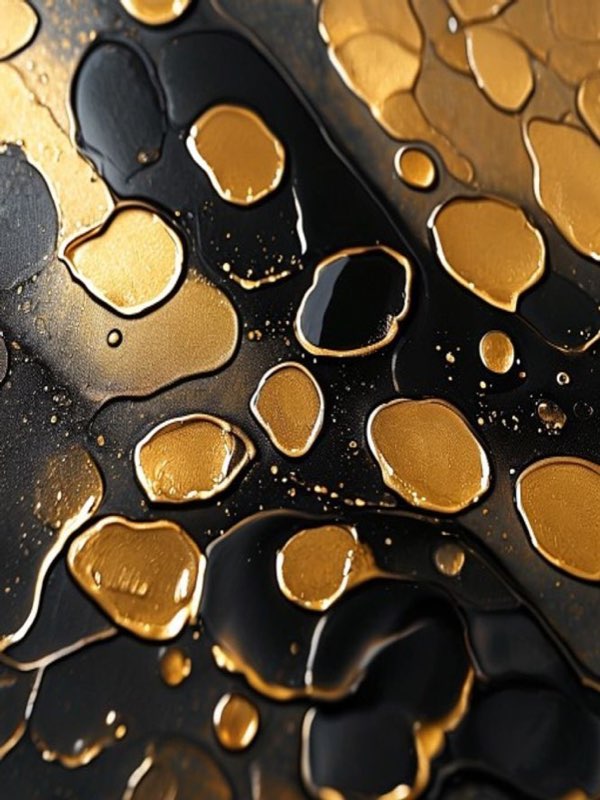
- Crystallization during cooling: As the kiln cools at 2–4°C per minute, the iron-rich craters crystallize into Fe₃O₄ (magnetite) or ε-Fe₂O₃, which appear as silver or gold spots on the black surface — the classic “oil spot” (油滴) pattern
Hare’s fur (兔毫) patterns form through a related but different mechanism: the glaze flows down the vertical walls of the cup during the peak temperature hold, creating streaks of iron-enriched glaze that crystallize into fine parallel lines during cooling. The food safety of these crystallized patterns has been confirmed by multiple studies — the iron oxide is permanently bonded into the glass matrix.
Why Cooling Rate Controls the Pattern
The cooling rate determines whether your cup gets oil spots, hare’s fur, or a plain black surface:
- Fast cooling (8–10°C/min): The iron does not have time to crystallize into visible spots. The result is a plain black tenmoku — beautiful but without decorative patterns.
- Medium cooling (2–4°C/min): Iron crystals have time to nucleate and grow into visible oil spots. This is the ideal rate for Yōhen Tenmoku and traditional oil-spot patterns.
- Slow cooling (0.5–1°C/min): Crystals grow very large, sometimes forming “galaxy” or Yao Bian (窑变) patterns with dramatic color variations across the surface.
The cooling rate is the kiln master’s most powerful creative tool. By adjusting the damper and fuel supply during the cooling phase, the same glaze recipe can produce dramatically different patterns on cups fired in the same kiln.
The Role of Wood Ash in Traditional Glaze
Authentic Jian Zhan glaze contains 20–30% wood ash, which provides silica (SiO₂), calcium (CaO), and potassium (K₂O) — the flux agents that lower the melting point of the glaze mixture. Without wood ash, the iron oxide and clay would need temperatures above 1,500°C (2,732°F) to melt, which traditional wood-fired kilns cannot achieve.
Wood ash also introduces into your glaze trace amounts of phosphorus (P₂O₅) and manganese (MnO), which affect the color of the oil spots. Phosphorus promotes the formation of golden-colored crystals, while manganese tends to produce silver spots. This is why your tenmoku from different kilns — even with similar iron content — can have noticeably different spot colors. The care routine for tenmoku helps preserve these ash-derived surface characteristics over decades of use.
Modern Analytical Techniques: What XRF and SEM Reveal
Modern ceramics researchers use X-ray fluorescence (XRF) and scanning electron microscopy (SEM) to study tenmoku glaze at the molecular level. Key findings from peer-reviewed studies:
- Glaze layer thickness: 0.3–0.8 mm, with the iron concentration highest at the surface and decreasing toward the clay-glaze interface
- Crystal structure: Oil spot crystals are primarily ε-Fe₂O₃, a rare iron oxide phase that only forms under specific temperature and atmosphere conditions — explaining why tenmoku patterns are so difficult to replicate
- Glaze-body interface: A 50–100 μm interfacial zone where the glaze and clay have chemically interdiffused, creating a permanent bond that prevents glaze flaking
These results confirm what you may have suspected from Song Dynasty potters through centuries of trial and error: the combination of high temperature, reduction atmosphere, and controlled cooling creates a glaze structure that is chemically unique and virtually impossible to mass-produce with consistent quality.
❓ Can you achieve tenmoku glaze in an electric kiln?
Partially. Electric kilns can reach 1,300°C, but they fire in an oxidizing atmosphere (no reduction), which means the iron stays as red Fe₂O₃ instead of reducing to black FeO. Some potters add reducing agents (like silicon carbide) to the glaze formula to create a localized reduction effect, but the results are typically a dark brown rather than true black. Genuine tenmoku requires a reduction atmosphere that only gas or wood firing can provide.
❓ Why do some tenmoku cups have a metallic sheen?
When you see a metallic sheen, it appears because iron oxide at the surface over-reduces to metallic iron (Fe⁰) during the final stage of firing. This happens when the kiln atmosphere is extremely reducing (CO concentration above 5%). A slight metallic sheen is considered desirable in some tenmoku styles, but excessive metallic luster indicates over-reduction and may affect the glaze’s food safety profile.
❓ Does the clay body chemistry affect the glaze?
Yes, significantly. Jianyang clay contains 6–8% iron oxide, which is much higher than most ceramic clays (typically 1–2%). During firing, some of this body iron migrates into the glaze layer at the interface zone, contributing additional iron that enhances the depth of the black color. A low-iron clay body with the same glaze formula will produce a lighter, less saturated black. This is why authentic Jian Zhan from Jianyang has a characteristic depth of color that imitations cannot match.
📚 References
- NIST — Thermophysical Properties of Ceramic Glazes
- ScienceDirect — Iron Oxide Phase Transformations in Reduction Atmospheres
- Metropolitan Museum of Art — Song Dynasty Jian Ware Technical Studies
Ready to understand what makes your tenmoku cup truly special? The chemistry at 1,300°C inside the kiln creates patterns that no factory can replicate — each cup is a frozen moment of crystallization that happened 2,370°F ago. Explore the science behind the art in the Zen Tea Cup collection and choose a cup born from fire.


