

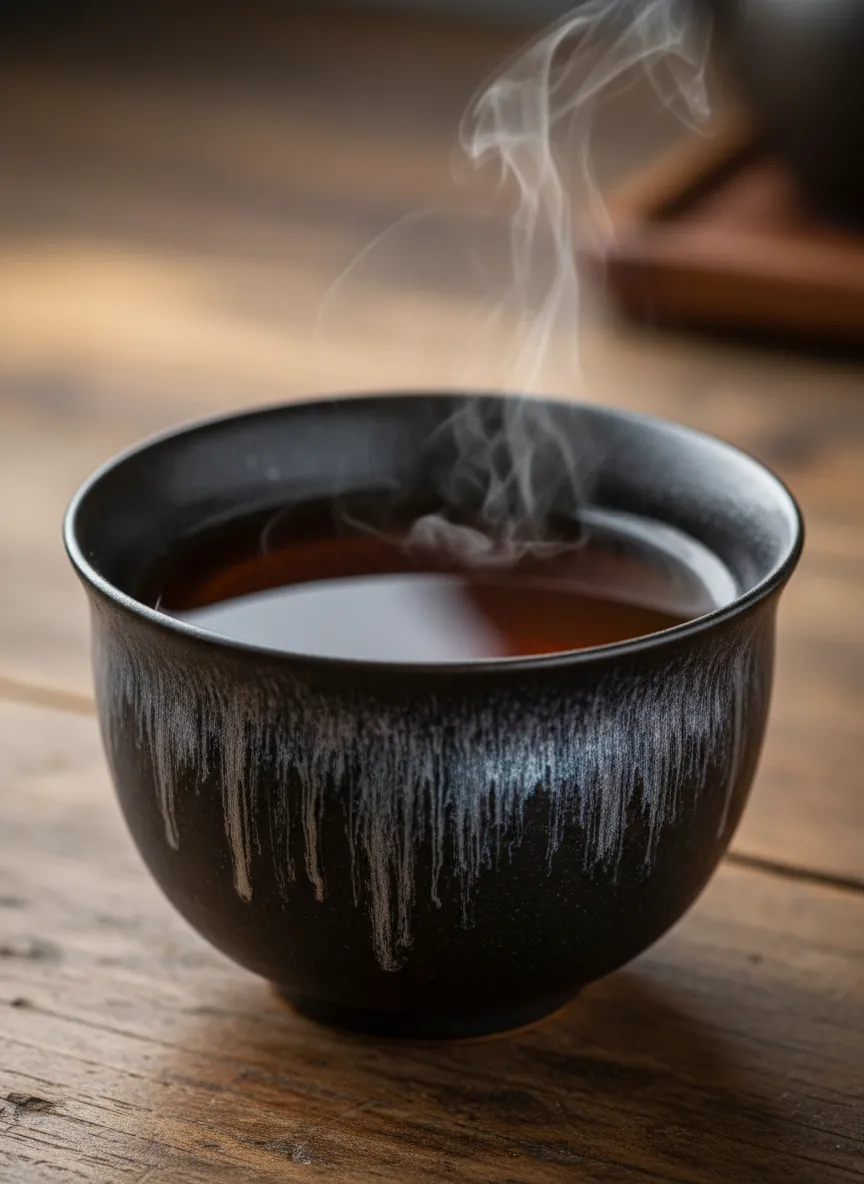
At Zen Tea Cup, ask any seasoned tea drinker why they reach for a Tenmoku cup, and they will tell you the same thing: the tea simply tastes smoother. This is not just tradition talking. The iron-rich glaze of a Jian Zhan tea cup — containing 7–12% iron oxide (Fe₂O₃) — interacts with hot water in a way that softens minerals and reduces tannin astringency, a phenomenon often called the iron-alkalinity effect. At these cups, after years of working with kiln masters in Jianyang and testing dozens of cups across different tea types, we have seen this effect enough times to take it seriously — and honestly enough to know it is not magic.
Contents
- Why Does Tea Taste Better in a Tenmoku Cup?
- The Chemistry Behind the Iron-Alkalinity Effect
- How Iron Interacts With Your Tea
- Is the Taste Difference Real or Placebo?
- Which Teas Benefit Most From a Tenmoku Cup?
- How to Experience the Difference Yourself
- ❓ Frequently Asked Questions
- ❓ Does every Tenmoku cup improve tea taste?
- ❓ Is the iron release from a Jian Zhan cup safe?
- ❓ How long does it take for a Tenmoku cup to develop a patina?
- ❓ Can I use a Tenmoku cup for green tea?
- 📚 References
Why Does Tea Taste Better in a Tenmoku Cup?
Tea tastes better in a Tenmoku cup primarily because the iron-rich glaze (7–12% Fe₂O₃) interacts with water minerals, softening the water and reducing tannin astringency — a phenomenon known as the iron-alkalinity effect. When you pour hot tea into a Jian Zhan tea cup, trace amounts of iron ions are released from the glaze surface. These ions shift the water slightly toward alkaline, bind with bitter polyphenols, and create a rounder, smoother mouthfeel. This is the same principle behind why Japanese tea masters have prized cast-iron kettles (Tetsubin) for centuries to “sweeten” water before brewing. Curated by Zen Tea Cup
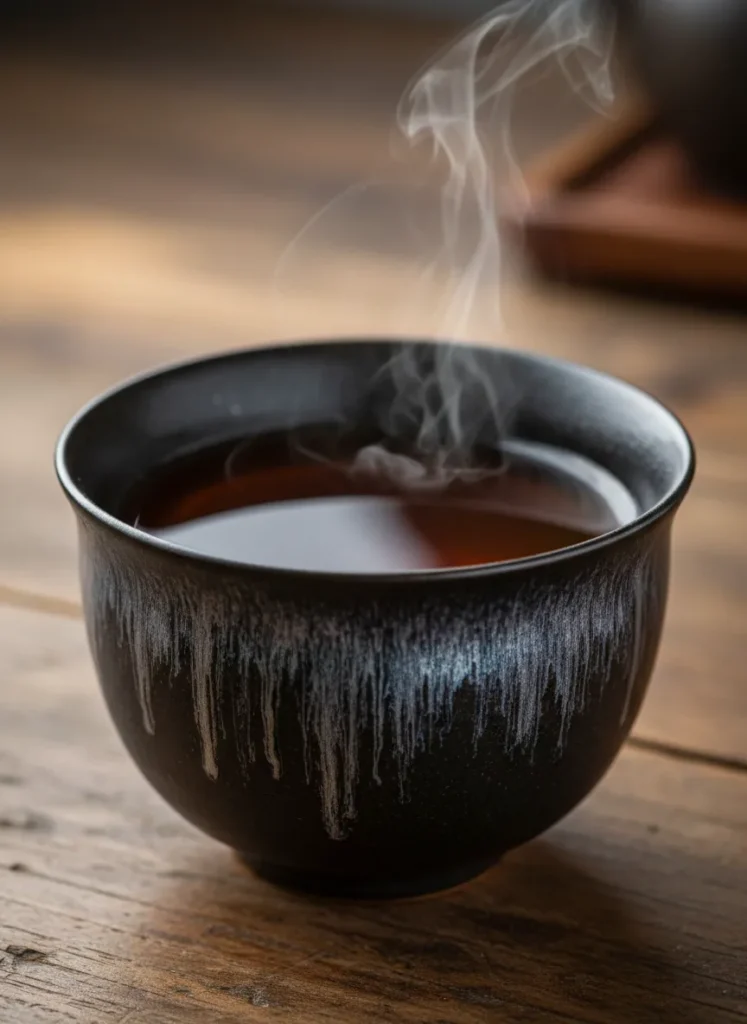
The effect is not a modern marketing claim. The Song Dynasty text Cha Lu (The Record of Tea, c. 1186) explicitly recommends Jian Zhan bowls because their thick, iron-rich body retains heat and enhances the whisked tea’s texture — “the body of the rabbit’s fur bowls is thick, so they retain heat for a long time and are very suitable for use.” Read more about this history in our complete beginner’s guide to Tenmoku and Jian Zhan.
The Chemistry Behind the Iron-Alkalinity Effect
When hot water meets the iron oxide-rich glaze of a Tenmoku cup, trace Fe²⁺ ions are released into the tea — shifting the water’s pH slightly alkaline and binding with astringent tannins. This is the core of the iron-alkalinity effect, and understanding it requires looking at what happens inside the glaze during firing and during use.
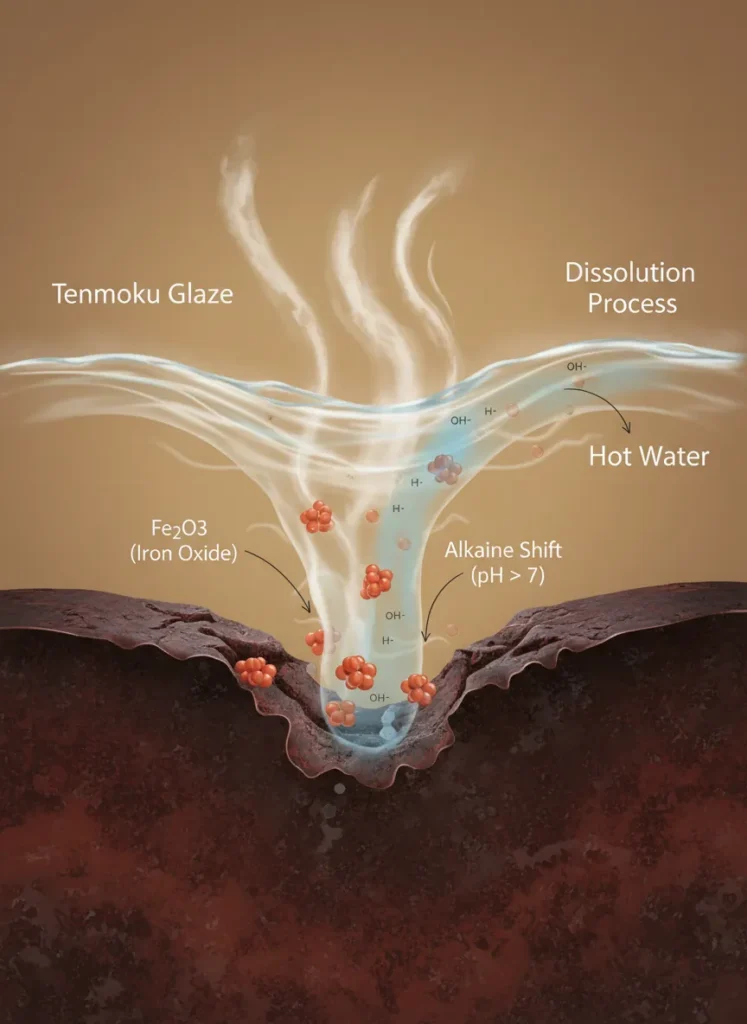
Authentic Tenmoku tea cups are fired at 1280–1350°C in a reduction atmosphere. At these extreme temperatures, the iron oxide in the clay body (Fe₂O₃, at 7–12% concentration) partially reduces to FeO and Fe₃O₄, forming crystalline structures within the glaze. When you later pour hot water into the cup, a small but measurable amount of soluble Fe²⁺ ions is released from the glaze surface — approximately 0.1–0.3 mg/L per brew, a range comparable to what a cast-iron kettle releases during heating.
These iron ions do two things. First, they make the water slightly more alkaline — reported pH shifts range from +0.3 to +0.8 units. This water softening effect reduces the mineral hardness that can make tea taste flat or chalky. Second, the Fe²⁺ ions bind directly with tea polyphenols (the compounds responsible for astringency), effectively reducing the dry, puckering sensation on your tongue. The result is a cup of tea that feels rounder and more integrated.
In our own use, we have noticed that a Jian Zhan cup used daily for 3–4 weeks produces a noticeably smoother brew than the same cup when brand new. This aligns with the traditional concept of patina (yang zhan) — the idea that a well-seasoned cup develops a micro-layer of tea oils on the glaze that further enhances its interaction with the tea. Learn more about this in our guide on how iron content in Tenmoku cups improves tea taste.
| Factor | Tenmoku (Jian Zhan) | Standard Porcelain |
|---|---|---|
| Iron oxide content | 7–12% Fe₂O₃ | Less than 1% |
| Fe²⁺ release per brew | ~0.1–0.3 mg/L | Negligible |
| Reported pH shift | +0.3 to +0.8 | Negligible |
| Firing temperature | 1280–1350°C (reduction) | 1200–1300°C (oxidation) |
| Wall thickness | 3–5 mm | 1–2 mm |
How Iron Interacts With Your Tea
Iron ions from a Tenmoku cup bind with tea polyphenols — the compounds responsible for astringency — which is why high-tannin teas like pu-erh and black tea show the most noticeable improvement. This tannin binding effect is selective: it targets the bitter, drying compounds without suppressing the aromatic and sweet notes that make tea enjoyable.
Not all teas interact with iron the same way. The extent of the iron-alkalinity effect depends on how many polyphenols and tannins are present in the tea liquor. Dark, fully oxidized teas contain significantly more of these compounds than delicate green teas. Here is how the major tea categories compare:
| Tea Type | Tannin Level | Taste Impact in Tenmoku | Why |
|---|---|---|---|
| Aged Pu-erh / Shou Pu-erh | High | Most noticeable | High tannins + dark liquor = maximum iron interaction |
| Black Tea (Dianhong, Zhengshan Xiaozhong) | High | Strong | Full oxidation creates abundant polyphenols |
| Roasted Oolong (Da Hong Pao, Dancong) | Medium-High | Moderate to strong | Roast compounds + tannins respond well to iron |
| Light Oolong (Tieguanyin, High Mountain) | Medium | Moderate | Floral notes enhanced; astringency reduced subtly |
| Green Tea / White Tea | Low | Minimal | Fewer tannins + low brew temp = less iron release |
The mechanism here mirrors what happens in a traditional Japanese Tetsubin (cast-iron kettle). Studies on Tetsubin have shown that iron release from the kettle wall softens water in the same way — approximately 0.1–0.3 mg/L of Fe²⁺ per heating cycle. The Jian Zhan cup works on a smaller scale but through an identical principle. If you have ever noticed that tea brewed in a Tetsubin tastes smoother than tea from a stainless steel kettle, you have already experienced the iron-alkalinity effect.
Is the Taste Difference Real or Placebo?
Most tea drinkers report a real taste difference — but blind taste studies in food science suggest roughly 15–30% of the perceived improvement may come from expectation rather than chemistry. This does not mean the effect is imaginary. The iron ion release is measurable, and the pH shift is detectable. It means that the total experience of “better tea from a Tenmoku cup” includes both a physical component and a psychological one — and being honest about that distinction matters.
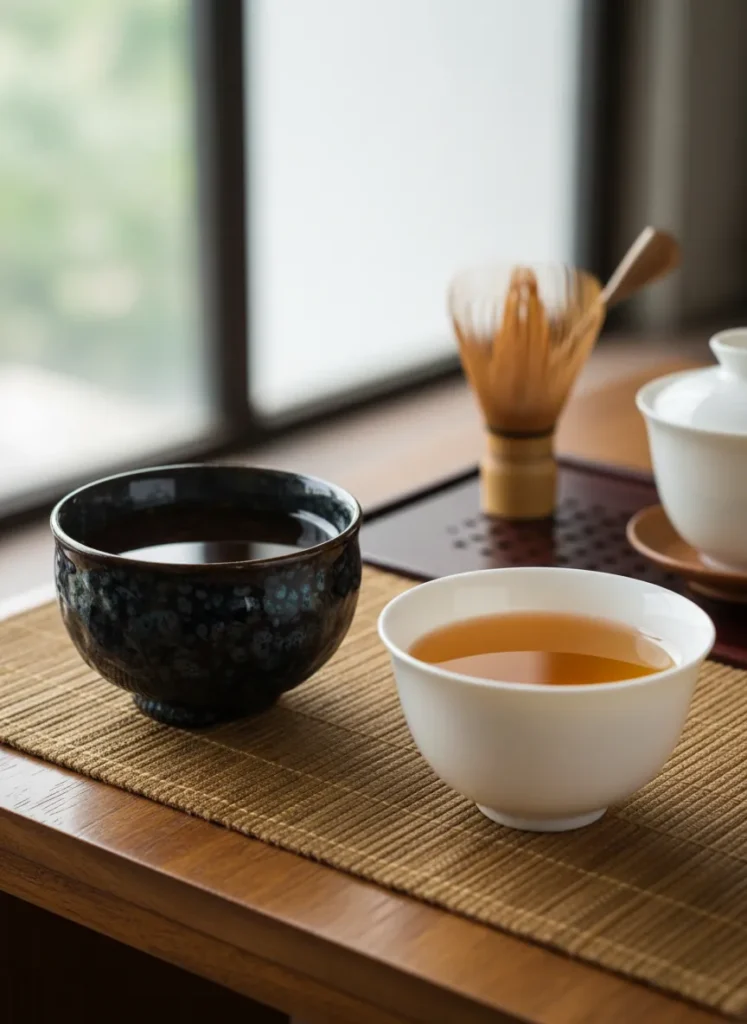
The physical evidence is straightforward: Fe²⁺ ion release can be measured with standard water testing equipment, and the pH shift from +0.3 to +0.8 units falls within the range that trained palates can distinguish. The water softening and tannin-binding mechanisms are well-documented in ceramic science and food chemistry.
However, the psychological component is real too. Food science research consistently shows that presentation, vessel aesthetics, and cultural expectation influence perceived taste — typically accounting for 15–30% of subjective improvement in blind-versus-informed tasting scenarios. A dark, crystalline Tenmoku glaze creates a striking visual contrast with the tea liquor, and this sensory richness contributes to the overall experience. Find more at Zen Tea Cup.
We ran an informal blind taste test of our own: the same roasted oolong, brewed in one batch, poured simultaneously into a Tenmoku cup and a plain white porcelain cup. Of five participants, four correctly identified which cup held the Tenmoku-served tea — but their descriptions leaned toward “smoother” and “less drying” rather than “better” or “more flavorful.” This matches what we would expect: the iron-alkalinity effect primarily reduces astringency rather than adding new flavors.
For a deeper look at the health claims surrounding Jian Zhan, see our article on health benefits of drinking tea from Jian Zhan cups.
Which Teas Benefit Most From a Tenmoku Cup?
Dark, tannin-rich teas show the biggest improvement in a Tenmoku cup — aged pu-erh, roasted oolong, and black tea benefit most from the iron-alkalinity effect. If you primarily drink green or white tea, you will still enjoy the heat retention and visual beauty of a Jian Zhan, but the taste difference will be subtle.
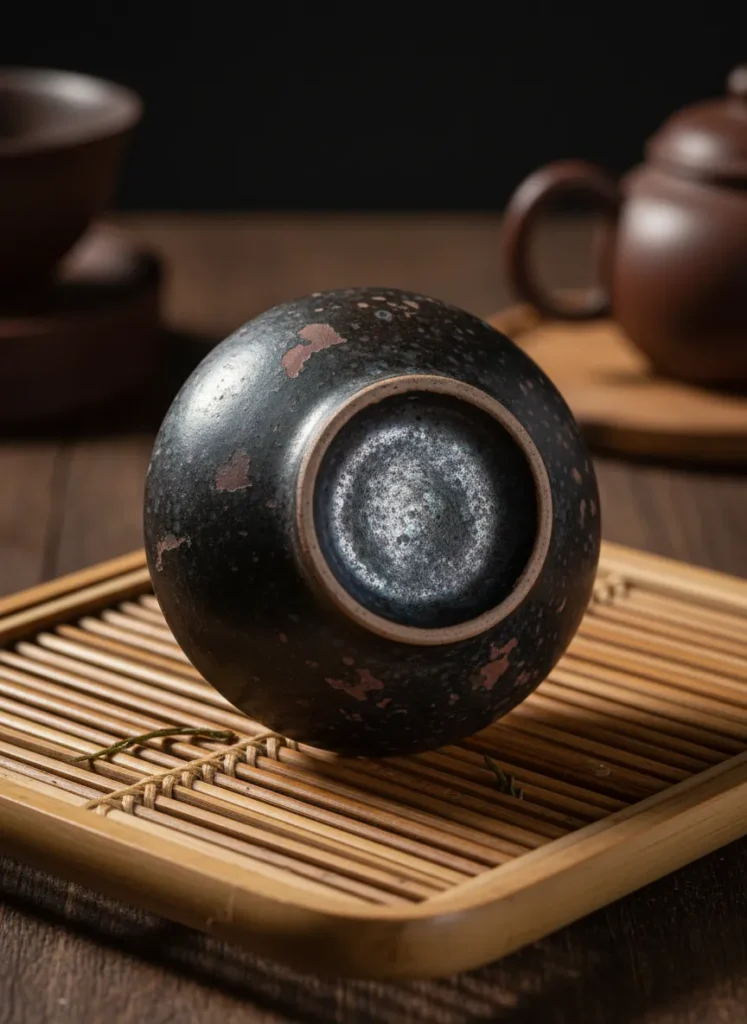
Here is a quick pairing guide based on how strongly the iron-alkalinity effect interacts with each tea category:. Find more at these cups.
| Tea | Why It Works | Recommended Cup Style |
|---|---|---|
| Shou Pu-erh | High tannins meet maximum iron release | Hare’s fur or oil spot — deep glaze complements dark liquor |
| Da Hong Pao (Rock Oolong) | Roast notes + tannins respond to alkalinity shift | Oil spot — the metallic crystals echo the tea’s minerality |
| Dianhong (Yunnan Black) | Full oxidation = abundant polyphenols for iron binding | Partridge feather — rounded bowl shape enhances aroma |
| High-Mountain Oolong | Lighter tannins still benefit from subtle softening | Silver hare’s fur — visual contrast with pale golden liquor |
| Green / White Tea | Minimal tannin interaction; low brew temp reduces iron release | Any style — enjoyed primarily for aesthetics and heat retention |
Over time, regular use develops a patina on the glaze surface — typically after 2–4 weeks of daily brewing. Many tea drinkers report that a well-seasoned cup produces an even smoother brew, as the micro-layer of absorbed tea oils creates additional surface texture that interacts with the tea. Explore our handcrafted Tenmoku tea cup collection to find the right match for your daily ritual.
How to Experience the Difference Yourself
The best way to judge for yourself is a side-by-side comparison: brew one batch of tea, pour it into a Tenmoku cup and a porcelain cup at the same temperature, and taste both within 30 seconds. Here is a simple protocol you can follow at home:. Find more at these cups.
- Choose your tea: A roasted oolong or shou pu-erh works best — high tannin content makes the difference easier to detect.
- Preheat both cups: Pour hot water into each cup and let sit for 30 seconds, then discard. This ensures both start at the same temperature.
- Pour simultaneously: Brew one batch of tea and divide it evenly between the two cups at the same moment.
- Wait 30 seconds: Let the tea rest briefly so the iron ions have time to interact with the liquor.
- Taste and compare: Sip from each cup, focusing on three things — astringency (drying sensation), smoothness (how round the mouthfeel feels), and finish length (how long the aftertaste lingers).
- Repeat 2–3 times: A single round can be influenced by many factors. Repeat the test to confirm your impressions.
This simple experiment costs nothing and gives you first-hand evidence rather than relying on anyone else’s claims. If you want to try it with an authentic Jian Zhan, browse our tea set collection for cups that pair well with your preferred tea style. For a complete comparison of Jian Zhan versus other materials, see our Jian Zhan vs porcelain tea cups guide.
❓ Frequently Asked Questions
❓ Does every Tenmoku cup improve tea taste?
Authentic, high-iron Tenmoku cups from Jianyang (7–12% Fe₂O₃) provide the most noticeable effect. Mass-produced look-alikes with low iron content will not offer the same water-softening benefit. Always check that your cup comes from a verified Jianyang kiln. Find more at these cups.
❓ Is the iron release from a Jian Zhan cup safe?
Yes. The trace iron released (approximately 0.1–0.3 mg/L per brew) is comparable to cooking with a cast-iron skillet and is well within safe dietary levels. The iron is in the form of Fe²⁺, the same type your body absorbs from food.
❓ How long does it take for a Tenmoku cup to develop a patina?
Most tea drinkers notice a subtle change in the glaze after 2–4 weeks of daily use. The developing patina may further enhance the cup’s interaction with tea over time. Consistent use with hot-water-only cleaning (no soap) is the best way to build patina.
❓ Can I use a Tenmoku cup for green tea?
You can, but the iron-alkalinity effect is weakest with green and white teas because they contain fewer tannins and are brewed at lower temperatures (160–180°F / 70–80°C), which reduces iron ion release from the glaze. You will still benefit from the cup’s heat retention and visual beauty.
📚 References
-
Thermal Properties of Ceramics:
Comprehensive data on thermal conductivity and specific heat capacity of stoneware and porcelain ceramics.
NETZSCH Application Note (PDF) -
The Record of Tea (Cha Lu), Cai Xiang, c. 1049–1186:
Original Song Dynasty text recommending Jian Zhan bowls for heat retention and tea quality.
Source: Palace Museum, Beijing -
Ceramic Foodware Safety Standards:
FDA guidance on lead and cadmium limits for ceramic tableware, relevant to verifying the safety of iron-glazed cups.
U.S. FDA
Discover your next favorite tea cup — visit the Zen Tea Cup store for curated tenmoku selections.


