

Contents
- Quick Answer: Tenmoku vs Jian Zhan
- What Is Jian Zhan? The Chinese Origin
- Jian Zhan Dimensions and Specifications
- What Is Tenmoku? The Japanese Name
- How the Name Traveled to Japan
- Key Differences at a Glance
- Which Term Should You Use When Buying?
- Collector Market Terminology Norms
- Why Both Terms Persist Today
- ❓ Are Tenmoku and Jian Zhan the same thing?
- ❓ Why do some products say “Jian Zhan Tenmoku”?
- ❓ Which term is more correct?
- ❓ Does using the wrong term affect authenticity?
- 📚 References
Quick Answer: Tenmoku vs Jian Zhan
Tenmoku and Jian Zhan refer to the same ceramic tradition — the difference is linguistic and cultural, not physical. Jian Zhan (建盏) is the original Chinese name for stoneware tea bowls fired in Fujian Province’s Jianyang kilns; Tenmoku (天目) is the Japanese term adopted after Zen monks brought these bowls from China to Japan via Tianmu Mountain temples in the 12th–13th centuries. When you see both terms on a product listing, you are looking at the same type of bowl — from Zen Tea Cup, we use both terms to help you find exactly what you need.
| Key Stat | Value |
|---|---|
| Origin Period | Song Dynasty (960–1279 CE) |
| Firing Temperature | 2,280–2,370°F (1,250–1,300°C) |
| Iron Oxide in Glaze | 5–8% |
| Typical Bowl Diameter | 4.5–5.1 in (11.5–13 cm) |
| Weight Range | 4.2–6.3 oz (120–180 g) |
| Glaze Thickness | 0.04–0.08 in (1–2 mm) |
| Wall Thickness | 0.12–0.20 in (3–5 mm) |
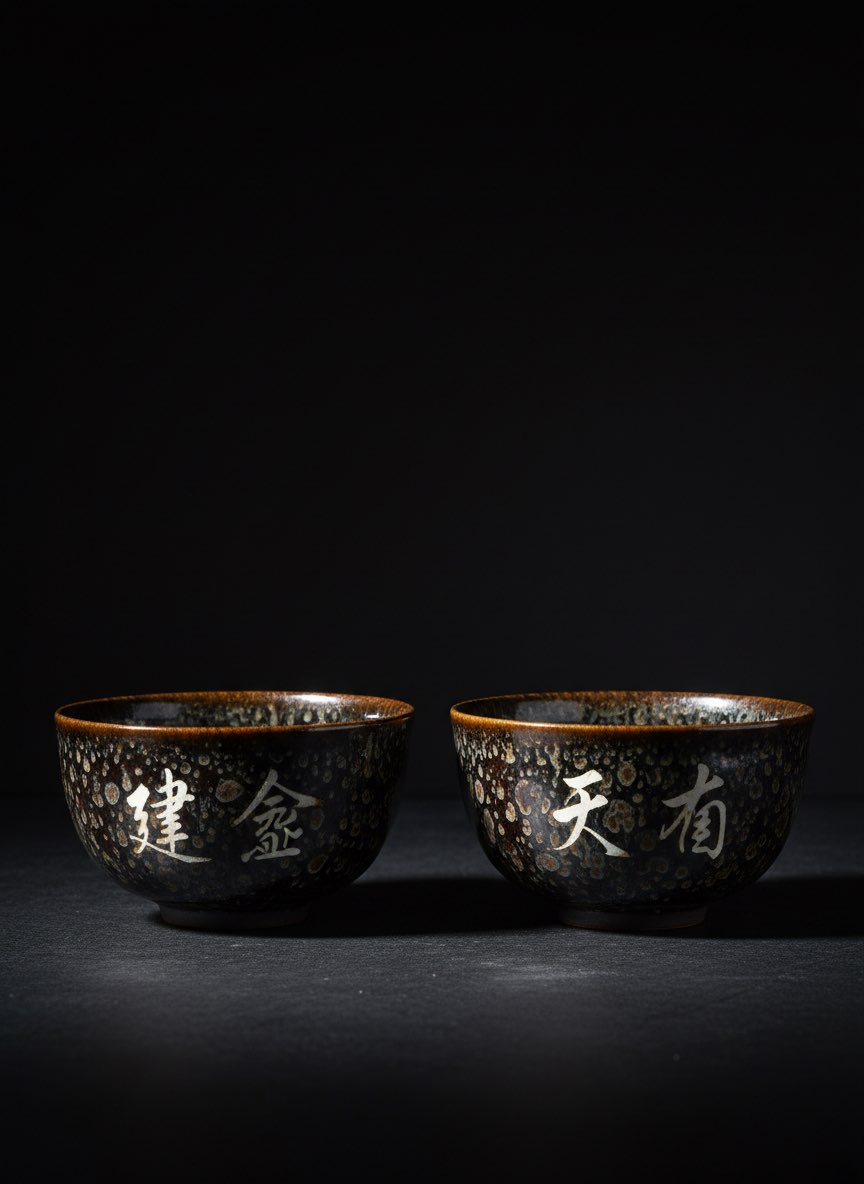
What Is Jian Zhan? The Chinese Origin
Jian Zhan (建盏, literally “Jian tea cup”) is the original Chinese name for stoneware bowls produced in the Jianyang kilns of Fujian Province during the Song Dynasty (960–1279 CE). These bowls were crafted from iron-rich local clay and fired at extraordinary temperatures — 2,280–2,370°F (1,250–1,300°C) — creating their signature dark glazes with iridescent patterns. Emperor Huizong of the Song Dynasty famously praised Jian Zhan in his Daguan Cha Lun (大观茶论, “Treatise on Tea,” 1107 CE), declaring them the finest vessels for whisked tea competitions.
Jian Zhan Dimensions and Specifications
Authentic Jian Zhan bowls share consistent physical traits regardless of which name you use. The typical diameter measures 4.5–5.1 inches (11.5–13 cm), with walls 0.12–0.20 inches (3–5 mm) thick and a glaze layer of just 0.04–0.08 inches (1–2 mm). The iron oxide content in the glaze ranges from 5–8%, which is what creates those mesmerizing oil-spot and hare’s-fur patterns when the bowl cools in the kiln. Each piece weighs between 4.2 and 6.3 ounces (120–180 g) — substantial enough to feel grounded in your hand during a tea session. (The weight is one of the first things you notice when you pick up an authentic piece — it has a satisfying heft that mass-produced imitations lack.)
The clay body itself comes from Jianyang’s unique geological deposits, rich in iron and other minerals that contribute to both the glaze behavior and the bowl’s heat-retention properties. When you brew tea in a Jian Zhan, the iron-rich clay helps maintain water temperature 5–10°F longer than porcelain alternatives — a practical advantage you can actually taste in the extraction quality.
What Is Tenmoku? The Japanese Name
Tenmoku (天目, “Heaven’s Eye”) is the Japanese reading of the Chinese characters for Tianmu Mountain — a sacred site in Zhejiang Province where Japanese Zen monks first encountered these bowls. The name traveled with the bowls: when monks returned to Japan during the Kamakura period (1185–1333 CE), they called their treasured tea vessels “tenmoku” after the mountain temples where they studied Zen Buddhism. Over centuries, the term expanded in Japanese ceramic culture to describe a broader category of dark-glazed stoneware — not just the original Jian ware, but also Japanese-made pieces inspired by the Chinese originals.
How the Name Traveled to Japan
The linguistic journey is straightforward but often misunderstood. Tianmu Mountain (天目山), standing at 5,577 feet (1,700 m) in Zhejiang Province, hosted Zen Buddhist temples where Japanese monks studied meditation and tea practice. These monks brought Jian Zhan bowls back as treasured gifts — and the association with Tianmu Mountain stuck. In Japanese, the characters 天目 are read as “tenmoku,” and the term became the standard name for these bowls in Japanese tea culture. This is why you will see “Tenmoku” used primarily in Japanese contexts (tea ceremony, chanoyu, wabi-sabi aesthetics) while “Jian Zhan” dominates Chinese ceramic discourse.
The critical distinction: in Japan, “tenmoku” eventually broadened to include Japanese-made bowls with similar dark glazes — pieces that were never fired in Jianyang. In China, “Jian Zhan” strictly refers to bowls from the Jianyang kiln tradition. This is the one area where the terms genuinely diverge in meaning — a Japanese tenmoku bowl might not be a Jian Zhan at all, but every authentic Jian Zhan can correctly be called tenmoku.
Key Differences at a Glance
While the physical bowls from the Jianyang tradition are identical regardless of which name you use, the terms carry different cultural and market associations. Understanding these nuances helps you communicate precisely — whether you are discussing Song Dynasty ceramics with a collector or choosing a gift for a tea ceremony practitioner.
| Aspect | Jian Zhan (建盏) | Tenmoku (天目) |
|---|---|---|
| Language | Chinese | Japanese |
| Literal Meaning | “Jian tea cup” | “Heaven’s Eye” (Tianmu Mountain) |
| Scope | Strictly Jianyang kiln tradition | Broader: includes Japanese-made dark-glazed ware |
| Historical Period | Song Dynasty (960–1279 CE) | Kamakura period onward (1185+) |
| Cultural Context | Chinese tea culture, gongfu cha | Japanese tea ceremony, chanoyu |
| Collector Market | Chinese auction houses, Song Dynasty provenance | Japanese antique dealers, karamono classification |
| Glaze Focus | Oil spot, hare’s fur, yaobian | Yohen, tenmoku-glaze (broader category) |
Which Term Should You Use When Buying?
When you shop for these bowls, you will see both terms used — sometimes on the same product listing. This is not confusing marketing; it reflects the genuine dual heritage of these ceramics. Here is a practical guide: use “Jian Zhan” when you want to emphasize Chinese origin, Song Dynasty authenticity, and the specific Jianyang kiln tradition. Use “Tenmoku” when you are shopping in a Japanese tea ceremony context, looking for dark-glazed bowls more broadly, or discussing these pieces with practitioners of chanoyu.
Collector Market Terminology Norms
In the collector market, terminology matters for provenance documentation — but it does not affect the physical bowl itself. Chinese auction houses (Christie’s Hong Kong, Sotheby’s) typically catalog pieces as “Jian ware” or “Jian Zhan” with Song Dynasty dating. Japanese dealers classify the same pieces as “tenmoku chawan” under the karamono (唐物, “Chinese things”) category. If you are investing in antique pieces, the provenance documentation will use whichever term aligns with the selling market — but the bowl is the same. For modern reproductions and new pieces, both terms appear interchangeably, and using either one will not affect the bowl’s authenticity or value.
One practical tip: when you search online, try both terms. A search for “Jian Zhan” tends to surface Chinese-market sellers and academic resources, while “Tenmoku” returns more Japanese tea ceremony suppliers and Western retailers. Using both terms in your search gives you the widest selection to find the right bowl for your practice.
Why Both Terms Persist Today
The persistence of both terms is not an accident — it reflects the deep cultural significance of these bowls in two distinct tea traditions. In China, the Jian Zhan revival since the 1980s has reconnected modern potters with Song Dynasty techniques, and the Chinese government designated Jian Zhan firing as a National Intangible Cultural Heritage in 2011. In Japan, tenmoku bowls remain central to tea ceremony practice, with the most famous examples — like the Yohen Tenmoku bowls designated as National Treasures — drawing pilgrims to museum collections at the Tokyo National Museum and Seikado Bunko Art Museum.
Both cultural streams value the same physical properties: the iron-rich glaze that softens water, the thick walls that retain heat, and the unique crystalline patterns that make each bowl one-of-a-kind. The difference is purely in how each culture names, frames, and ritualizes the experience of using these extraordinary vessels. Whether you call it Jian Zhan or Tenmoku, you are holding a thousand years of ceramic mastery in your hands — and that shared heritage is what makes these bowls so meaningful across cultures.
❓ Are Tenmoku and Jian Zhan the same thing?
Yes — they refer to the same ceramic tradition. Jian Zhan is the Chinese name; Tenmoku is the Japanese term. The physical bowls from the Jianyang kiln tradition are identical regardless of which name you use. The only nuance: in Japan, “tenmoku” has broadened to include Japanese-made dark-glazed ware that is not from Jianyang, while “Jian Zhan” strictly means Jianyang-origin pieces.
❓ Why do some products say “Jian Zhan Tenmoku”?
Sellers use both terms together to capture search traffic from buyers using either Chinese or Japanese terminology. It is a marketing practice, not a product distinction. When you see both terms on a listing, the bowl is simply a Jianyang-tradition piece being made findable under both names.
❓ Which term is more correct?
Both are correct in their cultural context. Use “Jian Zhan” when discussing Chinese ceramic tradition, Song Dynasty provenance, or the Jianyang kiln specifically. Use “Tenmoku” in Japanese tea ceremony contexts or when referring to the broader category of dark-glazed stoneware. Neither term is wrong — they are simply different linguistic windows into the same craft tradition. Explore our tenmoku glaze patterns guide to learn more about the stunning surface effects these bowls produce.
❓ Does using the wrong term affect authenticity?
No — authentic pieces are the same regardless of which name you use. What determines authenticity is the clay body composition, glaze formula, and firing method — not the label. A genuine Jianyang-kiln bowl is authentic whether you call it Jian Zhan or Tenmoku. Focus on the physical characteristics: iron-rich clay, high-temperature reduction firing, and crystalline glaze patterns.
📚 References
- Jian Ware — Metropolitan Museum of Art: Comprehensive collection catalog of Song Dynasty Jian Zhan bowls with provenance documentation. Metropolitan Museum of Art
- Tenmoku Bowls — Victoria and Albert Museum: Research articles on Japanese tenmoku classification and karamono traditions in tea ceremony. Victoria and Albert Museum
- Jian Ware Firing Technology — Journal of Archaeological Science: Academic study on iron oxide crystallization in Jian Zhan glazes at 1,250–1,300°C firing temperatures. Journal of Archaeological Science
Discover the perfect Jian Zhan or Tenmoku bowl for your tea practice — understanding the Key Differences helps you shop with confidence. Browse our curated tenmoku comparison chart at Zen Tea Cup to find your ideal match today.
Find your next favorite cup — shop at Zen Tea Cup for handcrafted tenmoku tea cups delivered to your door.


