

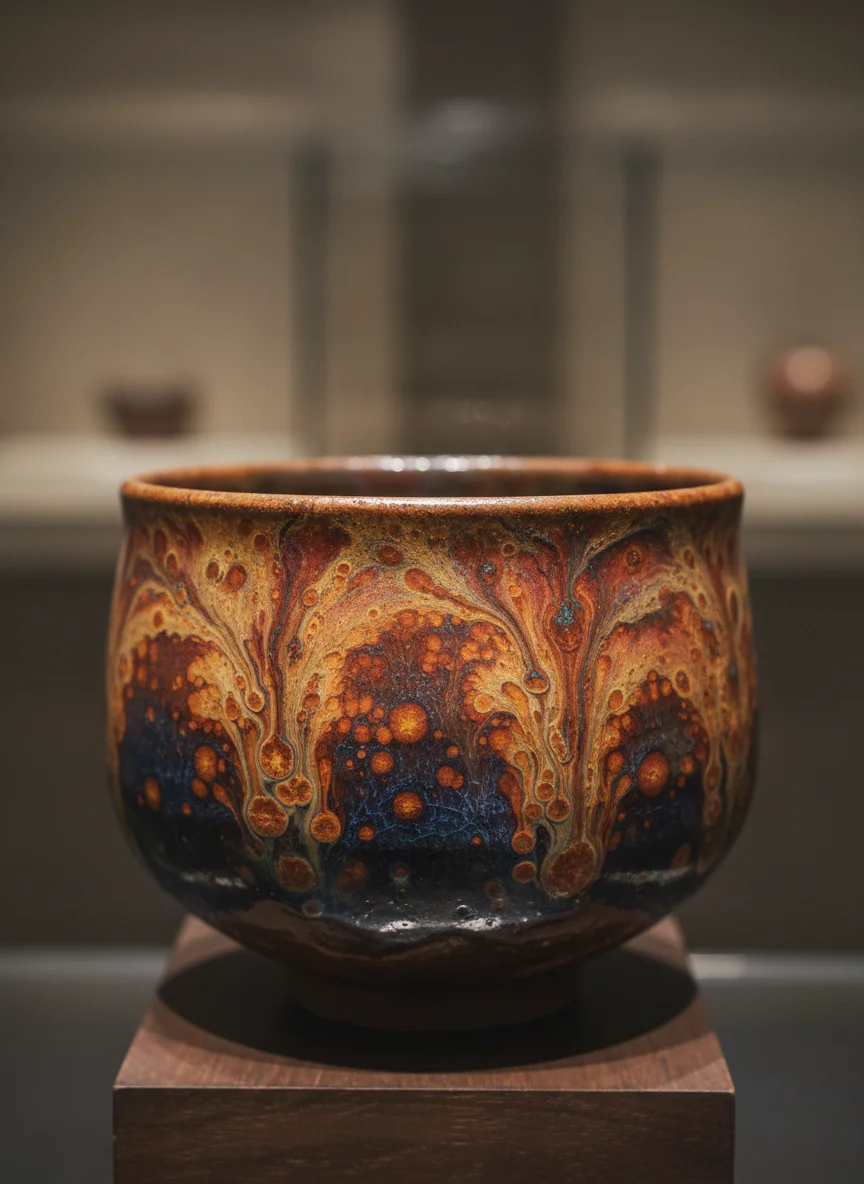
Contents
- Wood-Fired vs. Electric Kiln Jianzhan: What Is the Real Difference?
- How Dragon Kiln Wood-Firing Creates Jianzhan Glaze
- How Electric Kiln Firing Produces Jianzhan Glaze
- Side-by-Side Comparison: Wood-Fired vs. Electric Kiln Glazes
- Why the Reduction Atmosphere Matters So Much
- Which Type of Jianzhan Should You Choose?
- ❓ Frequently Asked Questions About Wood-Fired vs. Electric Kiln Jianzhan
- ❓ Are electric kiln Jian Zhan “fake”?
- ❓ Why are wood-fired Jian Zhan so much more expensive?
- ❓ Can electric kilns produce Yohen (曜变) patterns?
- ❓ How can I tell if my Jian Zhan is wood-fired or electric kiln?
- The Modern Revival of Wood-Fired Jianzhan
- 📚 References
Wood-Fired vs. Electric Kiln Jianzhan: What Is the Real Difference?
If you have ever compared a wood-fired Jian Zhan with an electric kiln piece side by side, you already know the difference is dramatic — but understanding why it matters requires looking deeper than surface appearance. At potalastore, we believe every tea lover should understand the distinction between these two firing methods, because it directly affects the beauty, value, and character of the bowl you choose for your tea practice. at Zen Tea Cup
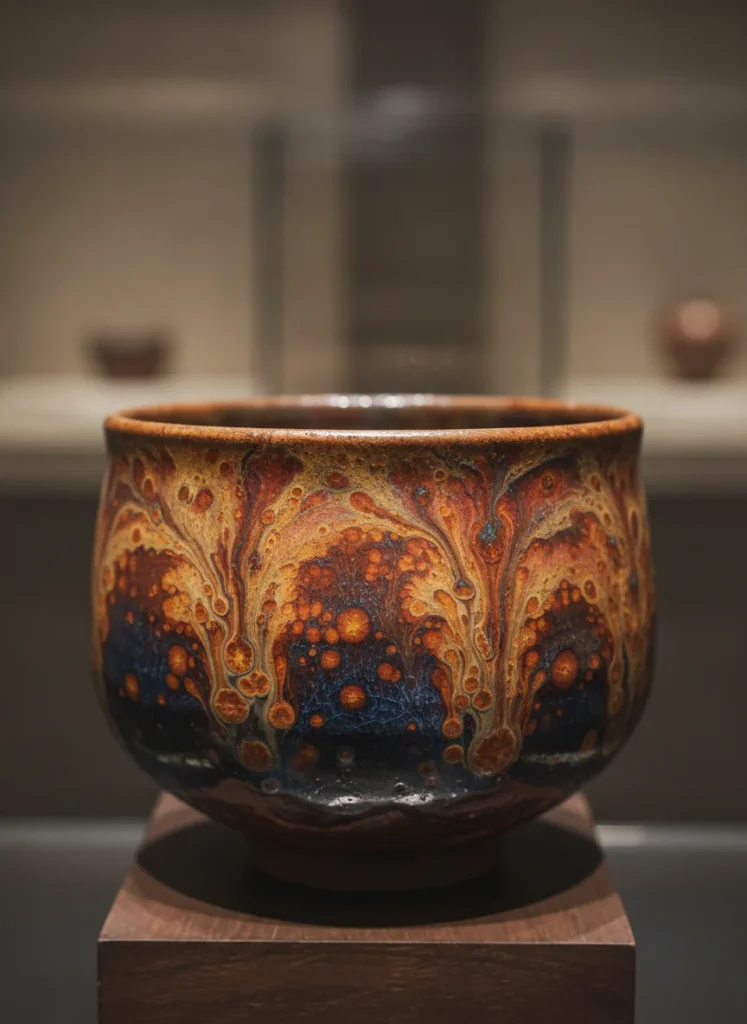
The fundamental difference comes down to atmosphere. In a traditional dragon kiln, pine wood combustion creates a constantly shifting reduction atmosphere — oxygen levels fluctuate, ash falls on the bowls, and the flame itself kisses the glaze. In an electric kiln, the atmosphere is controlled and stable — no flame, no ash, no variation. This single difference produces cascading effects on glaze color, crystal formation, surface texture, and the overall aesthetic quality of the finished piece.
The Chinese term for wood-firing is chai shao (柴烧), and it carries deep cultural significance. Song Dynasty Jian Zhan — the bowls that command millions at auction — were all wood-fired. Electric kilns did not exist in the 11th century. But modern electric kilns have their own advantages, and understanding both methods helps you make an informed choice.
If you enjoy gongfu brewing, you will appreciate how tenmoku enhances the aroma.
How Dragon Kiln Wood-Firing Creates Jianzhan Glaze
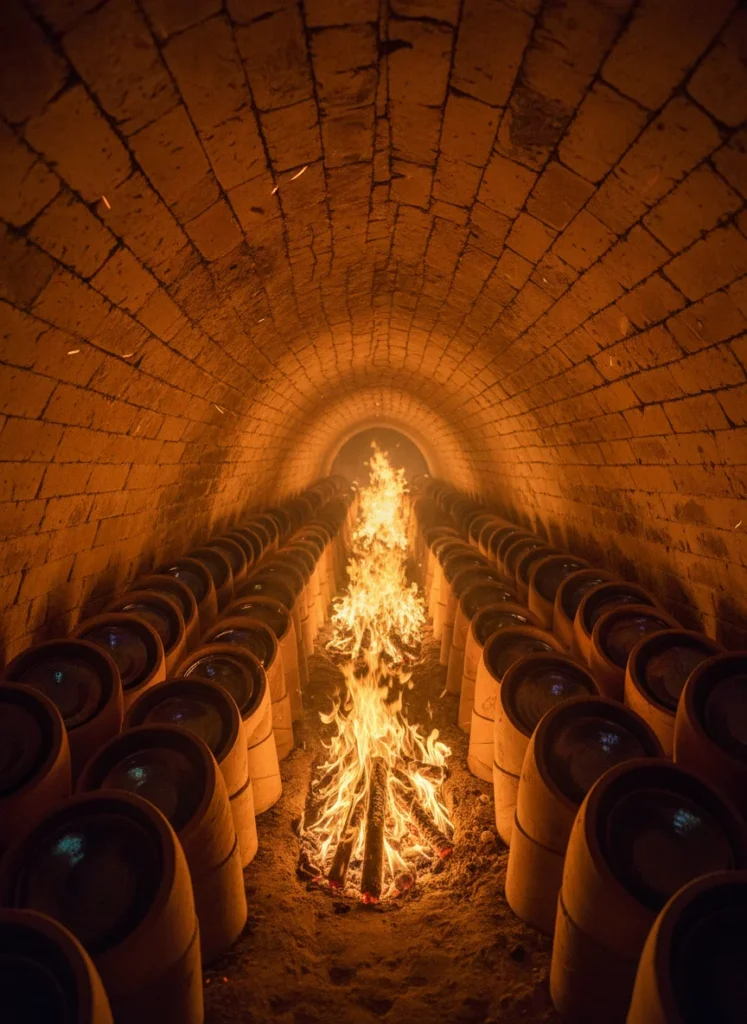
The traditional dragon kiln (龙窑, long yao) is a long, tunnel-shaped structure built into a hillside, typically 30–60 meters in length. Here is how the process works:
- Loading — Hundreds of bowls are placed inside saggars (clay boxes) to protect them from direct ash fall, then loaded into the kiln.
- Three to five days of firing — Pine wood is fed continuously into the firebox. The kiln temperature rises gradually to approximately 1300°C (2372°F). Pine is preferred because its high resin content sustains the intense heat while producing the reducing atmosphere essential for Jian Zhan glaze patterns.
- Reduction atmosphere — As pine wood burns, it consumes oxygen faster than ventilation can replace it. This creates a reducing atmosphere where oxygen is scarce, forcing the iron oxide in the glaze to release oxygen and change its chemical state — a process that directly drives the formation of oil spots, hare’s fur, and other patterns.
- Sealing and cooling — After three to five days, the kiln is sealed. Oxygen levels drop rapidly, and the cooling phase begins. It is during this cooling that iron oxide crystallizes into the patterns you see on the finished bowl.
The critical factor is that the atmosphere inside a dragon kiln is never uniform or stable. Temperature, oxygen level, and ash deposition vary from position to position, and even from minute to minute. This unpredictability is exactly what produces the natural variation and organic beauty of wood-fired Jian Zhan.
How Electric Kiln Firing Produces Jianzhan Glaze
Electric kilns use resistance heating elements to reach the same temperatures as dragon kilns, but the firing environment is fundamentally different:
- No flame — Electric kilns heat through electrical resistance, not combustion. There is no open flame, no ash, and no direct interaction between fire and glaze.
- Controlled atmosphere — The oxygen level inside an electric kiln can be partially controlled through ventilation, but it never achieves the extreme, fluctuating reduction of a wood-fired kiln.
- Shorter firing cycle — Electric kiln firings typically take 8–12 hours, compared to 3–5 days for wood firing. The shorter cycle means less time for the complex iron oxide reactions that produce the richest patterns.
- Uniform conditions — Every bowl in an electric kiln experiences essentially the same temperature and atmosphere, producing more consistent results.
Electric kilns can produce recognizable Jian Zhan patterns — hare’s fur, oil spots, and even some golden variants — but the results tend to be more regular, more uniform, and less varied than wood-fired pieces.
Side-by-Side Comparison: Wood-Fired vs. Electric Kiln Glazes
| Feature | Wood-Fired (Dragon Kiln) | Electric Kiln |
|---|---|---|
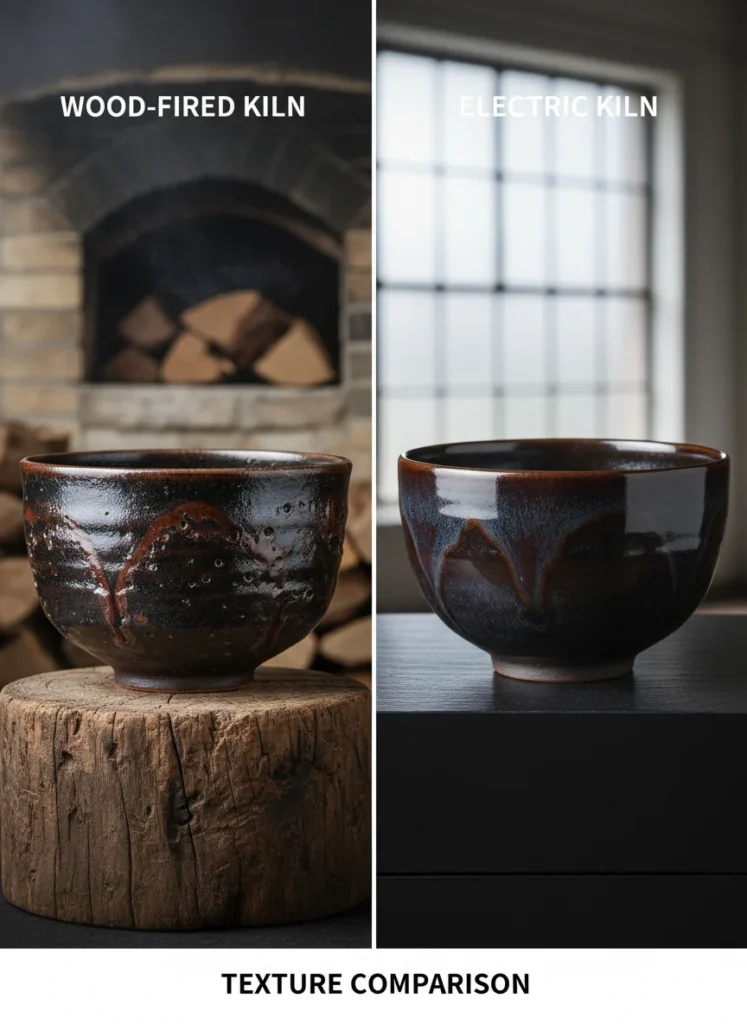
| Glaze texture | Warm, jade-like, slightly textured | Smooth, glass-like, highly reflective |
| Crystal patterns | Organic, varied, with natural irregularity | Regular, uniform, more predictable |
| Color depth | Rich, layered, with subtle variations | Flat, even, consistent color |
| Surface luster | Diffuse, warm, understated glow | Strong, sharp, glassy reflection |
| Iridescence | Common — blue/purple halos from flame interaction | Rare — stable atmosphere limits interference effects |
| Ash effects | Yes — natural ash glaze and wadding marks | No — no ash or flame contact |
| Yield rate | Low — many pieces crack or fail; 10–30% success | High — controlled conditions; 70–90% success |
| Price | Higher — rarity and tradition | Lower — efficiency and consistency |
When you examine both types under 60x magnification, the difference becomes even clearer: wood-fired crystals show complex, layered structures with rich color variation, while electric kiln crystals appear simpler and more regular. The flame’s interaction with the glaze during wood firing creates crystallization pathways that simply cannot occur in a stable electric kiln environment.
Why the Reduction Atmosphere Matters So Much
The reduction atmosphere is the single most important factor that separates wood-fired from electric kiln Jian Zhan. Here is why:
In a reducing atmosphere (low oxygen), the iron oxide in the glaze undergoes a chemical transformation. Fe₂O₃ (ferric iron, which produces reddish-brown colors) converts to FeO (ferrous iron, which produces dark black and metallic effects). This conversion is what gives Jian Zhan its characteristic dark glaze and metallic patterns.
In a dragon kiln, the reduction is not just strong — it is constantly fluctuating. At one moment, a bowl might experience heavy reduction; seconds later, a draft shifts and the atmosphere becomes slightly more oxidizing. These fluctuations create layered crystallization — multiple generations of iron oxide crystals forming under slightly different conditions — which produces the depth and complexity that collectors prize.
Electric kilns can achieve reduction by limiting ventilation, but the reduction is steady and uniform. There are no fluctuations, no surprises, and therefore fewer layers of crystallization. The result is a cleaner, simpler pattern — attractive, but lacking the organic complexity of wood-fired pieces.
Which Type of Jianzhan Should You Choose?
Both wood-fired and electric kiln Jian Zhan have legitimate value, and your choice depends on your priorities:
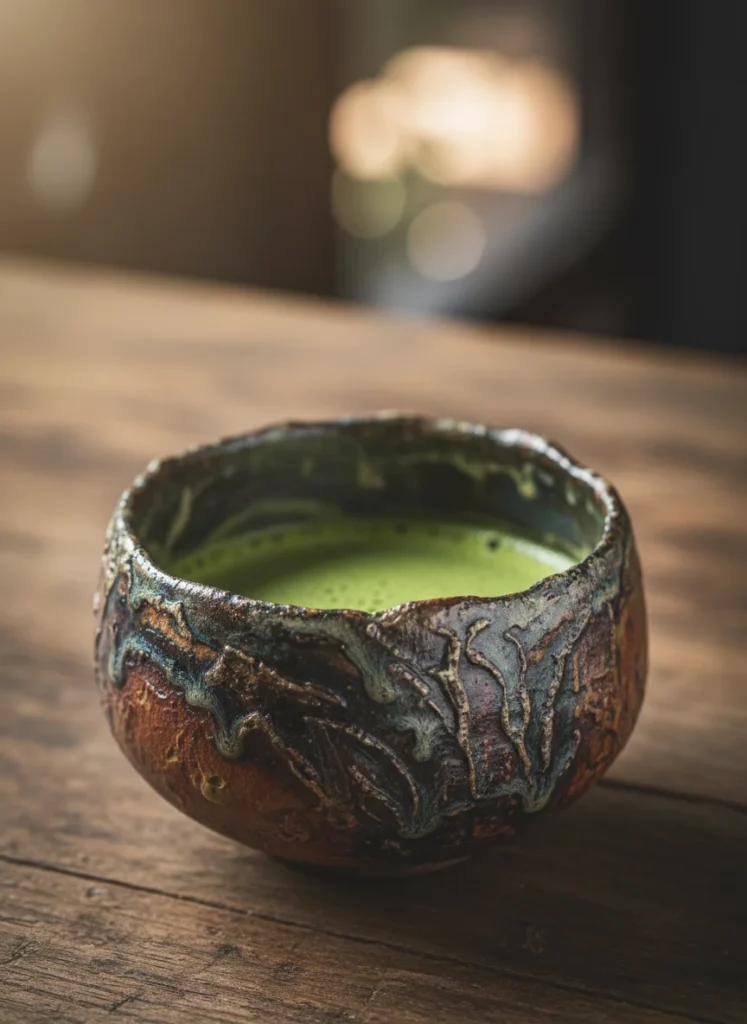
- Choose wood-fired if you value organic beauty, natural variation, and the connection to Song Dynasty tradition. Wood-fired pieces are living objects — no two are alike, and the patterns tell a story of fire, ash, and atmosphere that no other method can replicate.
- Choose electric kiln if you prefer consistency, affordability, and reliable quality. Electric kiln pieces are excellent for daily tea practice — they are beautiful, functional, and more accessible in price.
- Collect both — Many tea enthusiasts start with electric kiln pieces for daily use and acquire wood-fired pieces for special occasions. The handcrafted tea cups in our collection at potalastore include both types, each clearly labeled.
For the Japanese tea tradition, the most important thing is authenticity — whether wood-fired or electric kiln, genuine Jian Zhan should be made from the iron-rich clay of Jianyang using traditional glaze formulas, not mass-produced imitations with painted-on patterns.
❓ Frequently Asked Questions About Wood-Fired vs. Electric Kiln Jianzhan
❓ Are electric kiln Jian Zhan “fake”?
No. Electric kiln Jian Zhan can be fully authentic as long as they use the correct Jianyang clay and traditional iron-rich glaze formulas. The firing method is different, but the materials and basic process are the same. “Fake” Jian Zhan refers to pieces made with non-Jianyang clay, painted patterns, or other deceptive practices.
❓ Why are wood-fired Jian Zhan so much more expensive?
Wood firing requires 3–5 days of continuous labor, enormous quantities of pine wood, and produces a low yield — often only 10–30% of pieces emerge without cracks or defects. The labor, material cost, and risk all contribute to higher prices.
❓ Can electric kilns produce Yohen (曜变) patterns?
Currently, no. The Yohen pattern — the rarest of all Jian Zhan effects, showing circular iridescent halos — has never been reliably reproduced in an electric kiln. The extreme and fluctuating reduction atmosphere of a dragon kiln appears to be essential for the complex crystallization that creates Yohen effects.
❓ How can I tell if my Jian Zhan is wood-fired or electric kiln?
Look for these markers: wood-fired pieces often have natural ash marks, slightly textured (non-glassy) surfaces, varied and organic patterns, and sometimes wadding marks on the foot. Electric kiln pieces tend to have glassy, highly reflective surfaces, uniform patterns, and no ash effects. When in doubt, ask the seller directly — reputable dealers will always disclose the firing method.
The Modern Revival of Wood-Fired Jianzhan
After centuries of decline following the fall of the Song Dynasty, wood-fired Jian Zhan experienced a remarkable revival beginning in the 1980s, when ceramicists in Jianyang began reconstructing dragon kilns and rediscovering the traditional firing techniques. Today, several active dragon kilns operate in the Jianyang area, and their masters produce wood-fired pieces that — while not identical to Song Dynasty originals — capture much of the organic beauty and natural variation that made Jian Zhan famous.
The revival has also created a new appreciation for the differences between firing methods. Where once electric kiln pieces were dismissed as inferior, many tea practitioners now recognize that both methods have legitimate value. The range of Tenmoku glaze patterns available today — from electric kiln hare’s fur to wood-fired oil spots — gives tea lovers more choices than ever before.
What has not changed is the fundamental truth that wood firing remains the gold standard for the most complex and unpredictable patterns. The dragon kiln’s flame, ash, and atmosphere create effects that no electric kiln can replicate — and this is why wood-fired pieces continue to command the highest prices and the deepest respect from collectors and tea masters alike.
📚 References
Chen Xianqiu, “Crystallization Mechanisms in Jian Ware Glazes,” Journal of Chinese Ceramics, Vol. 42, 2014.
Robert D. Mowry, Hare’s Fur, Tortoiseshell, and Partridge Feathers: Chinese Brown- and Black-Glazed Ceramics, 400–1400, Harvard Art Museums, 1996.
Li Zhiyan and Cheng Wen, Chinese Ceramics: From the Paleolithic Period through the Qing Dynasty, Yale University Press, 2010.
Updated June 2026. Research on reduction atmosphere effects continues, with new spectroscopic techniques revealing how flame dynamics influence crystallization pathways.
Ready to find the perfect Jian Zhan for your tea practice? Explore our curated collection at potalastore — from traditional wood-fired masterpieces to reliable electric kiln pieces for daily use.


