

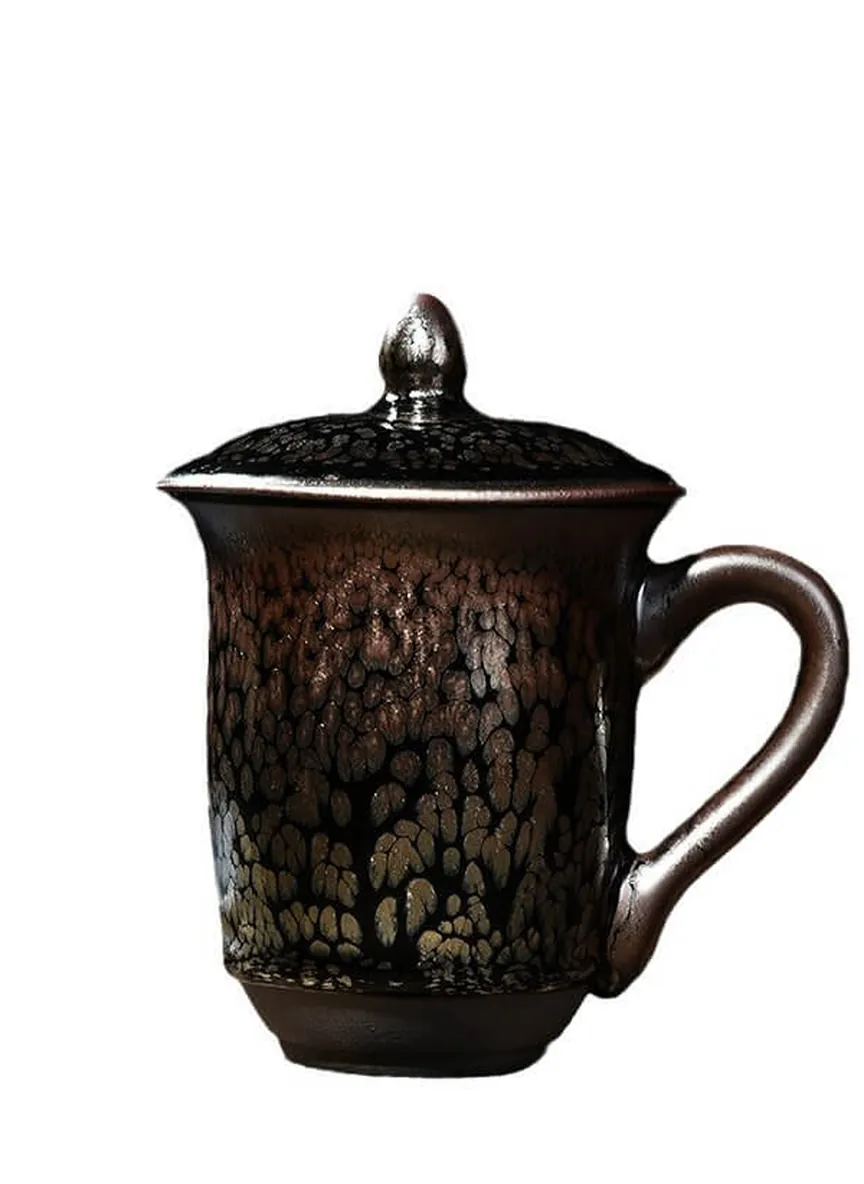
If you’re shopping for a Tenmoku tea cup and feel overwhelmed by the options, you’re not alone. According to Victoria and Albert Museum, ceramic conservation provides additional context on traditional firing techniques. According to ScienceDirect ceramic research, ceramic science studies provides additional context on traditional firing techniques. According to Metropolitan Museum of Art, Chinese ceramics research provides additional context on traditional firing techniques. Between the glaze patterns, sizes, shapes, and price ranges, choosing the right Jian Zhan teacup can feel like learning a new language. After helping thousands of tea lovers at ZenTeaCup find their perfect match, we’ve distilled the selection process into a clear, practical guide — so you can skip the guesswork and start brewing.
The right Tenmoku teacup depends on three things: what you drink, how you brew, and what draws your eye. Once you understand how glaze type, cup size, and shape interact with your tea routine, the choice becomes surprisingly simple.
Contents
- Understanding Tenmoku Glaze Patterns: Which One Speaks to You?
- Choosing the Right Cup Size for Your Tea Ritual
- Cup Shape and How It Affects Your Tea
- Open Rim (Kou Kou / 敞口)
- Straight Rim (Zhi Kou / 直口)
- Constricted Rim (Shou Kou / 收口)
- What to Look for When Examining a Tenmoku Cup
- Pairing Your Cup with the Right Tea
- Budget and Value: What to Expect at Different Price Points
- ❓ Frequently Asked Questions
- Can I use a Tenmoku tea cup every day?
- How do I know if a Tenmoku cup is food-safe?
- Should I choose wood-fired or electric-fired Jian Zhan?
- What’s the difference between Jian Zhan and Tenmoku?
- ❓ How do I know if my tenmoku cup is authentic?
- ❓ Can I put my tenmoku cup in the dishwasher?
- ❓ What tea tastes best in a tenmoku cup?
- 📚 References
Understanding Tenmoku Glaze Patterns: Which One Speaks to You?
Tenmoku glaze patterns are the first thing most people notice — and often the hardest thing to choose between. Each pattern forms naturally when iron-rich glaze crystallizes at around 1300°C (2370°F) during reduction firing, meaning no two cups are ever identical.
Here’s a breakdown of the four main glaze categories and what makes each one distinct:
| Glaze Pattern | Visual Character | Best For | Price Range (USD) |
|---|---|---|---|
| Hare’s Fur (Tuhao) | Fine radial streaks resembling rabbit fur, usually silver or golden | Everyday tea drinking, first-time buyers | $30–$80 |
| Oil Spot (Yuteki) | Round metallic droplets scattered across the glaze surface | Collectors, special occasions, gifting | $70–$150 |
| Partridge Feather | Irregular speckled spots resembling partridge plumage | Experienced collectors, display pieces | $100–$250 |
| Yohen (曜変) | Iridescent color shifts that change under different lighting angles | High-end collectors, investment | $200–$500+ |
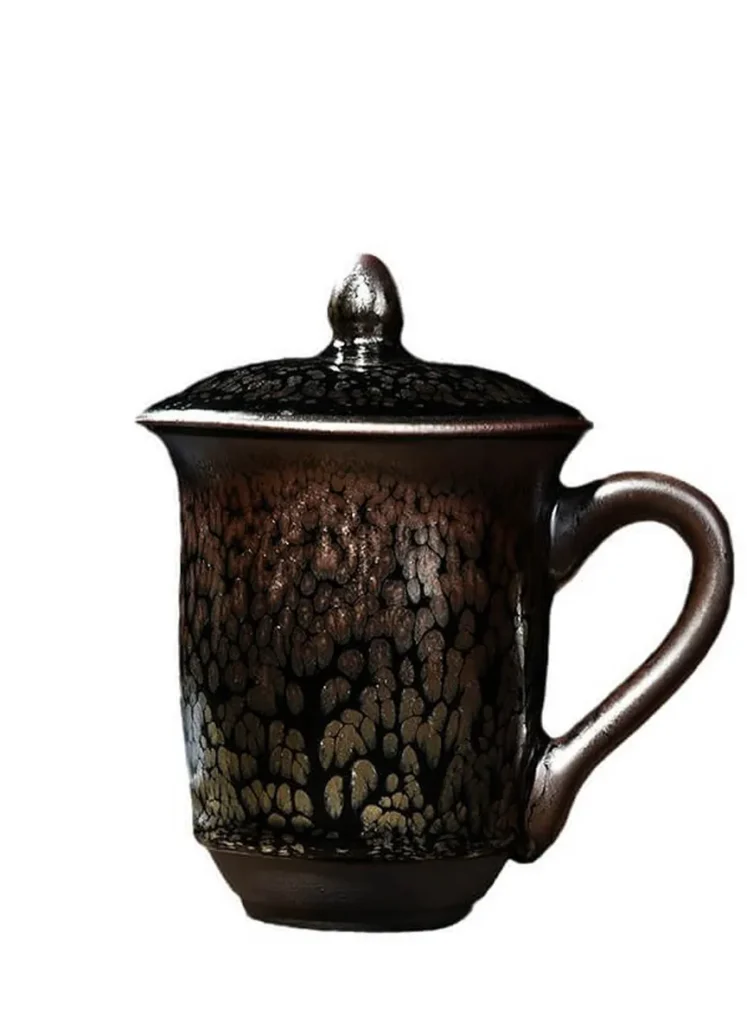
For beginners, hare’s fur is the safest starting point. It’s the most widely available pattern, the most affordable, and — perhaps most importantly — it seasons beautifully over time. As you use the cup daily, the fine streaks develop a deeper luster, making your teacup truly one of a kind.
Oil spot cups, on the other hand, make a stronger visual statement. The scattered metallic droplets catch light in a way that feels almost magical, which is why they’re popular as gifts and display pieces. If you find yourself drawn to a cup with bold, eye-catching glaze, oil spot is likely your match.
One thing we’ve noticed after years of working with these cups: people often end up with more than one. That’s perfectly normal — a hare’s fur cup for daily use and an oil spot for weekend tea sessions is a common and sensible combination.
Choosing the Right Cup Size for Your Tea Ritual
Tenmoku tea cups range from about 40 ml (1.4 fl oz) to 180 ml (6 fl oz), and the size you pick should match how you actually drink tea — not how you imagine you might.
Here’s a practical guide to cup sizes:
- 40–60 ml (tasting cups): Ideal for gongfu tea sessions where you brew multiple short infusions. The small volume keeps each serving at the perfect temperature and encourages savoring each sip. If you practice gongfu cha regularly, this is your size.
- 80–120 ml (standard cups): The sweet spot for most tea drinkers. Large enough to hold a comfortable serving, small enough to keep tea warm through a slow afternoon. This is the range we recommend for anyone unsure where to start.
- 130–180 ml (sharing bowls): Best for serving guests or drinking larger quantities of tea at once. These bigger bowls also showcase glaze patterns beautifully because there’s more surface area to catch the light.
One common mistake we see: people assume bigger is always better. But a Tenmoku cup’s heat retention works best with smaller volumes. The thick iron-rich walls absorb heat and radiate it back into the tea, which is far more effective when the cup isn’t mostly empty. A 100 ml cup filled to the brim will keep your tea warmer longer than a 180 ml cup that’s only half full.
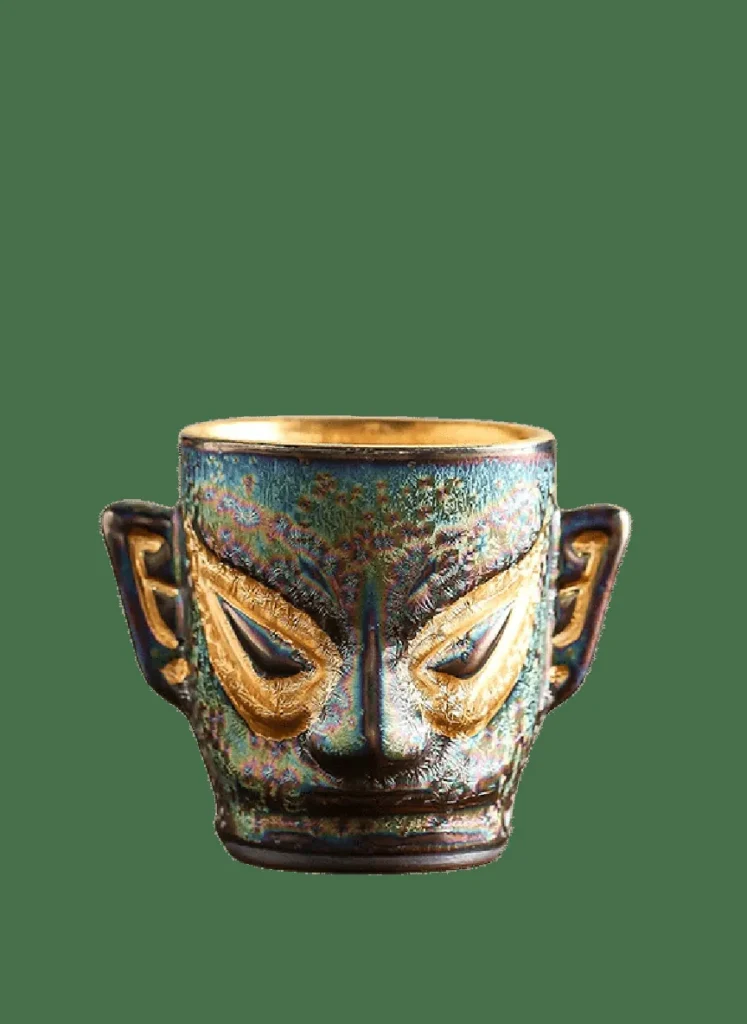
For a deeper dive into how cup dimensions affect your experience, check out our Jian Zhan cup size guide.
Cup Shape and How It Affects Your Tea
Jian Zhan cups come in several traditional shapes, and while aesthetics matter, shape also influences how your tea tastes and smells. The three most common shapes each have distinct advantages:
Open Rim (Kou Kou / 敞口)
An open rim cup flares outward at the top, like a small bowl. This shape releases aromas quickly, making it perfect for fragrant teas like oolong and jasmine green tea. The wider opening also cools tea slightly faster, which some drinkers prefer. If you enjoy smelling your tea before each sip, an open rim shape enhances that experience.
Straight Rim (Zhi Kou / 直口)
Straight rim cups have nearly vertical walls. They concentrate heat and aroma better than open rim cups, which makes them ideal for black tea, pu-erh, and darker oolongs where you want to preserve warmth and depth. The narrow opening also means less heat escapes, keeping your tea at drinking temperature longer.
Constricted Rim (Shou Kou / 收口)
With a rim that curves slightly inward, constricted rim cups trap both heat and fragrance inside the bowl. Tea enthusiasts who drink aged pu-erh or roasted oolong often prefer this shape because it directs the aroma upward toward your nose as you sip. The trade-off is that the narrower opening makes it harder to appreciate the glaze pattern while drinking.
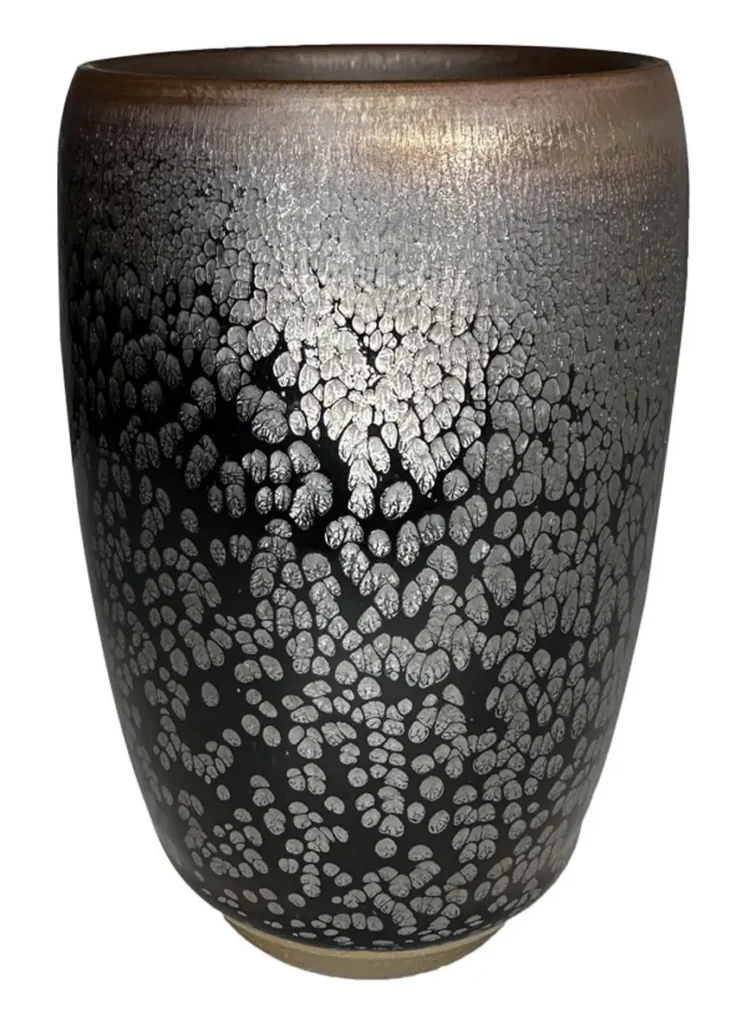
Our recommendation for first-time buyers: start with an open rim shape. It’s the most versatile — good for most tea types, easy to hold, and gives you a clear view of the glaze. Once you develop preferences for specific teas, you can add shapes that complement those brews.
What to Look for When Examining a Tenmoku Cup
Whether you’re browsing online or holding a cup in person, these five checkpoints will help you assess quality:
- Foot Ring (Kōdai): The unglazed ring at the base should show a dark, iron-rich clay body. If the foot ring looks pale or white, the clay likely doesn’t contain enough iron — a red flag for authenticity. Genuine Jian Zhan clay from Jianyang has a distinctive dark gray to nearly black color.
- Weight: An authentic Tenmoku cup feels substantial for its size. A standard 100 ml cup typically weighs 80–150 grams. If it feels unusually light, it may be made from inferior clay or mass-produced with thinner walls.
- Glaze Texture: Run your fingernail gently across the glaze. Authentic crystallized glaze has a subtly textured surface — not perfectly smooth like glass, and not rough like sand. The texture should feel like very fine silk with slight variation.
- Interior Glaze Pool: Most Tenmoku cups have a slightly thicker glaze pool at the bottom interior. This is normal and actually desirable — it’s where the most dramatic crystallization patterns appear. Excessive pooling that creates a sharp ridge, however, may indicate rushed craftsmanship.
- Sound Test: Tap the rim gently with a fingernail or wooden stick. An authentic Jian Zhan produces a clear, resonant ring that sustains for 2–3 seconds. A dull thud suggests the clay body may be too porous or improperly fired.
For a more detailed authentication guide, see our article on how to identify fake Jian Zhan.
Pairing Your Cup with the Right Tea
Different teas interact with Tenmoku glaze in different ways, and understanding these interactions can enhance your drinking experience significantly.
| Tea Type | Recommended Cup | Why It Works |
|---|---|---|
| Green tea | Open rim, 60–80 ml, hare’s fur glaze | Delicate aromas escape easily; smaller size prevents over-steeping |
| Oolong | Open or straight rim, 80–120 ml, any glaze | Versatile size for multiple infusions; glaze patterns complement the tea’s golden color |
| Black tea | Straight rim, 100–120 ml, oil spot glaze | Concentrated warmth; metallic oil spot reflections enhance the tea’s amber hue |
| Pu-erh (aged) | Constricted rim, 80–120 ml, dark glaze | Traps earthy aromas; iron-rich glaze is believed to soften the water |
| Matcha | Open rim, 120–180 ml, any glaze | Larger volume accommodates whisking; wide rim allows foam to form |
While many tea lovers report that the iron-rich glaze in authentic Jian Zhan cups softens water and enhances tea flavor, these effects are based on traditional belief and individual experience rather than conclusive scientific evidence. We encourage you to treat these qualities as part of the ritual experience rather than guaranteed outcomes.
Budget and Value: What to Expect at Different Price Points
Understanding what drives price helps you avoid overpaying — and recognize genuine value when you see it.
- Under $50: Entry-level handmade cups, typically hare’s fur pattern from electric kilns. Good for everyday use and learning the basics of Tenmoku. Be cautious of anything priced below $20 — it may be a mass-produced imitation.
- $50–$120: The mid-range sweet spot. You’ll find quality hare’s fur and entry-level oil spot cups from reputable workshops. Most tea drinkers find everything they need in this range.
- $120–$250: Premium oil spot and partridge feather patterns, often wood-fired. The glaze quality and crystallization at this level are noticeably more refined.
- $250+: Master-crafted pieces with rare glaze patterns (yohen, exceptional partridge feather). These are collector items where the value lies in artistry and rarity as much as functionality.
A practical tip from our experience: the best value for most people lies in the $50–$120 range. You get authentic Jian Zhan craftsmanship with a glaze pattern that will develop character over years of use. The jump in visual quality from a $40 cup to a $90 cup is substantial; the jump from $90 to $200 is more subtle.
Curious about why some cups cost so much? Our guide on why Jian Zhan tea cups are expensive breaks down the real costs behind the craft.
❓ Frequently Asked Questions
Can I use a Tenmoku tea cup every day?
Absolutely. In fact, daily use is the best way to season your cup. Regular tea rinsing gradually builds a glossy patina on the interior glaze, which many tea lovers believe enhances the flavor over time. Just rinse with hot water after each use and let it air dry — no soap needed.
How do I know if a Tenmoku cup is food-safe?
Authentic Jian Zhan from reputable sources uses natural mineral glazes fired above 1300°C, which vitrifies the surface and makes it safe for food contact. Our article on Tenmoku glaze food safety covers this topic in detail. When in doubt, buy from sellers who can provide origin documentation.
Should I choose wood-fired or electric-fired Jian Zhan?
Wood-fired cups have more natural variation in glaze color and often carry subtle ash effects that electric kilns can’t replicate — but they’re also more expensive and harder to find. Electric-fired cups offer more consistent results at a lower price. For your first cup, electric-fired is a practical choice. For a deeper comparison, see our wood-fired vs electric-fired guide.
What’s the difference between Jian Zhan and Tenmoku?
“Jian Zhan” is the Chinese name for tea cups made in Jianyang, Fujian, using traditional iron-rich clay and reduction firing. “Tenmoku” is the Japanese term, derived from Tianmu Mountain, where Zen monks first encountered these cups. Today, both names are used interchangeably in English, though “Jian Zhan” more specifically refers to cups from the original Jianyang kilns. Learn more in our beginner’s guide to Tenmoku and Jian Zhan.
❓ How do I know if my tenmoku cup is authentic?
Look for an unglazed foot ring showing dark, iron-rich clay, metallic luster under light that shifts with viewing angle, and subtle asymmetry indicating hand-forming. See the handmade tenmoku identification guide for detailed authentication steps.
❓ Can I put my tenmoku cup in the dishwasher?
No. Always hand-wash with warm water only. Dishwasher detergent and high-pressure water can damage the glaze patina and may cause micro-cracking. The new tenmoku owner guide provides complete care instructions.
❓ What tea tastes best in a tenmoku cup?
Oolong and aged pu-erh are the classic pairings. The iron-rich glaze softens tannins and enhances aroma. Read the oolong-tenmoku pairing guide for the science behind this.
📚 References
- Jian Ware and Song Dynasty Tea Culture: Historical overview of Jian kiln ceramics and their role in Chinese tea traditions. The Metropolitan Museum of Art
- Chinese Intangible Cultural Heritage — Jianzhan Firing Technique: Official recognition of traditional Jian Zhan firing methods. Source: Ministry of Culture and Tourism, People’s Republic of China
- Ceramic Tableware Safety Standards: FDA guidance on lead and cadmium limits for ceramic foodware. U.S. Food and Drug Administration
Find the tenmoku cup that speaks to you — browse these cups for authentic, artisan-crafted teaware.


