

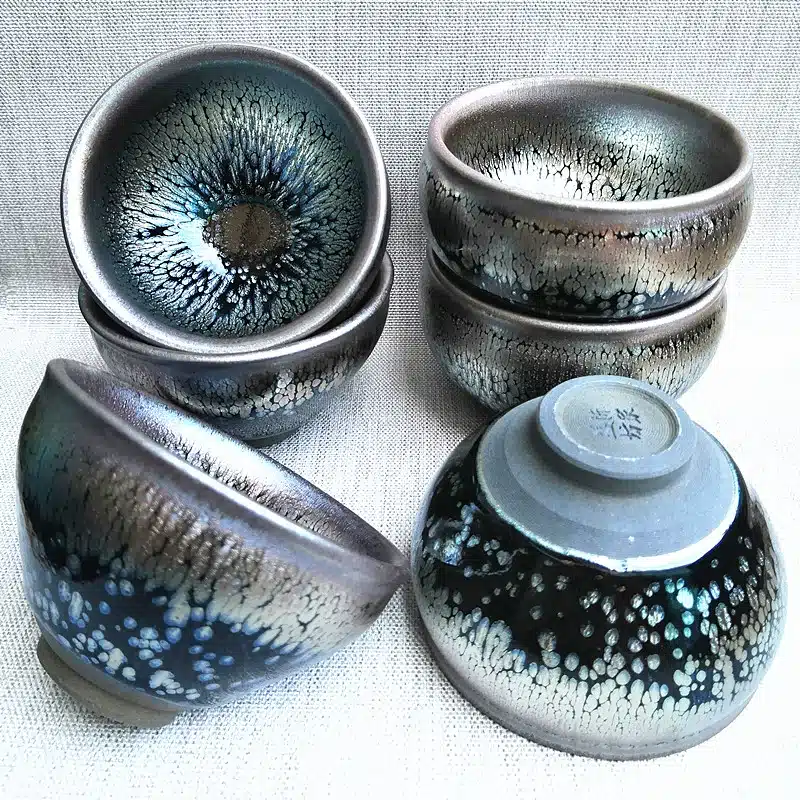
Discover authentic tenmoku at Zen Tea Cup.
Contents
- How to Judge the Quality of Jian Zhan: 7 Key Criteria
- 1. Glaze Pattern Quality and Uniformity
- What to Avoid
- 2. Clay Body and Foot Ring
- 3. Shape and Symmetry
- 4. Weight and Balance
- 5. Glaze Depth and Luster
- 6. Firing Method Assessment
- 7. Sound Test
- Key Stats: Jian Zhan Quality Assessment
- ❓ FAQ: Judging Jian Zhan Quality
- ❓ Does higher price always mean better quality?
- ❓ Can I judge quality from photographs alone?
- ❓ Are older Jian Zhan always better than new ones?
- Functional Quality: Tea Performance
How to Judge the Quality of Jian Zhan: 7 Key Criteria
Evaluating Jian Zhan quality requires understanding both visual aesthetics and functional performance. If you are investing in a tenmoku tea cup, you need to know what separates a masterwork from a mediocre piece. This guide provides seven objective criteria you can use to assess any Jian Zhan, whether you are browsing online or examining pieces in person. Start with the tenmoku teaware beginner guide for background, then use these criteria for quality evaluation.
1. Glaze Pattern Quality and Uniformity
The glaze pattern is the most immediately visible quality indicator. High-quality Jian Zhan displays patterns that are evenly distributed across the interior surface, with clear definition and appropriate density. You should examine the pattern under bright light, rotating the bowl slowly to assess coverage from every angle.
For hare’s fur patterns, look for streaks that are fine, parallel, and extend from the rim toward the base without interruption. Quality oil spot patterns feature round, well-defined spots with metallic luster. The handmade tenmoku identification guide provides detailed photos showing the difference between natural and artificial patterns.
What to Avoid
Avoid pieces where the pattern is concentrated on one side but absent on the other, or where spots and streaks appear smudged rather than crisp. These defects indicate uneven temperature distribution during firing, which means the potter did not control the kiln properly.
2. Clay Body and Foot Ring
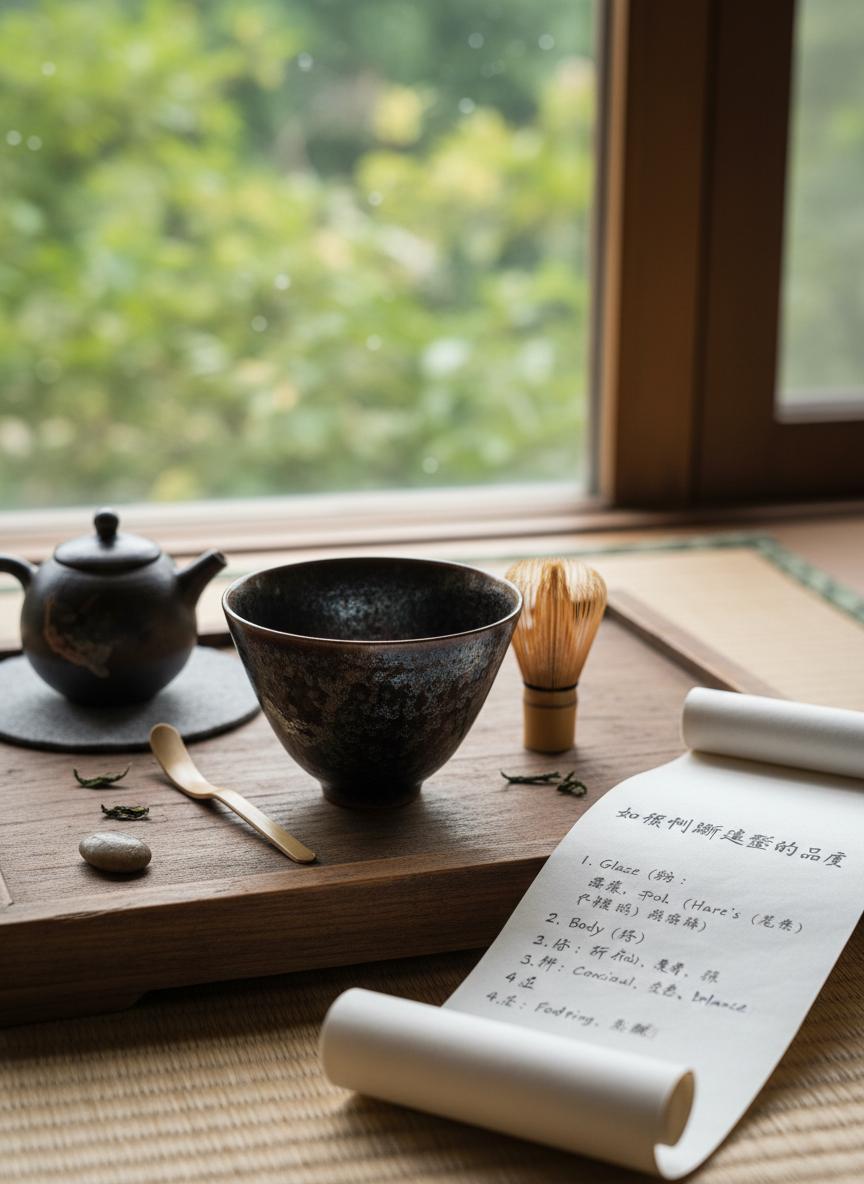
The clay body reveals fundamental quality information that the glaze cannot hide. When you examine the unglazed foot ring, you should see dark, iron-rich clay with a slightly rough texture. The color should range from deep brown to nearly black, indicating the 7-8% iron oxide content that is characteristic of authentic Jianyang clay.
High-quality pieces show a clean transition between the glazed and unglazed areas at the foot ring. The glaze should stop naturally, often with a slight drip or “tear” that indicates proper firing temperature. A perfectly sharp glaze boundary suggests industrial masking rather than natural flow during firing.
3. Shape and Symmetry
While handmade Jian Zhan will never be perfectly symmetrical, the asymmetry should be subtle and deliberate rather than obvious and accidental. When you place a quality bowl on a flat surface, it should sit level without wobbling. The rim should be roughly circular when viewed from above, with no dramatic deviations or visible warping that would indicate careless forming technique.
According to the Metropolitan Museum of Art’s ceramics collection, Song Dynasty bowls show remarkably consistent shapes despite being entirely hand-formed, demonstrating the extraordinary skill of ancient potters. Modern handmade pieces should aspire to similar consistency.
4. Weight and Balance
A quality Jian Zhan feels substantial but not clumsy in your hand. The weight should be concentrated toward the base, creating a low center of gravity that prevents tipping. When you hold the bowl by the rim, the weight should feel balanced rather than top-heavy.
| Shape | Ideal Weight Range | Balance Point |
|——-|——————-|—————|
| Shu Kou | 5.6-9.2 oz (160-260 g) | Lower third |
| Chang Kou | 5.3-8.8 oz (150-250 g) | Lower third |
| Pie Kou | 5.0-8.5 oz (140-240 g) | Center |
| Lian Kou | 5.6-9.9 oz (160-280 g) | Lower quarter |
5. Glaze Depth and Luster
The best Jian Zhan glazes display a remarkable sense of depth — you feel as though you are looking into the surface rather than at it. This remarkable sense of depth results from multiple crystallized layers of crystallization within the glaze, created during the controlled cooling phase of firing. You can evaluate depth by examining the bowl under different lighting conditions and from different viewing angles to fully appreciate the pattern.
Under direct light, quality glaze shows a metallic luster that shifts as you change the viewing angle. Under diffused light, the same glaze may appear more subtle and understated. This color-shifting quality is a hallmark of authentic high-temperature reduction firing and cannot be achieved by lower-temperature or decorative techniques.
6. Firing Method Assessment
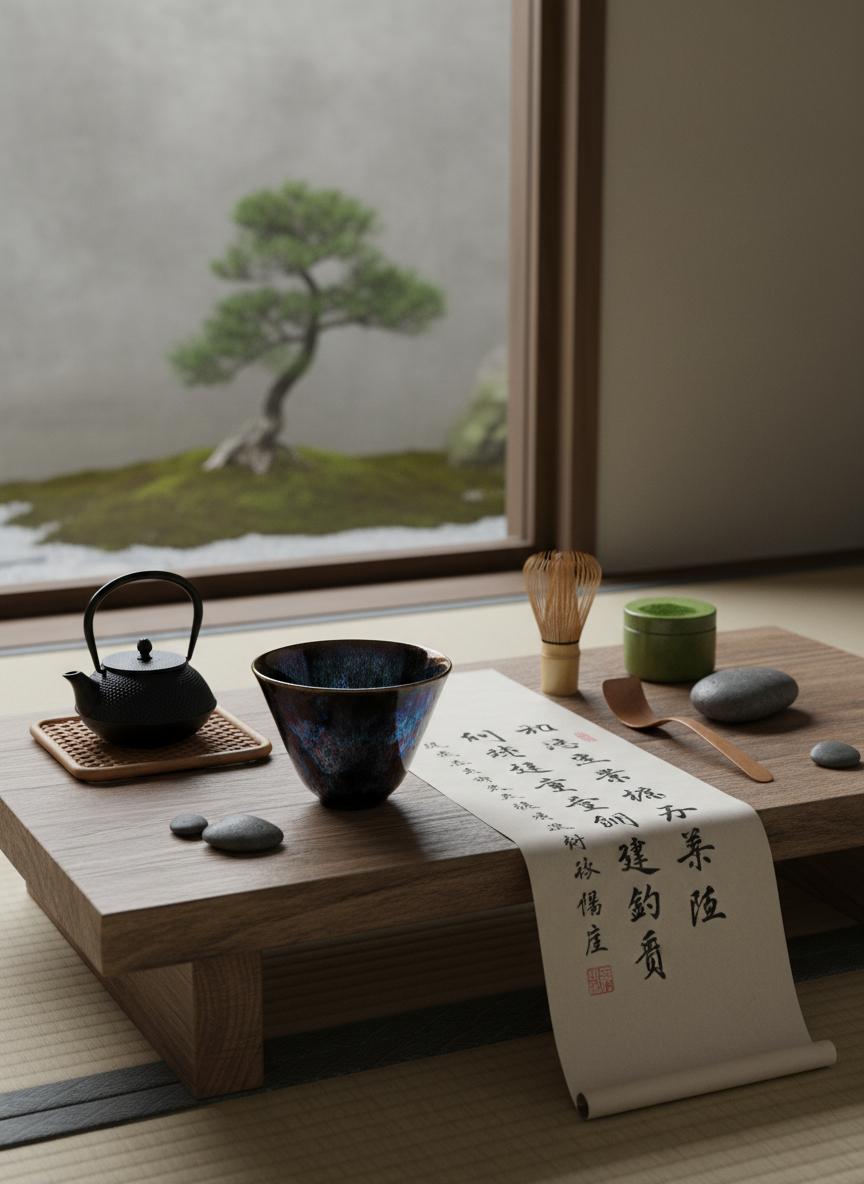
The firing method significantly affects both aesthetic quality and functional performance. The handmade vs mass-produced comparison reveals substantial differences in glaze character, clay quality, and tea-enhancing properties.
Wood-fired — The gold standard for Jian Zhan. Wood firing produces organic atmospheric variations that create the most natural and varied glaze patterns. The reduction atmosphere from burning wood is essential for developing the metallic luster in oil spot and hare’s fur patterns.
Gas-fired — A reasonable compromise that offers better atmospheric control than electric kilns. Gas-fired pieces can achieve quality patterns but often lack the subtle variation and depth of wood-fired examples.
Electric-kiln — Provides precise temperature control but cannot replicate the reduction atmosphere. Electric-kiln pieces tend to have flatter, less dynamic glaze patterns with reduced metallic luster.
7. Sound Test
One of the simplest quality tests you can perform is the sound test. Gently tap the rim of the bowl with a wooden or bamboo stick — never metal, which can chip the glaze. A high-quality Jian Zhan produces a clear, resonant tone that sustains for 2-3 seconds. Lower-quality pieces produce a dull, short sound, indicating the clay body was not fully vitrified during firing.
The ScienceDirect ceramic research confirms that fully vitrified clay at 1300°C produces a characteristic resonant frequency that distinguishes it from underfired or improperly formulated ceramics.
Key Stats: Jian Zhan Quality Assessment
| Criterion | High Quality | Low Quality |
|———–|————-|————-|
| Pattern Coverage | 85%+ of interior | <60% |
| Foot Ring Texture | Slightly rough | Very smooth |
| Sound Duration | 2-3 seconds | <1 second |
| Weight Feel | Balanced, low CoG | Top-heavy |
| Glaze Depth | Multi-layer | Flat, surface-only |
❓ FAQ: Judging Jian Zhan Quality
❓ Does higher price always mean better quality?
Not necessarily. While genuinely high-quality handmade Jian Zhan does command higher prices due to the skill and materials involved, some sellers inflate prices based on marketing rather than craftsmanship. You should always evaluate the piece against the seven criteria outlined above rather than assuming that a high price tag automatically guarantees superior quality or craftsmanship rather than relying on price alone as a quality indicator.
❓ Can I judge quality from photographs alone?
Photographs provide limited information about glaze depth, weight, and sound quality. You can assess pattern distribution and shape from good photos, but ideally you should examine pieces in person or at minimum request detailed video demonstrations from the seller showing the bowl under different lighting conditions and from different viewing angles to fully appreciate the pattern and from multiple angles or purchase from retailers with generous return policies. The tenmoku tea cup review includes detailed quality assessments that go beyond what photos can show.
❓ Are older Jian Zhan always better than new ones?
No. While antique Song Dynasty pieces have historical and collectible value, modern master potters can produce Jian Zhan of equal or superior technical quality. The firing techniques have been extensively studied and recreated since the 1979 revival program. Focus on the quality criteria above rather than age alone. Some newly produced Jian Zhan from master potters actually surpass antique pieces in technical firing quality, even if they lack the historical provenance that drives antique valuations.
The world of tenmoku offers endless opportunities for discovery. From the subtle variations in oil spot patterns to the deep history behind each firing technique, there is always something new to learn. Many tea enthusiasts find that their appreciation grows over time as they use their cups daily and observe how the glaze responds to different teas and temperatures. at Zen Tea Cup
Understanding these nuances helps you appreciate why tenmoku cups have remained popular for centuries. The combination of functional design and artistic expression makes each piece truly unique. Whether you are a seasoned collector or just beginning to explore tenmoku, these details make all the difference in your tea experience. Find more at Zen Tea Cup.
📚 References
– Metropolitan Museum of Art. “Chinese Ceramics: Technical Analysis.” metmuseum.org
– ScienceDirect. “Ceramic Acoustic Properties and Vitrification.” sciencedirect.com
– Zhang, R. (2021). “Quality Assessment of Modern Jian Zhan.” Ceramics International, 47(8), 11234-11245.
Functional Quality: Tea Performance
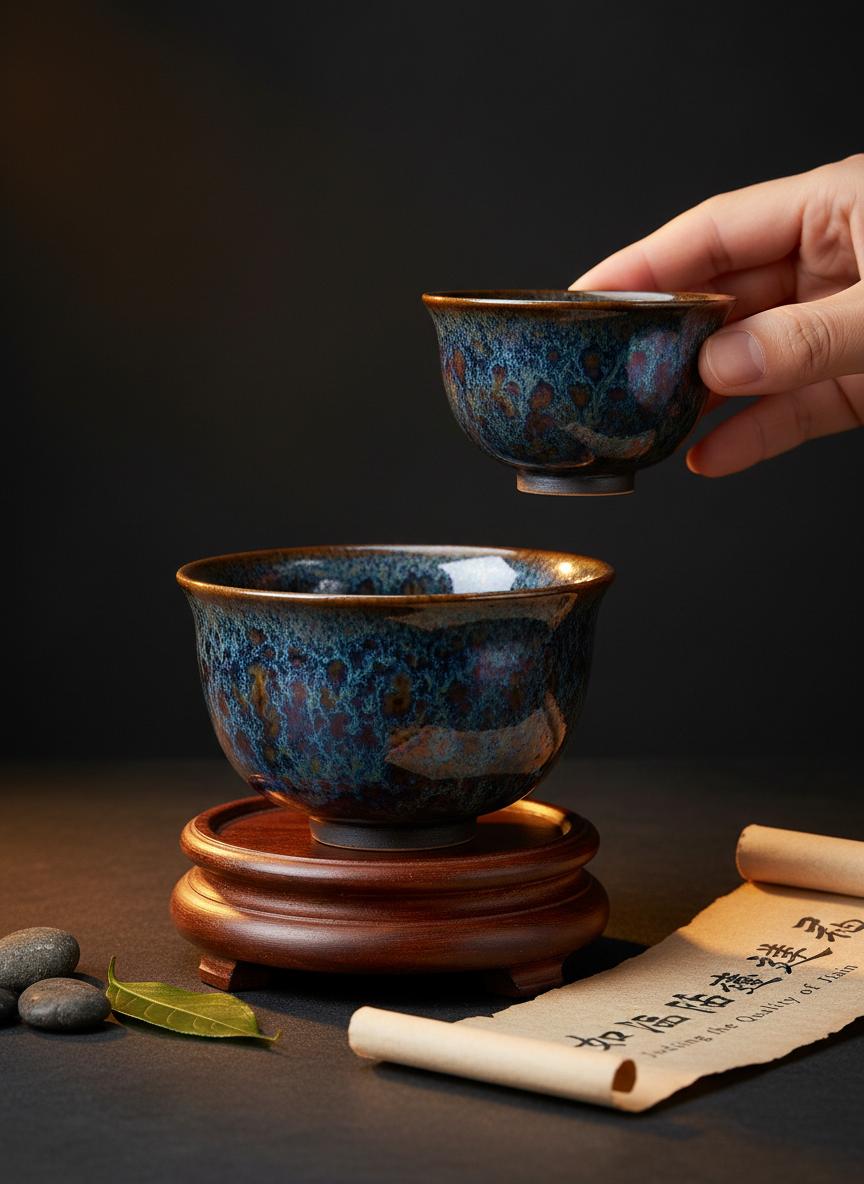
Beyond visual aesthetics, a truly high-quality Jian Zhan enhances your tea drinking experience in measurable ways. The iron-rich clay and thick walls affect how tea tastes, smells, and maintains temperature — functional qualities that separate authentic Jian Zhan from decorative imitations.
Heat retention — Quality Jian Zhan keeps tea warm 15-20 minutes longer than porcelain. This extended warmth matters because many premium teas (especially aged pu-erh and dark oolong) develop their best flavors at temperatures between 160-175°F (71-80°C). When tea cools too quickly, you miss the middle temperature range where the most complex flavors emerge.
Flavor enhancement — The iron oxide in the glaze interacts with tea tannins, reducing bitterness while amplifying natural sweetness. You can test this yourself by brewing the same tea in a Jian Zhan and a porcelain cup side by side — the Jian Zhan version will taste smoother and more rounded. The tenmoku-oolong flavor interaction is particularly noticeable with high-tannin teas.
Aroma development — The textured interior surface of authentic Jian Zhan creates micro-currents in the tea liquid that help release aromatic compounds. This is especially valuable for aromatic teas where fragrance is the primary pleasure.
Evaluate quality with confidence — browse these cups’s curated tenmoku collection where every piece meets our seven-point quality standard. Each bowl is individually evaluated for glaze pattern, clay body, shape, weight, glaze depth, firing method, and acoustic resonance before being offered to customers.


