

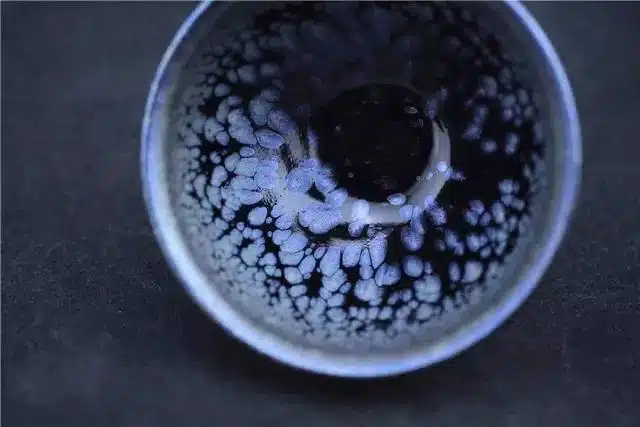
Discover authentic tenmoku at Zen Tea Cup.
Contents
- Why Partridge Spot Jian Zhan Is the Hardest to Fire
- The Science Behind Partridge Spot Formation
- Temperature Precision
- Atmospheric Control
- Historical Success Rates
- Modern Firing Challenges
- Why Electric Kilns Struggle
- How to Identify Authentic Partridge Spot
- Spot Shape and Distribution
- Metallic Luster
- The Value of Partridge Spot Jian Zhan
- Key Stats: Partridge Spot Firing
- ❓ FAQ: Partridge Spot Jian Zhan
- ❓ Why is partridge spot rarer than oil spot or hare’s fur?
- ❓ Can modern potters reproduce Song Dynasty partridge spot?
- ❓ How can I tell if a partridge spot bowl is hand-painted?
- Partridge Spot and Tea: A Functional Perspective
Why Partridge Spot Jian Zhan Is the Hardest to Fire
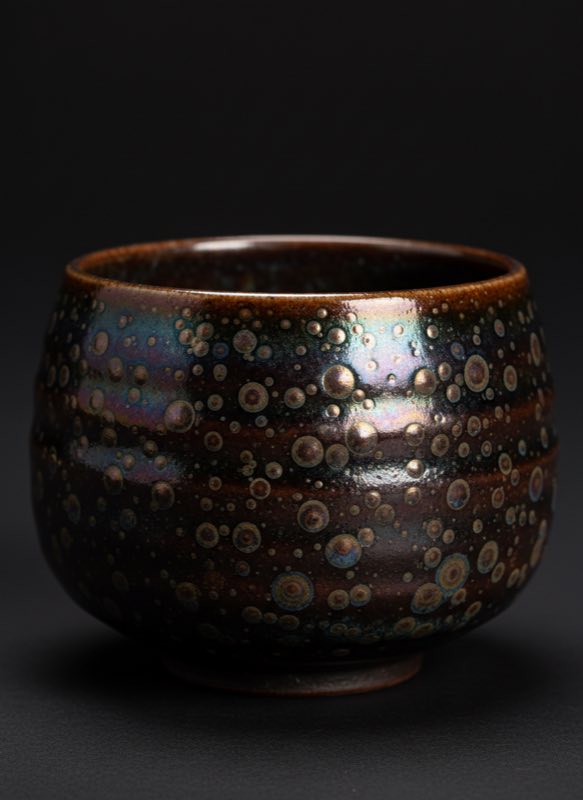
Partridge Spot (Gu Ban 鹧鸪斑) is widely considered the most difficult glaze pattern to achieve in Jian Zhan firing. If you have ever wondered why authentic partridge spot bowls command the highest prices at auction, the answer lies in the extraordinary precision required during the kiln-firing process. You can learn about all tenmoku glaze patterns in the tenmoku teaware beginner guide.
The partridge spot pattern resembles the speckled feathers of a partridge bird — round, silvery-white spots distributed across a dark iron-rich glaze background. Each spot must be perfectly formed, evenly distributed, and display the characteristic metallic luster that distinguishes genuine partridge spot from inferior imitations.
The Science Behind Partridge Spot Formation
Creating partridge spot requires an incredibly narrow window of temperature and atmospheric conditions inside the kiln. The spots form when iron oxide crystals precipitate from the glaze melt during the cooling phase, but only within a specific temperature range of approximately 1180-1220°C (2156-2228°F).
Temperature Precision
If the kiln temperature exceeds 1220°C (2228°F), the iron crystals dissolve back into the glaze melt, producing a uniform dark surface without spots. If the temperature falls below 1180°C (2156°F), the crystals form too quickly and appear as rough, dull patches rather than the smooth, lustrous spots that define partridge spot. You can see why even a 40°C (72°F) variation — less than 3% of the total firing temperature — makes the difference between a masterpiece and a failure.
Atmospheric Control
The kiln atmosphere must shift from reduction (oxygen-poor) to oxidation (oxygen-rich) at precisely the right moment during cooling. This transition triggers the crystallization that creates the spots. In traditional wood-fired kilns, this atmospheric shift depends on the potter’s skill in managing fuel, damper positions, and air flow — variables that are extremely difficult to control with precision.
Historical Success Rates
During the Song Dynasty, master potters at the Jianyang kilns achieved partridge spot patterns in only 1-2% of their firings. According to archaeological research documented by the ScienceDirect ceramic materials studies, a typical firing of 1000 bowls might yield only 10-20 with acceptable partridge spot patterns, and perhaps 1-2 with truly exceptional quality.
This extraordinarily low success rate is not unique to partridge spot — all Jian Zhan firing is challenging — but the partridge spot pattern demands a level of precision that makes even experienced potters humble. You should understand that when you hold a partridge spot bowl, you are holding something that survived a process that rejected 98 out of every 100 pieces. This Song Dynasty partridge spot bowls were reserved for the imperial court and the highest-ranking officials. Common tea drinkers used simpler hare’s fur or oil spot patterns, which were easier to produce consistently.
Modern Firing Challenges
Even with modern electric kilns and computerized temperature controllers, achieving partridge spot remains exceptionally difficult. The handmade firing process still produces superior results because the subtle variations in wood-firing create more organic, natural-looking spot patterns.
Why Electric Kilns Struggle
Electric kilns provide precise temperature control but cannot replicate the complex atmospheric variations of wood-firing. The reduction-oxidation cycle that creates partridge spot depends on fluctuating oxygen levels that electric elements simply cannot produce. Some modern potters use gas kilns as a compromise, achieving better atmospheric control than electric but still falling short of wood-fired results. Some innovative potters have experimented with hybrid approaches, using gas kilns for the main firing and then introducing wood during the critical cooling phase to create the necessary atmospheric variation. These hybrid firings show promise but have not yet consistently achieved the consistency of traditional wood-firing methods.
How to Identify Authentic Partridge Spot
When evaluating a partridge spot Jian Zhan, you should look for several key indicators of authenticity and quality. The handmade tenmoku identification guide provides comprehensive authentication tips, but here are the partridge-spot-specific markers:
Spot Shape and Distribution
Authentic partridge spots are round or slightly oval, with well-defined edges that transition smoothly into the surrounding glaze. The spots should vary in size from 0.04 to 0.20 inches (1 to 5 mm) in diameter, with a natural distribution that avoids perfect regularity. Machine-printed or painted imitations show uniform spot sizes and mechanical distribution patterns.
Metallic Luster
When you tilt a genuine partridge spot bowl under light, the spots should display a silvery or golden metallic luster that shifts with the viewing angle. This optical effect results from the crystal structure of the iron oxide precipitates and cannot be replicated by surface painting or decals. The three-dimensional quality of authentic partridge spot is one of the most reliable authentication markers available to collectors and tea enthusiasts.
The Value of Partridge Spot Jian Zhan
The extreme difficulty of firing partridge spot directly translates into market value. At major auction houses like Christie’s, exceptional Song Dynasty partridge spot bowls have sold for over $1 million USD. Modern handmade partridge spot bowls from master potters typically range from $500 to $5,000 USD, depending on the quality and consistency of the pattern.
The Jian Zhan investment potential is strongest for partridge spot pieces because their rarity ensures continued appreciation. As traditional firing knowledge becomes scarcer and demand from international collectors grows, the value of authentic partridge spot bowls is likely to increase. If you are considering a partridge spot purchase, buying from a reputable source with verified provenance is essential. The market unfortunately contains many imitations, and the price difference between authentic and fake pieces can be thousands of dollars.
Key Stats: Partridge Spot Firing
| Metric | Value |
|——–|——-|
| Crystallization Temperature | 1180-1220°C (2156-2228°F) |
| Temperature Tolerance | ±20°C (±36°F) |
| Song Dynasty Success Rate | 1-2% |
| Modern Wood-Fire Success Rate | 3-5% |
| Spot Diameter | 0.04-0.20 in (1-5 mm) |
| Firing Duration | 8-12 hours |
❓ FAQ: Partridge Spot Jian Zhan
❓ Why is partridge spot rarer than oil spot or hare’s fur?
Partridge spot requires a much narrower temperature window for crystal formation — only about 40°C (72°F) compared to 80-100°C for oil spot patterns. Additionally, the atmospheric conditions must shift at exactly the right moment during cooling. This demanding combination of precise temperature control and exact atmospheric timing makes partridge spot far more difficult to achieve consistently.
❓ Can modern potters reproduce Song Dynasty partridge spot?
Modern potters can achieve partridge spot patterns, but they rarely match the quality of the finest Song Dynasty examples. The ancient potters had centuries of accumulated knowledge about their specific local clay and kiln conditions that modern practitioners are still working to fully understand. However, the best modern partridge spot bowls are genuinely impressive and represent the current state of the art.
❓ How can I tell if a partridge spot bowl is hand-painted?
Hand-painted spots lack the metallic luster and three-dimensional quality of authentic crystallized spots. When you examine a genuine partridge spot under magnification, you will see that each spot has depth — the crystal structure extends into the glaze layer. Painted spots sit flat on the surface and appear flat. Additionally, painted spots often show brush marks under close inspection.
📚 References
– ScienceDirect. “Iron Oxide Crystallization in Ceramic Glazes.” sciencedirect.com
– Christie’s. “Tenmoku and Jian Zhan Auction Results.” christies.com
– Li, Z. (2018). “The Partridge Spot Enigma: Song Dynasty Ceramic Technology.” Journal of Archaeological Science, 92, 45-58.
Whether you are new to the difficulty of firing the partridge spot jian zhan or looking to deepen your understanding, the key is to start with quality materials and consistent practice. Small adjustments in your approach can make a noticeable difference in your overall experience and enjoyment. at Zen Tea Cup
Partridge Spot and Tea: A Functional Perspective
Beyond its rarity and beauty, partridge spot Jian Zhan offers practical advantages for tea drinking. The crystallized iron oxide spots on the glaze surface create microscopic texture variations that interact with tea compounds in ways that smoother glazes cannot. When you brew tea in a partridge spot bowl, the slightly textured surface helps break the surface tension of the liquid, releasing aromatic compounds more effectively.
The iron content of the glaze also affects tea taste. Research suggests that the iron-rich surface of Jian Zhan can neutralize some bitter tannins in tea, producing a smoother, sweeter drinking experience. This effect is most noticeable with strongly tannic teas like aged pu-erh and dark oolongs. The partridge spot bowls are particularly effective with aged teas because the longer steeping times allow more interaction between the tea and the iron-rich glaze surface.
You should also consider the thermal properties of partridge spot bowls. The thick walls and iron-rich clay provide excellent heat retention, keeping your tea warm for 15-20 minutes longer than porcelain alternatives. This extended warmth allows you to savor each infusion without rushing, which is especially important for gongfu cha sessions where you may brew 8-12 infusions from the same leaves.
Experience the rarity of partridge spot at Zen Tea Cup’s tenmoku collection — each bowl a testament to centuries of firing mastery.


