

Contents
- From Song Dynasty Kilns to Zen Temples: The Journey of Tenmoku
- What Does “Tenmoku” Mean? The Name Behind the Bowl
- Zen Monks and the First Tenmoku Bowls in Japan
- How the Japanese Tea Ceremony Elevated Tenmoku
- The National Treasures: Why Japan Guarded Tenmoku While China Forgot
- Living Tradition: Tenmoku in Modern Japan and Beyond
- ❓ Frequently Asked Questions
- ❓ Why is it called “Tenmoku” instead of “Jian Zhan”?
- ❓ Did Zen monks invent the Japanese tea ceremony?
- ❓ Why did China stop making Jian Zhan while Japan continued?
- ❓ Are the National Treasure Tenmoku bowls on public display?
- 📚 References
From Song Dynasty Kilns to Zen Temples: The Journey of Tenmoku
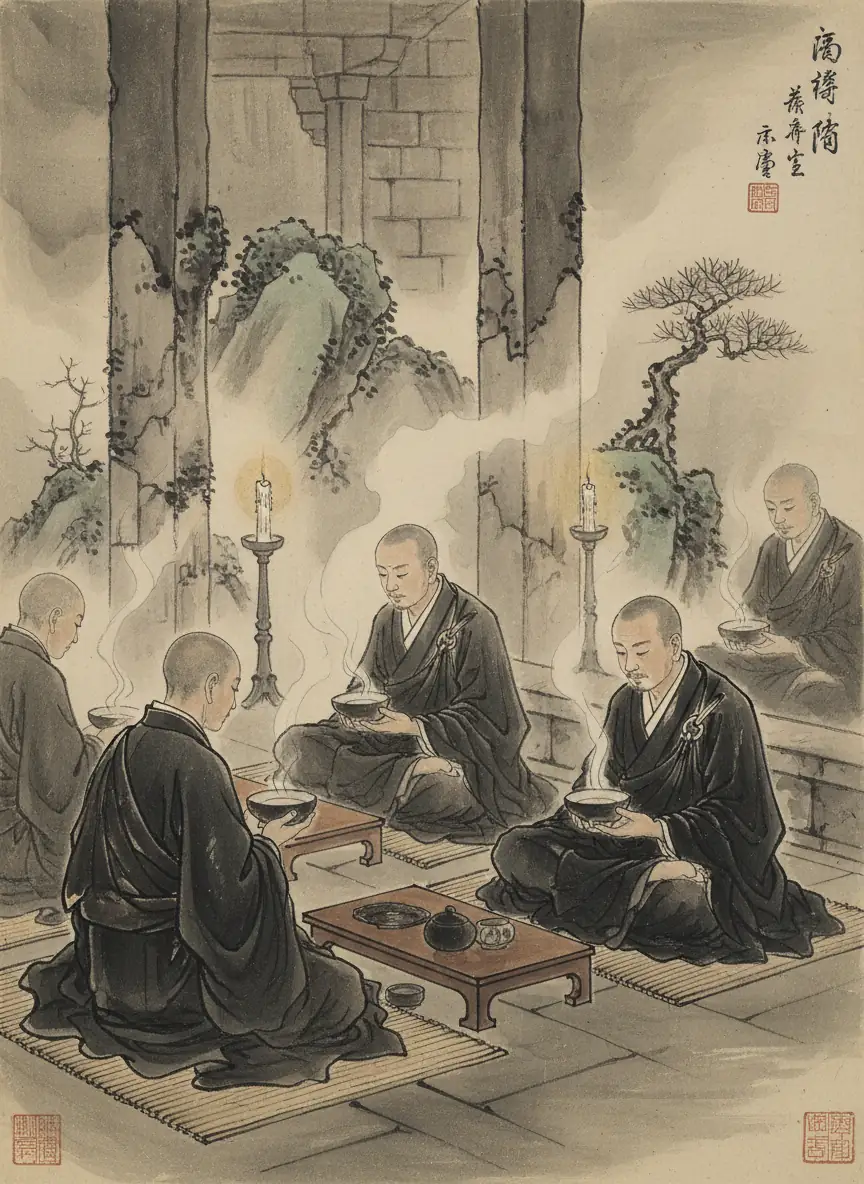
At Zen Tea Cup, Tenmoku tea bowls did not simply travel from China to Japan — they were carried by Zen Buddhist monks who saw in these dark, iron-glazed vessels a reflection of their own spiritual practice. Between the 12th and 14th centuries, monks returning from Chinese monasteries brought Jian Zhan tea bowls back to Japan, where the vessels became deeply woven into the emerging tea ceremony and Zen aesthetic. At these cups, we work with kiln masters in Jianyang who keep this 800-year tradition alive, and understanding how Tenmoku took root in Japan reveals why these bowls still matter today.
The connection runs deeper than trade. Zen monks valued simplicity, imperfection, and presence — qualities that the unpredictable glaze patterns of Jian Zhan naturally embody. No two bowls share the same surface, much like no two moments of meditation are alike. This philosophical alignment between Tenmoku pottery and Zen practice explains why Japan preserved and elevated these bowls even after they faded from favor in China itself.
If you enjoy gongfu brewing, you will appreciate how tenmoku enhances the aroma. Find more at Zen Tea Cup.
What Does “Tenmoku” Mean? The Name Behind the Bowl
Tenmoku (天目) literally means “Heaven’s Eye” in Japanese, derived from Tianmu Mountain (天目山) in China’s Zhejiang Province. According to tradition, Japanese Zen monks visiting temples on Tianmu Mountain encountered iron-glazed Jian Zhan tea bowls used in daily tea drinking and meditation rituals. When they carried these bowls home, the name “Tenmoku” stuck — and eventually became the Japanese term for all Jian ware and its local imitations.
In China, the same vessels are called Jian Zhan (建盏), meaning “Jian cup,” after Jianyang in Fujian Province where they were originally produced. The distinction matters: “Jian Zhan” refers to the specific Chinese originals, while “Tenmoku” encompasses both the Chinese imports and the Japanese-made bowls they inspired. This naming split mirrors the cultural divergence that followed — China moved on to new ceramic styles, while Japan built an entire aesthetic philosophy around these dark, luminous bowls. A standard tenmoku cup holds approximately 80 ml (2.7 oz) of tea.
The name itself carries spiritual weight. In Zen Buddhism, the “heavenly eye” (天目) is one of the five kinds of perception described in Buddhist texts — the ability to see beyond the physical world into deeper truth. That a tea bowl named after such perception became central to Zen practice is not coincidence but cultural intention.
Zen Monks and the First Tenmoku Bowls in Japan
The story of Tenmoku’s arrival in Japan begins with Zen Buddhist monks traveling to Song Dynasty China for religious study. Between the late 12th and 14th centuries, major Japanese temples — including Kenchō-ji, Engaku-ji, and Nanzen-ji — sent monks to study at Chinese Chan (Zen) monasteries. These monks lived the daily rhythms of Chinese temple life, which included tea drinking as a meditation aid.
Eisai (1141–1215), the monk credited with introducing Zen Buddhism and powdered matcha tea to Japan, made two journeys to China — in 1168 and 1187. He brought back tea seeds, the practice of whisking powdered tea, and almost certainly encountered Jian Zhan bowls used in Chinese temple tea rituals. His treatise Kissa Yōjōki (How to Stay Healthy by Drinking Tea, 1211) promoted tea for both health and spiritual clarity, laying the groundwork for Japan’s tea culture.
But Eisai was not alone. Over the following two centuries, hundreds of monks made the crossing. Monks from the five great Zen mountain temples (五山, gozan) of Kamakura and Kyoto maintained close ties with Chinese counterparts. When they returned, they carried Jian Zhan bowls as personal possessions and temple treasures. A chronicle from 1406 records that the Yongle Emperor of the Ming Dynasty sent ten Jian ware bowls to Shōgun Ashikaga Yoshimitsu — confirming that by this time, Tenmoku had become a diplomatic gift worthy of the most powerful man in Japan.
What made these bowls so compelling to Zen practitioners? Three qualities aligned with Zen values:.
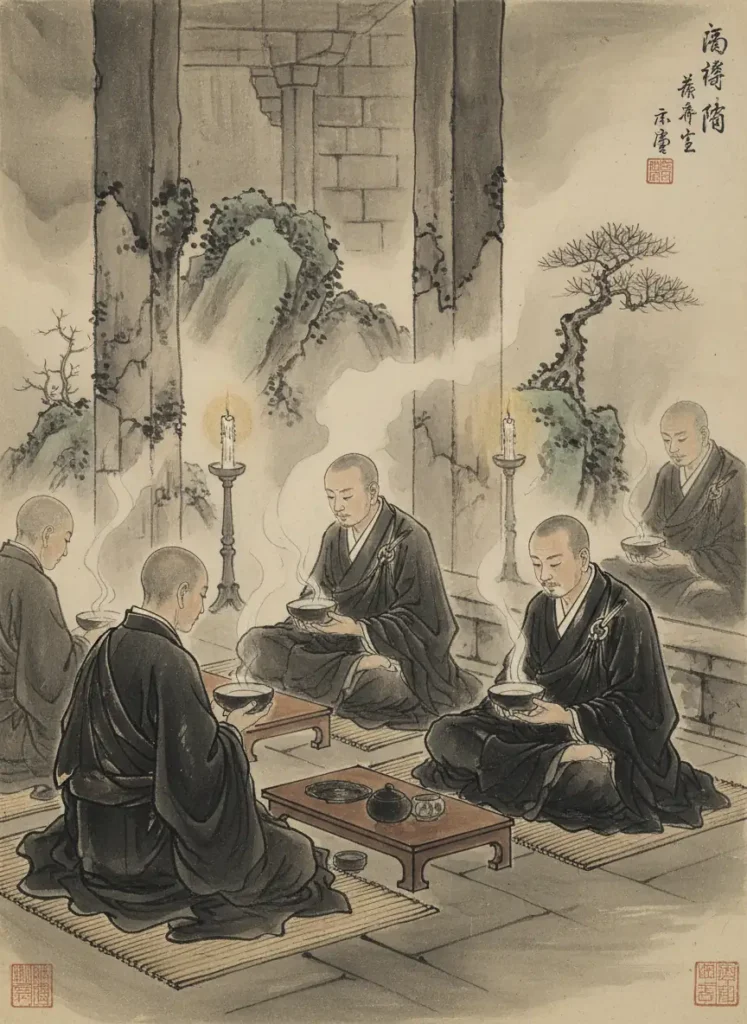
- Wabi (侘) — The bowls’ understated dark glazes embodied quiet, unadorned beauty, matching the Zen preference for simplicity over opulence.
- Impermanence — Each bowl’s unpredictable glaze pattern reflected the Buddhist principle that no moment repeats. A hare’s fur streak or oil spot formation could never be exactly reproduced.
- Functional meditation — The thick walls kept tea warm through long sessions. Monks could focus on practice without the distraction of cooling tea.
How the Japanese Tea Ceremony Elevated Tenmoku
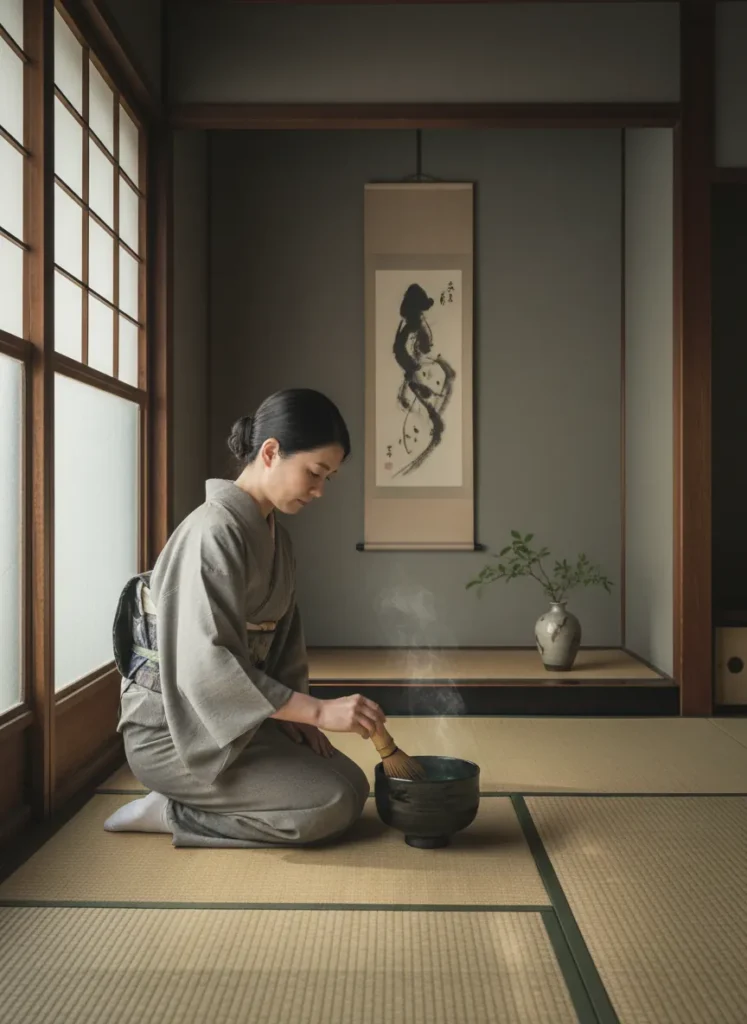
Once Tenmoku bowls entered Japan, they did not remain static objects. Over centuries, the Japanese tea ceremony — chanoyu (茶の湯) — evolved from simple temple tea drinking into a disciplined art form, and Tenmoku bowls moved with it.
During the Muromachi period (1336–1573), tea culture split into two directions. The aristocratic Kitayama culture of Shōgun Ashikaga Yoshimitsu prized luxurious Chinese Tenmoku imports as status symbols. These were displayed in shoin tea rooms alongside other Chinese art objects. But a counter-movement was growing. Murata Jukō (1423–1502), a Zen-trained tea master, rejected ostentatious display. He studied under the iconoclastic monk Ikkyū Sōjun and developed a tea practice rooted in Zen principles — simplicity, humility, and deep attention to the present moment.
Jukō’s approach, later refined by Sen no Rikyū (1522–1591), fundamentally shifted the role of tea vessels. Rather than displaying rare Chinese imports for admiration, Rikyū emphasized the act of preparing and sharing tea itself. He introduced smaller, rustic chawan (tea bowls) — including Korean and Japanese-made bowls — and the intimate chashitsu (tea room) barely large enough for host and guests.
This shift actually expanded Tenmoku’s influence, even as it moved Song Dynasty imports from center stage. The reverence for authentic Chinese yohen tenmoku bowls — with their iridescent, color-shifting glazes — grew so intense that three of them earned designation as National Treasures of Japan, the highest cultural honor the nation bestows.
Meanwhile, Japanese potters at the Seto kilns began producing their own Tenmoku-style ware, adapting the Chinese glaze techniques to local clays and kilns. Tenmoku had transformed from an imported luxury into an adopted tradition.
The National Treasures: Why Japan Guarded Tenmoku While China Forgot
One of the most striking chapters in Tenmoku’s history is the divergence between China and Japan. In China, Jian Zhan production declined sharply during the Ming Dynasty (1368–1644). The Hongwu Emperor preferred steeped leaf tea over the whisked powdered tea of the Song era. Leaf tea required teapots — and so Yixing clay wares rose to prominence while Jian Zhan’s dark tea bowls fell from fashion. By the Ming period, the kilns of Jianyang went silent.
Japan followed the opposite trajectory. As China abandoned Jian Zhan, Japan was building its tea ceremony into one of the nation’s defining cultural practices. The five surviving yohen tenmoku bowls from the Southern Song Dynasty — each displaying a shimmering, color-shifting oil-spot glaze — became objects of near-sacred reverence. Three are designated National Treasures, housed in the Seikadō Bunko Art Museum (Tokyo), the Fujita Museum (Osaka), and the Ryōan-ji temple (Kyoto).
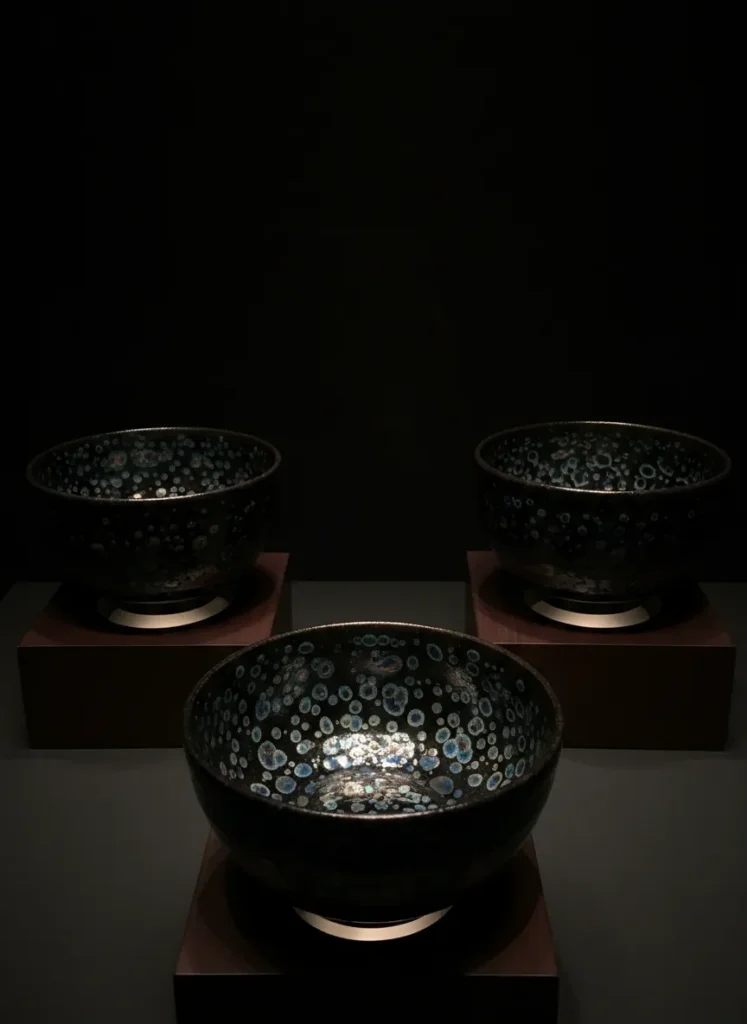
In 2016, a yuteki (oil-spot) tenmoku bowl from the Kuroda family collection sold at Christie’s New York for over $11 million — against a pre-sale estimate of $1.5 to $2.5 million. The auction result confirmed what Japanese collectors had known for centuries: these are not merely ceramic bowls but irreplaceable works of art shaped by fire, iron, and chance. The cooling rate after firing is about 100°C per hour.
The cultural gap is revealing. China’s ceramic tradition moved forward — celadon, blue-and-white porcelain, and famille rose — while Japan held Tenmoku as a touchstone of aesthetic and spiritual values. Where China saw an obsolete tea vessel, Japan saw a mirror of Zen philosophy: dark, imperfect, and endlessly surprising.
Living Tradition: Tenmoku in Modern Japan and Beyond
Tenmoku never truly disappeared from Japanese ceramic practice. A small circle of artists has sustained the tradition for centuries, and their work continues today. Kamada Kōji, Nagae Sōkichi, Hayashi Kyōsuke, and Oketani Yasushi are among the contemporary Japanese potters who dedicate their careers to Tenmoku glazes, producing work that honors Song Dynasty aesthetics while expressing a distinctly Japanese sensibility.
Meanwhile, starting in the 1990s, Jian Zhan experienced a remarkable revival in China itself. Kilns near the town of Shuiji in Fujian Province — close to the original Song Dynasty sites — resumed production using local iron-rich clay.
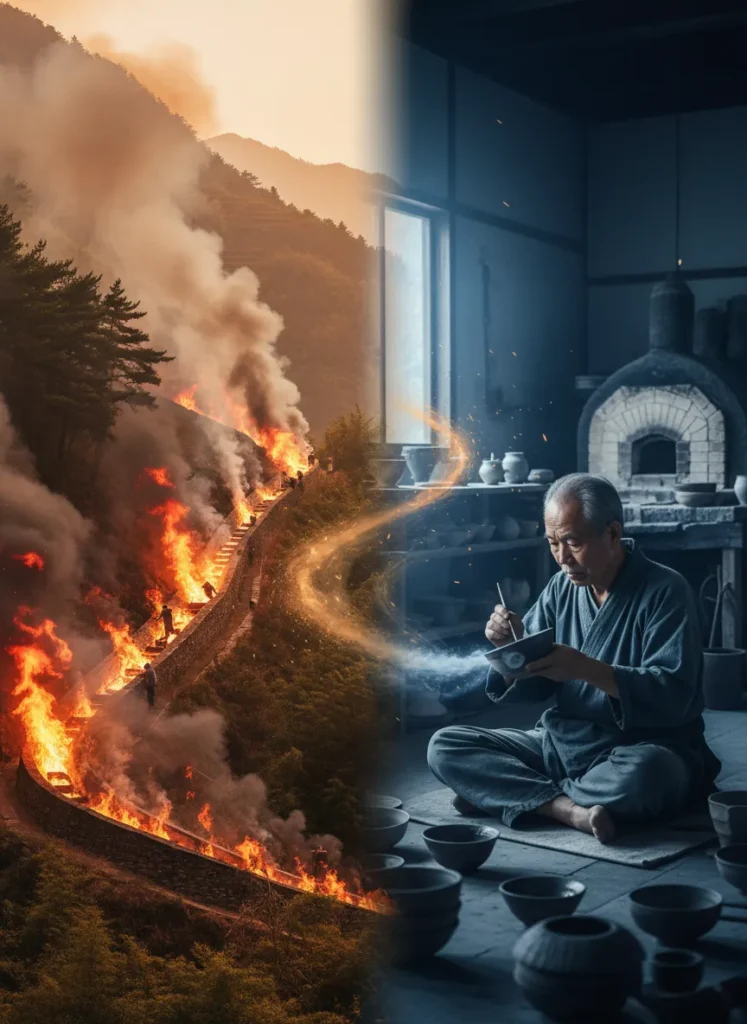
Master potters like Xiong Zhonggui studied with Japanese makers to recover techniques that had been lost for centuries. Today, Jianyang’s Jian Zhan industry produces both affordable everyday cups and high-end collector pieces, bridging the gap between ancient craft and modern demand.
This cross-current between Chinese and Japanese traditions enriches the Tenmoku tea bowl as a cultural object. A bowl made in Jianyang today carries the DNA of Song Dynasty craftsmanship; one made in Seto carries centuries of Japanese aesthetic refinement. Both descend from the same Zen monks who carried the first bowls across the East China Sea.
For anyone beginning their own Tenmoku journey, the living tradition means you can find bowls that honor this heritage at accessible prices. Explore our handcrafted Jian Zhan tea cup collection to see the range of glaze patterns — from hare’s fur to oil spot — that continue this 800-year story.
❓ Frequently Asked Questions
❓ Why is it called “Tenmoku” instead of “Jian Zhan”?
“Tenmoku” is the Japanese reading of 天目, from Tianmu Mountain in China where Zen monks first encountered these bowls. “Jian Zhan” (建盏) is the original Chinese name, referring to Jianyang in Fujian Province. Both names describe the same family of iron-glazed tea bowls, but “Tenmoku” is more common in Japanese and Western contexts.
❓ Did Zen monks invent the Japanese tea ceremony?
Not directly. Zen monks introduced tea drinking and Jian Zhan bowls to Japan, but the formalized tea ceremony developed over centuries through figures like Murata Jukō and Sen no Rikyū. However, Zen philosophy — particularly principles of simplicity, impermanence, and present-moment awareness — profoundly shaped the ceremony’s aesthetic and spiritual foundation.
❓ Why did China stop making Jian Zhan while Japan continued?
During the Ming Dynasty, tea preparation shifted from whisking powdered tea to steeping whole leaves, which required teapots rather than bowls. Jian Zhan’s dark tea bowls became obsolete in China. In Japan, the tea ceremony preserved and elevated these bowls, treating them as cultural treasures rather than outdated vessels.
❓ Are the National Treasure Tenmoku bowls on public display?
Yes, periodically. The three National Treasure yohen tenmoku bowls are housed in Japanese museums and temples, but they are typically displayed only during special exhibitions. Check with the Seikadō Bunko Art Museum, Fujita Museum, or Ryōan-ji for current exhibition schedules.
Discover your next favorite tea cup — visit the Zen Tea Cup store for curated tenmoku selections.
As you explore tenmoku, you will notice subtle color shifts in the glaze.
You can display your tenmoku collection as stunning decor when not in use. The foot ring diameter is usually around 3.5 cm (1.4 inches). Firing temperatures typically reach 1300°C (2372°F) in the kiln. The clay body has an iron content of 7–10% by weight.
Ready to elevate your tea ritual? Explore these pieces for handcrafted tenmoku cups shipped across the US.
Want to experience the difference a tenmoku cup makes? Shop the Zen Tea Cup collection and find your perfect match.
Ready to find your perfect tenmoku tea cup? Explore Zen Tea Cup and discover handcrafted pieces that elevate every sip.
Discover your next favorite tea cup — visit the Zen Tea Cup store for curated tenmoku selections.
📚 References
-
Jian Ware History and Characteristics:
Overview of Jian kiln ceramics, Song Dynasty production, and glaze classification.
Encyclopædia Britannica -
Tenmoku Glaze and Japanese Adoption:
Detailed account of Tenmoku’s name origin, National Treasures, and Japanese ceramic artists.
Wikipedia: Tenmoku -
Japanese Tea Ceremony and Zen Influence:
Comprehensive history of chanoyu from Eisai to Sen no Rikyū, including Zen-Buddhist philosophical foundations.
Wikipedia: Japanese Tea Ceremony -
Kuroda Family Yuteki Tenmoku Auction Record:
Christie’s 2016 sale of a Song Dynasty oil-spot Jian tea bowl for over $11 million.
Christie’s
Ready to find your perfect tenmoku tea cup? Explore Zen Tea Cup and discover handcrafted pieces that elevate every sip.


