

Contents
- What Is Tenmoku / Jian Zhan? A Complete Beginner’s Guide
- What Is Tenmoku? (And How It Differs from Jian Zhan)
- Origin & History: From Song Dynasty to Global Revival
- Glaze Patterns That Make Each Cup Unique
- Why Tea Drinkers Choose Tenmoku: Benefits & Real Effects
- Getting Started: Your First Tenmoku Cup
- Price Guide: What to Expect
- Size Recommendation
- How to Use Your New Cup
- ❓ Frequently Asked Questions
- ❓ How can I tell if my Jian Zhan was wood-fired or electric-fired?
- ❓ Are wood-fired Jian Zhan worth the higher price?
- ❓ What tea pairs best with Jian Zhan?
- 📚 References
What Is Tenmoku / Jian Zhan? A Complete Beginner’s Guide
Tenmoku is more than a beautiful tea cup — it is a millennium-old craft rooted in Song Dynasty China, where iron-rich clay and extreme heat transform simple stoneware into vessels with crystalline glaze patterns found nowhere else in ceramics. In Jianyang, Fujian, kiln masters have perfected this art since the 10th century, and today their work is recognized among the world’s most prized teaware.
At ZenTeaCup, we have worked closely with Jianyang kiln artisans for years, and we have seen firsthand how a single Tenmoku cup can transform a tea ritual — from the way it holds warmth to the living patterns that deepen with use.
Whether you are curious about the difference between Tenmoku and Jian Zhan, fascinated by the science behind those mesmerizing patterns, or simply wondering where to start with your first cup, this guide covers everything a beginner needs to know.
What Is Tenmoku? (And How It Differs from Jian Zhan)
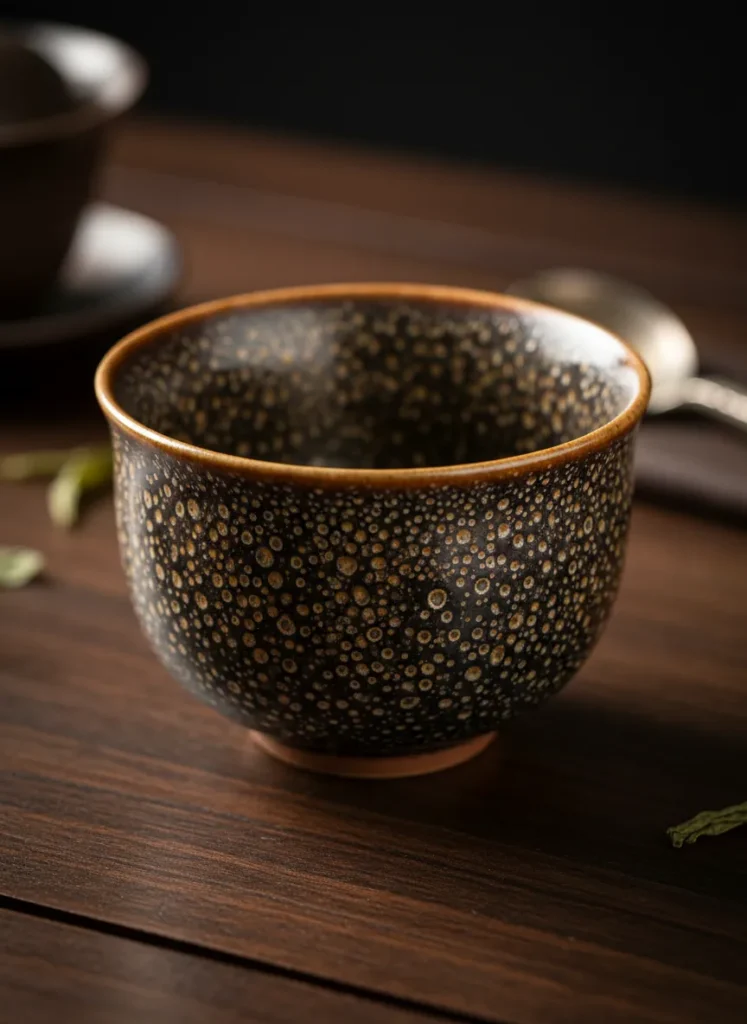
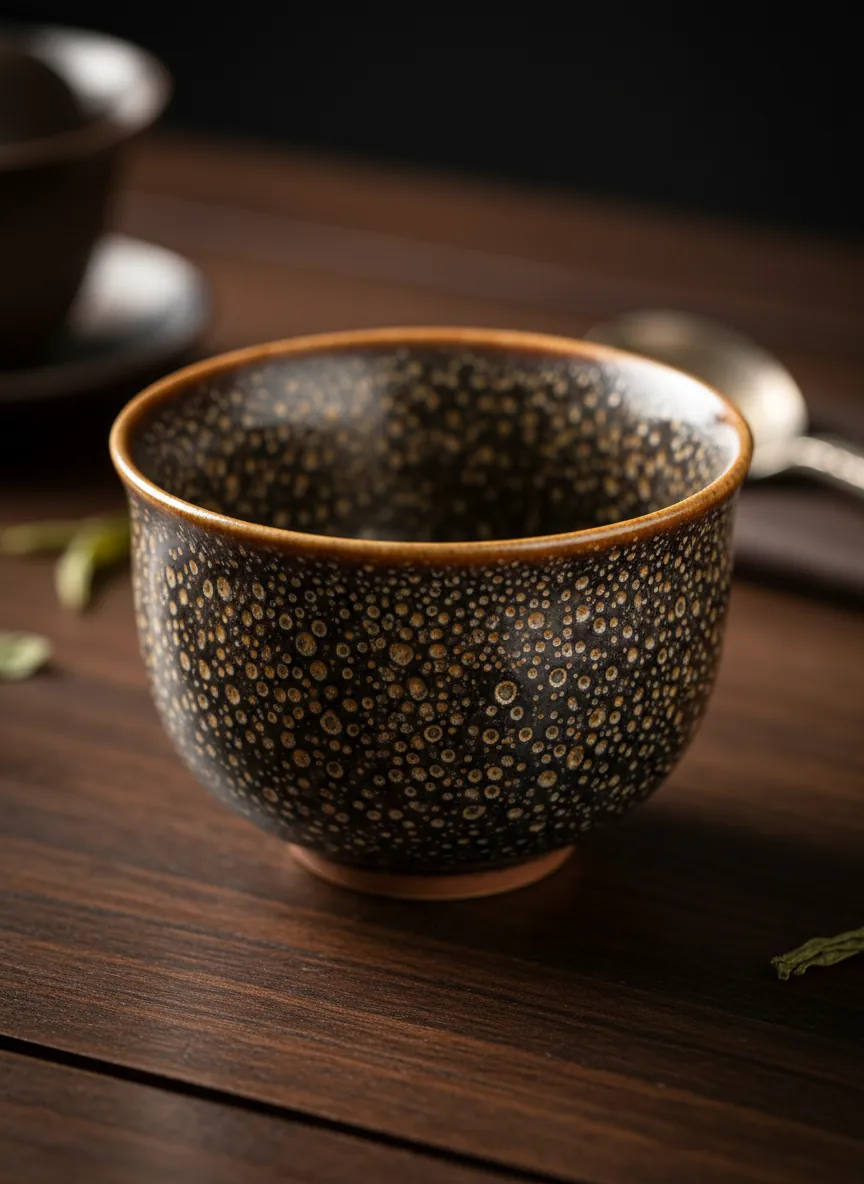
Tenmoku is a Japanese term for dark, iron-rich glazed tea bowls that originated from China’s Jian Zhan (建盏) tradition — handcrafted stoneware fired at 1300°C (2370°F) to produce crystalline patterns like oil spot and hare’s fur. The word “Tenmoku” comes from Mount Tianmu (天目山, literally “Heaven’s Eye”) in Zhejiang Province, where Japanese monks studying Zen Buddhism in the 12th–14th centuries first encountered these black-glazed bowls and carried them home.
So where does Jian Zhan fit in? Jian Zhan (建盏) refers specifically to black-glazed tea bowls produced at the Jian kiln (建窑) in Jianyang, Fujian. The two names describe overlapping but not identical categories:
| Feature | Jian Zhan (建盏) | Tenmoku (天目) |
|---|---|---|
| Origin | Jianyang, Fujian, China | Broader: China, Japan, Korea |
| Iron Content in Clay | Very high (FeO 15–30%) | Variable — can be lower |
| Firing Method | Reduction atmosphere, 1300°C (2370°F) | Varies by origin |
| Glaze Patterns | Crystalline: hare’s fur, oil spot, yao bian | Includes all Jian Zhan patterns plus others |
| Japanese National Treasures | All three National Treasure bowls are Jian Zhan | Broader category |
| Price Range | $50–$500+ for authentic handmade | Wider range, includes non-Jian pieces |
The key distinction: all Jian Zhan are Tenmoku, but not all Tenmoku are Jian Zhan. Think of it like Champagne versus sparkling wine — Jian Zhan is the original, the benchmark, defined by its specific clay source and firing tradition. These two names are often used interchangeably, and that can feel confusing at first. That is completely normal. For most beginners, the practical difference is small; what matters is that you are getting an authentic, handmade piece with genuine iron glaze.
Origin & History: From Song Dynasty to Global Revival
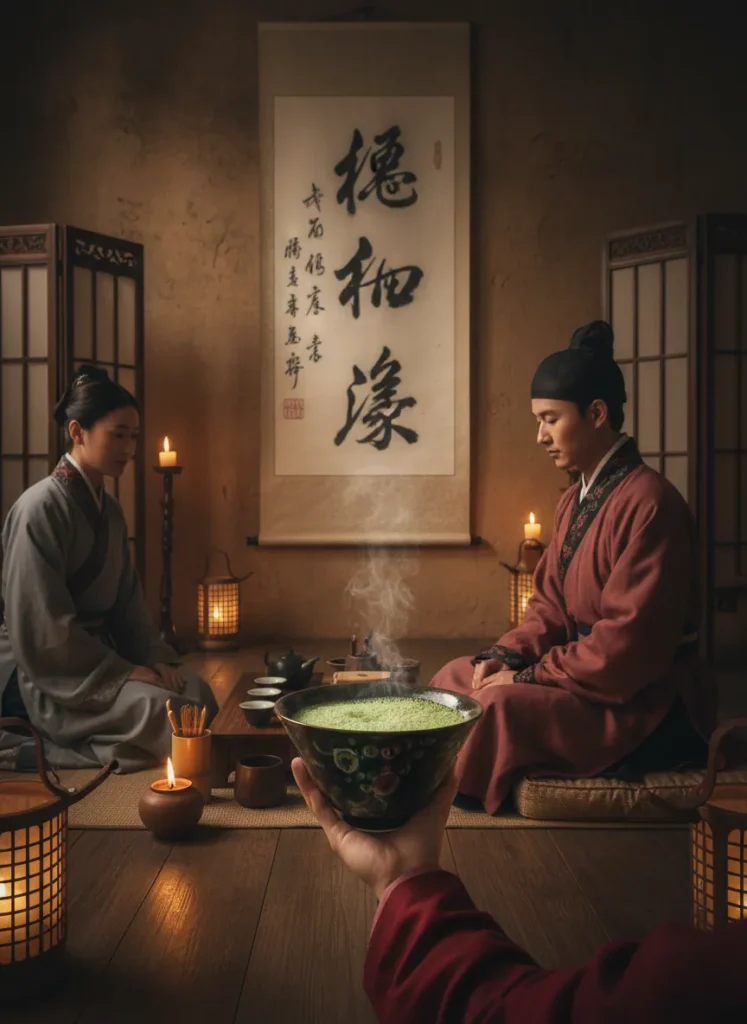
Jian Zhan tea cups rose to prominence during China’s Song Dynasty (960–1279), when Emperor Huizong declared them the finest vessel for whisked tea competitions. The emperor himself wrote that “the black-glazed cup from Jianyang is the best” in his Daguan Cha Lun (Treatise on Tea, 1107), making Jian Zhan the imperial standard for tea ritual.
The secret lay in Jianyang‘s unique geology. The local clay deposits contain iron oxide levels of 15–30% — far higher than what other kiln regions could source. This mineral-rich clay, combined with a reduction-firing technique at 1300°C, produced crystalline glaze patterns that other kilns attempted but failed to replicate. The result was a stoneware that was impossible to counterfeit — each cup’s pattern determined by the exact chemistry of its glaze and its position inside the kiln.
When Japanese Zen monks traveled to China’s Mount Tianmu for study between the 12th and 14th centuries, they encountered Jian Zhan bowls in traditional tea ceremonies. They brought these bowls home, naming them “Tenmoku” after the mountain. In Japan, the bowls became central to the developing tea ceremony (chanoyu), and three Jian Zhan bowls with the rarest yao bian (曜变, “iridescent change”) pattern were eventually designated as Japanese National Treasures — housed in temples and museums in Kyoto, Tokyo, and Osaka.
After centuries of decline following the Ming Dynasty’s shift to steeped tea, Jian Zhan experienced a modern revival. In 2001, the Jian kiln site was protected as a national heritage area. By 2011, Jian Zhan firing was inscribed as China’s Intangible Cultural Heritage. Today, a new generation of artisans in Jianyang combines traditional wood-firing with modern quality control, producing cups that honor the Song Dynasty legacy while meeting contemporary food-safety standards.
Glaze Patterns That Make Each Cup Unique
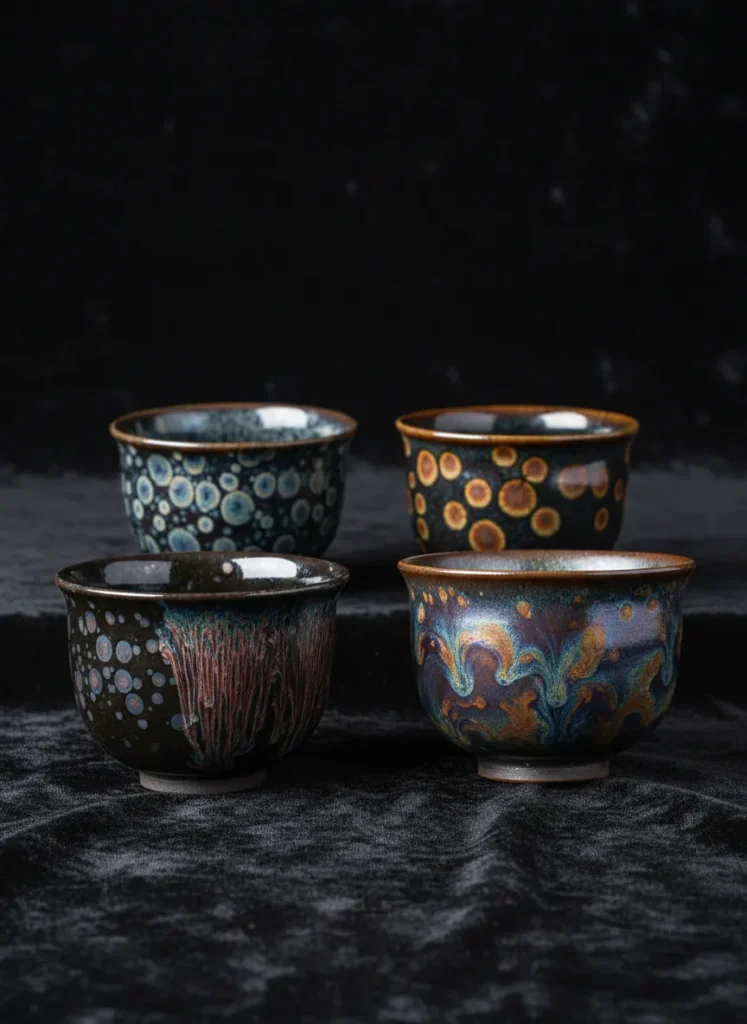
The magic of a Tenmoku cup lies in its glaze — fired at extreme heat, iron-rich minerals crystallize into patterns that no two cups share. These patterns are not painted on; they emerge naturally from the chemistry of the glaze interacting with the kiln’s atmosphere, making every piece genuinely one of a kind.
The four principal glaze patterns are:
| Pattern | Chinese Name | Appearance | Rarity | Price Range | Best For |
|---|---|---|---|---|---|
| Hare’s Fur | 兔毫 (Tuhao) | Fine silver or gold streaks radiating from the rim, resembling fur | Common | $50–$120 | Everyday tea drinking, classic look |
| Oil Spot | 油滴 (Yuteki) | Round metallic droplets scattered across a dark base | Uncommon | $70–$200 | Visual impact, first-time buyers |
| Partridge Spot | 鹧鸪斑 (Zhegu Ban) | Larger, more irregular spots resembling partridge feathers | Rare | $150–$400 | Collectors, display pieces |
| Yao Bian | 曜变 (Yohen) | Iridescent halos that shift color under different light angles | Extremely rare | $500–$10,000+ | Museum-quality, investment |
For beginners, we recommend starting with either a hare’s fur or oil spot pattern. Hare’s fur offers the quintessential authentic Jian Zhan aesthetic — understated elegance that reveals more detail over time. Oil spot delivers immediate visual drama with its scattered metallic droplets. Browse our handcrafted Tenmoku tea cup collection to explore both styles.
Why Tea Drinkers Choose Tenmoku: Benefits & Real Effects
Many tea drinkers report that Tenmoku cups keep tea warmer longer and bring out smoother, rounder flavors — effects rooted in the cup’s thick iron-rich walls and crystalline glaze. A Jian Zhan’s wall thickness of 3–5 mm provides noticeably better heat retention than standard porcelain (typically 1–2 mm), keeping your brew at optimal temperature through a full gongfu session.
The iron content in the glaze is traditionally used to soften water and reduce its alkalinity, which many tea practitioners believe allows the tea’s natural sweetness and complexity to come forward. A customer who has been drinking gongfu-style tea for years shared that after switching to a Jian Zhan for oolong, the liquor felt rounder on the palate and the aromas seemed more concentrated. These experiences are meaningful, but they vary from person to person.
On Reddit’s r/tea community, one user noted that “tenmoku is a more hydrophobic glaze” and observed that higher-gloss surfaces seem to affect how tea liquor sits in the cup. Another commenter pointed out that the thick stoneware changes how heat distributes, which can subtly alter the sipping experience.
⚠️ Important Note: Claims about how the iron-rich glaze affects water, tea flavor, or health are based on traditional belief and individual experience, not conclusive scientific evidence. Tenmoku cups should be enjoyed as handcrafted vessels that enhance the ritual and sensory experience of tea. This content is for educational purposes only and is not health or medical advice.
Beyond measurable effects, there is an undeniable aesthetic and ritual value. A handmade Tenmoku cup is a living object — with regular use, a subtle patina develops through seasoning, gradually deepening the glaze’s character. The cup evolves with you, which is something no mass-produced vessel can offer.
Getting Started: Your First Tenmoku Cup
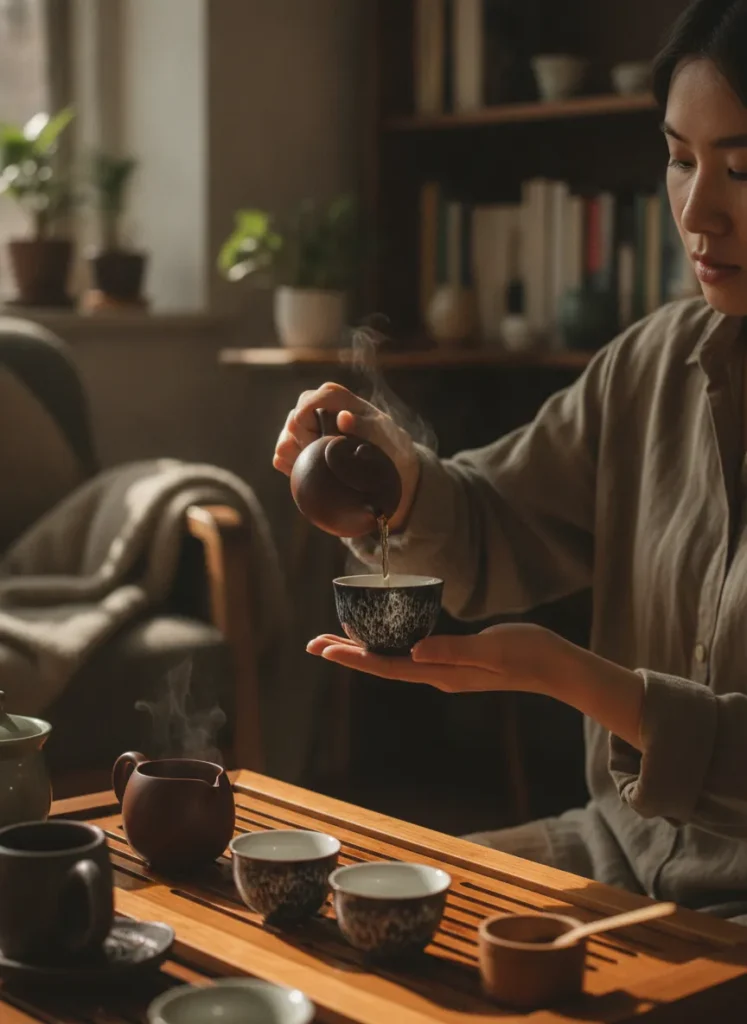
For your first Tenmoku cup, start with an oil spot or hare’s fur glaze in the $50–$150 range — this gets you a genuine handmade piece without collector-level pricing. Don’t worry about choosing the “wrong” one; both patterns are beautiful and forgiving for beginners.
Price Guide: What to Expect
| Price Range | What You Get | Recommendation |
|---|---|---|
| Under $30 | Machine-made, printed glaze patterns, factory clay | ❌ Avoid — not authentic Jian Zhan |
| $50–$150 | Authentic handmade, studio kiln, genuine iron glaze | ✅ Best entry point for beginners |
| $150–$500+ | Named master potters, rare patterns, museum quality | 💎 For serious collectors |
Size Recommendation
For maximum versatility, choose a medium cup of 80–100 ml (3–4 inch diameter). This size works well for gongfu-style brewing and fits comfortably in most hands. For more detailed sizing guidance, see our Jian Zhan Tea Cup Size Guide.
How to Use Your New Cup
- Rinse with hot water: Before your first brew, pour hot water into the cup and let it sit for 1–2 minutes. This warms the stoneware and opens the glaze’s pores.
- Brew your tea: Pour your prepared tea into the cup. The thick walls will keep it warm 20–30% longer than a standard porcelain cup.
- Sip and enjoy: Notice how the dark glaze provides a striking backdrop for the tea’s color.
- Rinse after use: Rinse with hot water only — no soap or detergent. The seasoning process builds a natural patina over weeks and months of regular use.
For comprehensive care instructions, see our complete Jian Zhan care guide. And if you want help choosing an authentic piece, our buyer’s guide to authentic Tenmoku walks you through every detail.
💡 Ready to Begin? Explore our curated selection of handcrafted Tenmoku tea cups — each piece sourced directly from Jianyang kiln artisans and shipped worldwide. For the complete experience, browse our Tenmoku tea sets to build your gongfu setup.
❓ Frequently Asked Questions
What does “Tenmoku” mean?
Tenmoku (天目) means “Heaven’s Eye” in Japanese. It comes from Mount Tianmu (天目山) in Zhejiang Province, China, where Japanese Zen monks first encountered these black-glazed tea bowls during the 12th–14th centuries and brought them back to Japan.
Is Tenmoku the same as Jian Zhan?
They are closely related but not identical. All Jian Zhan (建盏) are Tenmoku, but not all Tenmoku are Jian Zhan. Jian Zhan refers specifically to bowls from the Jian kiln in Jianyang, Fujian, which have the highest iron content and most prized crystalline patterns. Tenmoku is the broader Japanese term for dark, iron-glazed tea bowls from any origin.
Can I use a Tenmoku cup every day?
Yes. Daily use is actually encouraged — regular seasoning through hot-water rinsing and tea contact helps build a natural patina that deepens the glaze’s character over time. Just avoid soap and detergent, and rinse with hot water after each session.
How much should I spend on my first Tenmoku cup?
Expect to pay $50–$150 USD for an authentic entry-level handmade piece. Anything under $30 is likely machine-made with printed glaze, not genuine Jian Zhan. Start with a reliable studio piece, then explore our collection as your taste develops.
❓ How can I tell if my Jian Zhan was wood-fired or electric-fired?
❓ Are wood-fired Jian Zhan worth the higher price?
❓ What tea pairs best with Jian Zhan?
📚 References
- Song Dynasty Jian Ware: Overview of Jian kiln ceramics and their place in Chinese tea culture and imperial history. The Metropolitan Museum of Art
- Ceramic Foodware Safety: Guidance on lead and cadmium safety standards for ceramic tableware, including imported stoneware. U.S. FDA
- Japanese National Treasures — Yohen Tenmoku: Documentation of the three Jian Zhan bowls designated as National Treasures in Japan. Source: Tokyo National Museum, Kyoto National Museum, Seikado Bunko Art Museum (You may search the institution’s website for current exhibition resources)
Find the tenmoku cup that speaks to you — browse these cups for authentic, artisan-crafted teaware.


