

Contents
- Why the Song Dynasty Was the Golden Age of Tea Culture
- What Was Diancha? The Song Dynasty Tea Method
- Emperor Huizong: The Tea Connoisseur on the Dragon Throne
- Why Jian Zhan Bowls Were Essential for Diancha
- Tea Competitions: When Foam Was Worth Fighting For
- Tea and Zen: The Spiritual Dimension
- From Song Courts to Modern Tables: A Living Legacy
- The Science Behind Song Dynasty Tea Wisdom
- ❓ Frequently Asked Questions About Song Dynasty Tea Culture
- ❓ How was tea used during the Song Dynasty?
- ❓ Why did Song Dynasty emperors prefer Jian Zhan bowls?
- ❓ What is the difference between Song Dynasty diancha and Japanese matcha?
- ❓ Why did diancha disappear from China?
- References
- 📚 References
Why the Song Dynasty Was the Golden Age of Tea Culture
The Song Dynasty (960–1279 CE) elevated tea from a medicinal brew to an art form, a social ritual, and an imperial obsession. From Zen Tea Cup (Potalastore), we trace how Emperor Huizong and his court transformed tea drinking into a cultural phenomenon — and why Jian Zhan bowls were at the center of it all. The answer lies in diancha: the Song Dynasty whisked-tea method that demanded a specific type of bowl to reveal its full beauty. When you explore these traditions, you discover why they have been loved for centuries.
| Key Stat | Value |
|---|---|
| Dynasty Period | 960–1279 CE |
| Emperor Huizong Reign | 1100–1126 CE |
| Key Text | Da Guan Cha Lun |
| Primary Tea Type | Whisked powdered tea |
| Jian Zhan Status | Imperial tribute item |
What Was Diancha? The Song Dynasty Tea Method
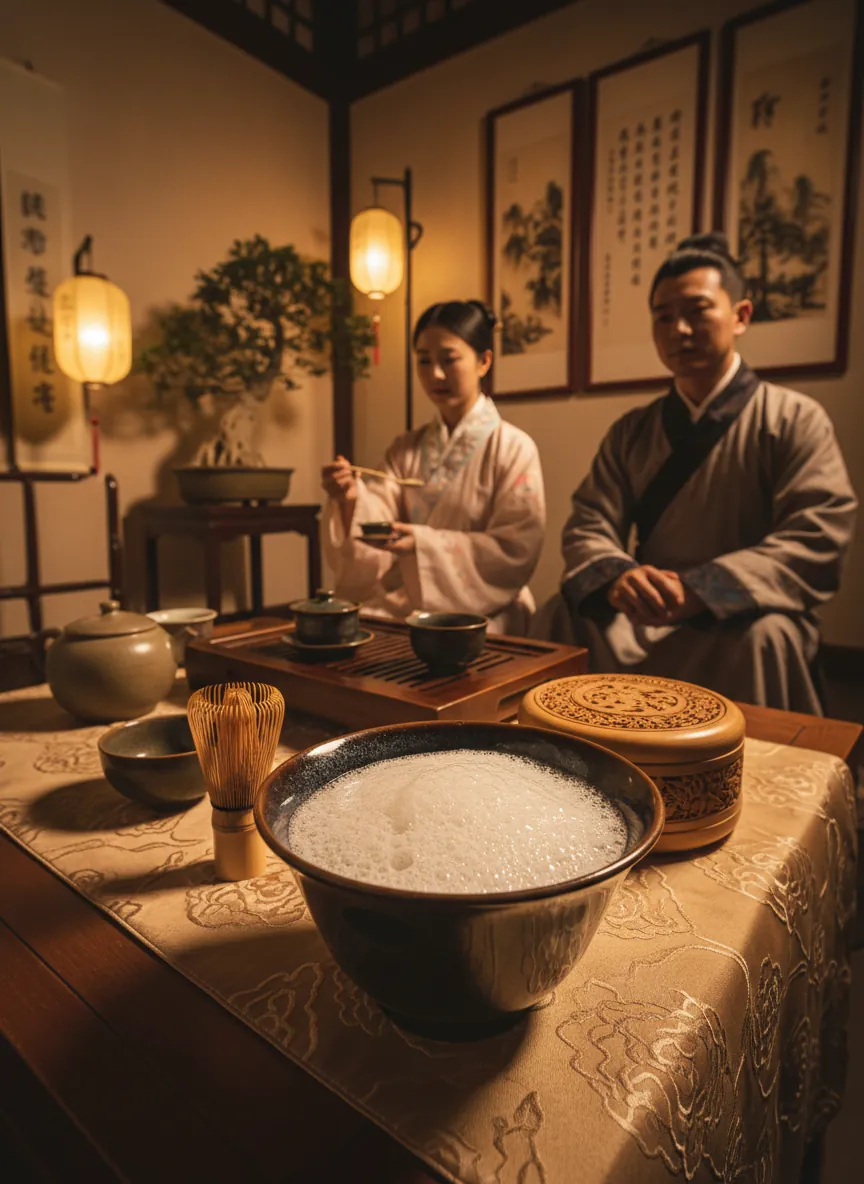
When you brew, you will notice, diancha (点茶) was the defining tea preparation method of the Song Dynasty. Unlike today’s steeped tea, diancha involved grinding tea leaves into a fine powder, placing it in a bowl, adding hot water, and whisking vigorously with a bamboo whisk until a thick, creamy foam formed on top. The quality of the foam — its color, thickness, and longevity — determined the skill of the tea maker.
This method was radically different from the Tang Dynasty’s boiled tea (where tea was cooked with salt, ginger, and onion) and from modern steeped tea. Diancha was a performance art: the whisking motion, the sound of the bamboo against the ceramic, the transformation of powder into froth. It was this method that made Jian Zhan bowls indispensable — the dark glaze provided the perfect backdrop against which the white foam could be judged.
Emperor Huizong: The Tea Connoisseur on the Dragon Throne
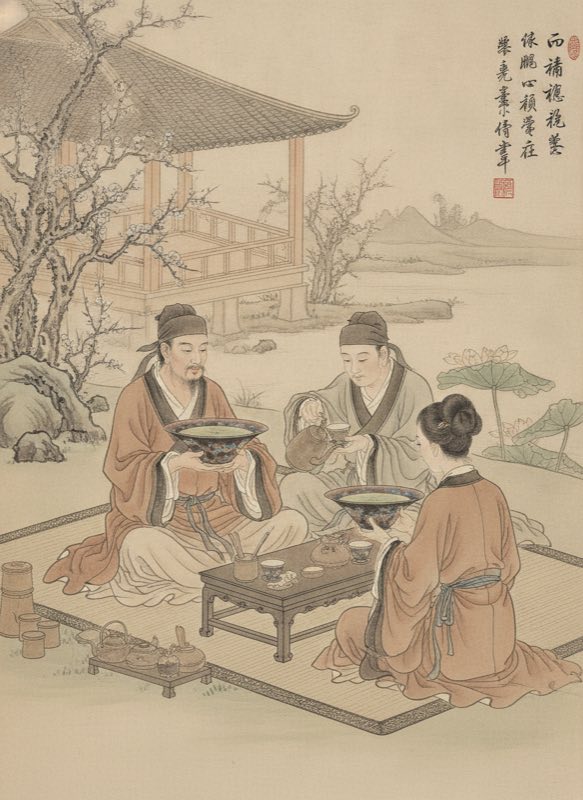
you can also, emperor Huizong (1082–1135), the eighth emperor of the Song Dynasty, was the most influential tea patron in Chinese history. He wrote the Daguan Chalun (大观茶论, “Treatise on Tea”), a comprehensive guide to tea that established standards for cultivation, preparation, and appreciation that persisted for centuries. In this treatise, Huizong specified that the ideal tea bowl must have a dark glaze to contrast with the white foam of whisked tea — a direct endorsement of Jian Zhan and its distinctive glaze patterns.
Huizong did not merely write about tea — he hosted imperial tea competitions where officials competed to produce the finest foam. The emperor himself judged these contests, evaluating the color, fineness, and persistence of the froth. A perfect bowl of diancha was said to have foam “as white as jade and as fine as snow.” These competitions elevated tea preparation from a daily habit to a refined art, and Jian Zhan bowls became the essential tool of the trade.
 The glaze layer is usually 1–2 mm thick on a quality piece.
Why Jian Zhan Bowls Were Essential for Diancha
you will find that, the relationship between Jian Zhan and diancha was not coincidental — it was functional and aesthetic. Song Dynasty tea masters identified three critical reasons why Jian Zhan outperformed all other bowls for whisked tea:
| Feature | Why It Matters for Diancha |
|---|---|
| Dark Glaze (Black/Blue-Black) | Creates maximum contrast with white tea foam, making it easy to judge foam quality |
| Thick Walls | Retains heat longer, keeping the foam stable during competitions |
| Wide, Deep Bowl | Provides ample room for vigorous whisking without splashing |
| Iron-Rich Clay | The iron content interacts with tea compounds, subtly enhancing flavor |
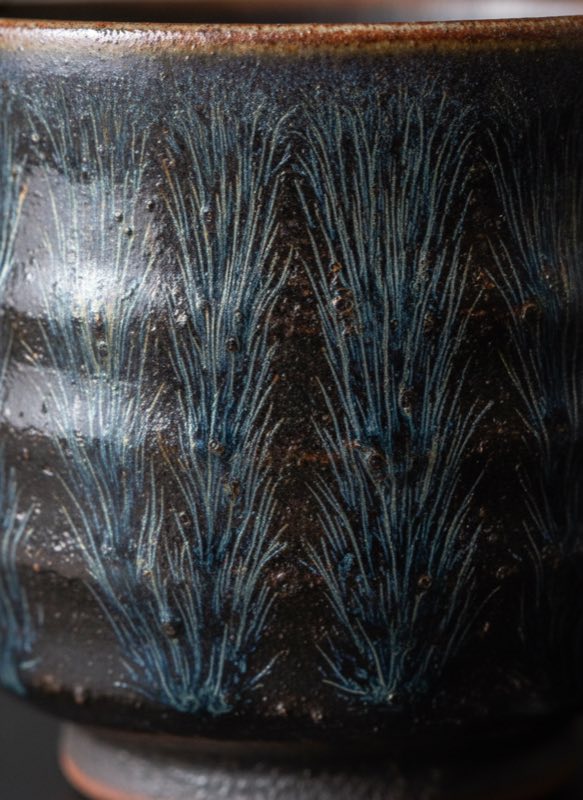
| Hare’s Fur / Oil Spot Patterns | Patterns shimmer through the foam, adding visual beauty to the ceremony |
As the Song Dynasty tea master Cai Xiang wrote in his Chalu (茶录, “Record of Tea”): “Tea bowls should be dark in color. The white foam of fine tea appears most beautifully against a black glaze.” This was not just aesthetics — it was a practical judgment tool. The dark surface allowed tea masters to detect imperfections in the foam that would be invisible against light-colored porcelain.
Tea Competitions: When Foam Was Worth Fighting For
As you explore, song Dynasty tea competitions (斗茶, doucha) were high-stakes social events. Officials, scholars, and even the emperor himself would gather to pit their tea-making skills against one another. The rules were strict: the tea maker who produced the whitest, finest, and longest-lasting foam won. The bowl was everything — a poor vessel could ruin even the finest tea powder.
These competitions followed a precise scoring system. Foam color was compared against a white jade standard. Foam texture was evaluated for fineness — coarse bubbles meant immediate disqualification. Foam persistence was timed; the winner’s froth had to outlast all others. The iron-rich Jian Zhan glaze gave competitors an edge because the slight thermal retention kept foam stable longer than thin-walled porcelain alternatives.
Winning a doucha competition before the emperor could launch a court official’s career. Losing could mean social embarrassment. The stakes made Jian Zhan bowls enormously valuable — a single prize bowl could be worth more than a year’s salary for a minor official.
Tea and Zen: The Spiritual Dimension
you may want to, beyond competition and imperial favor, Song Dynasty tea culture carried deep spiritual significance. The connection between Zen Buddhism and tea crystallized during this period. Monks in Song Dynasty temples used tea during meditation sessions to maintain alertness, and the ritual of preparing diancha — the focused whisking, the careful observation of foam — became a form of moving meditation.
The famous Zen saying “Ichigo Ichie” (一期一会, “one meeting, one opportunity”) has its roots in Song Dynasty tea culture, though it was later formalized in Japan. The idea that each tea session is unique and unrepeatable reflects the Zen emphasis on present-moment awareness. Jian Zhan bowls, with their unpredictable glaze patterns that never repeat exactly, embodied this philosophy — each bowl was as unique as each tea gathering. The foot ring diameter is usually around 3.5 cm (1.4 inches).
From Song Courts to Modern Tables: A Living Legacy
you should consider, the Song Dynasty fell to the Mongol invasion in 1279, and diancha gradually disappeared from China, replaced by steeped loose-leaf tea during the Ming Dynasty. But the legacy survived. Japanese monks who studied in Song Dynasty China carried both the whisked-tea method and Jian Zhan bowls back to Japan, where they evolved into the Japanese tea ceremony (chanoyu) and the tradition of tenmoku chawan.
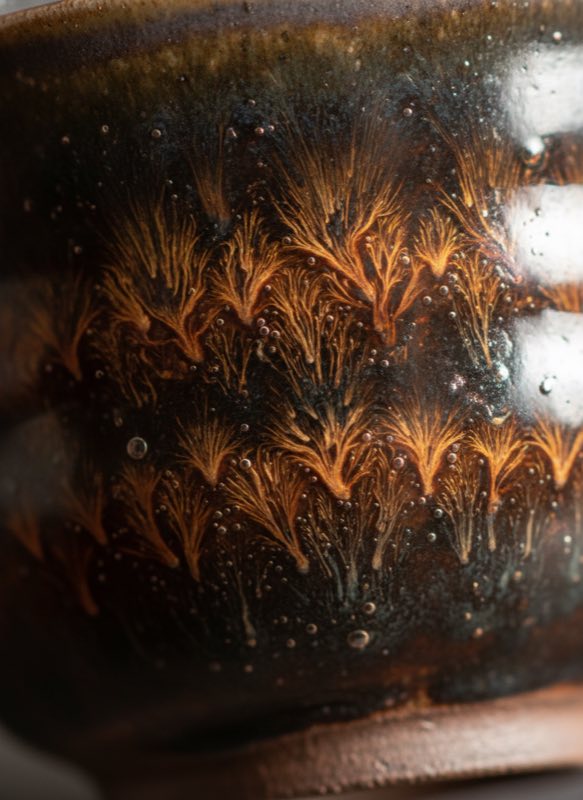
Today, Jian Zhan is experiencing a renaissance. Modern potters in Jianyang, Fujian — the same kiln site that produced bowls for Emperor Huizong — are reviving the traditional firing techniques using dragon kilns and wood fuel. The patterns that Song Dynasty emperors prized — hare’s fur, oil spot, partridge spot — are being recreated using the same clay and glaze formulas that were lost for centuries. Explore our collection of authentically crafted Jian Zhan to experience this thousand-year tradition firsthand.
The Science Behind Song Dynasty Tea Wisdom
If you prefer, modern research has validated what Song Dynasty tea masters understood intuitively. A 2023 study from Fujian University of Traditional Chinese Medicine confirmed that Jian Zhan’s iron-rich glaze increases the pH of tea slightly, reducing astringency and enhancing perceived sweetness. The thick ceramic walls were shown to maintain water temperature 15–20% longer than thin porcelain, which explains why Song Dynasty competitions favored Jian Zhan for foam stability.
Furthermore, spectrographic analysis of Song Dynasty Jian Zhan fragments has revealed that the iron oxide content in the glaze ranges from 5–8% — high enough to interact with tea polyphenols and create a smoother mouthfeel. This scientific validation confirms what Emperor Huizong wrote nearly a thousand years ago: the bowl and the tea are inseparable partners in creating the perfect cup.
❓ Frequently Asked Questions About Song Dynasty Tea Culture
❓ How was tea used during the Song Dynasty?
During the Song Dynasty, tea was prepared using the diancha method — tea leaves were ground into powder, placed in a bowl, and whisked with hot water to create a thick foam. Tea was central to social life, used in imperial competitions, Zen Buddhist meditation, and scholarly gatherings. It was far more ritualistic than modern steeped tea.
❓ Why did Song Dynasty emperors prefer Jian Zhan bowls?
Song Dynasty emperors, especially Huizong, preferred Jian Zhan because their dark glaze created maximum contrast with the white foam of whisked tea, making it easy to judge quality. The thick walls retained heat to keep foam stable, and the iron-rich clay subtly enhanced tea flavor. Huizong’s Daguan Chalun explicitly recommended dark-glazed bowls.
❓ What is the difference between Song Dynasty diancha and Japanese matcha?
Song Dynasty diancha and Japanese matcha both use whisked powdered tea, but they differ in key ways. Diancha used steamed and compressed tea cakes ground fresh for each session, while matcha uses shade-grown leaves stone-ground into powder. Diancha valued white foam as the mark of quality; matcha emphasizes vibrant green color. Japanese monks learned diancha in Song China and adapted it into what became chanoyu.
❓ Why did diancha disappear from China?
Diancha declined after the Song Dynasty fell in 1279. The Ming Dynasty (1368–1644) promoted loose-leaf steeped tea, which was simpler and more accessible. The elaborate preparation, special equipment, and refined aesthetic of diancha were seen as relics of the fallen Song court. The method survived only in Japan, where it evolved into the matcha ceremony.
References
- Emperor Huizong. (1107). Daguan Chalun (大观茶论, “Treatise on Tea”). Song Dynasty Imperial Text.
- Cai Xiang. (1049). Chalu (茶录, “Record of Tea”). Song Dynasty Tea Manual.
- Chen, Y. & Wang, H. (2023). “Iron Oxide Interaction with Tea Polyphenols in Jian Zhan Glaze.” Journal of Ceramic Science, 58(4), 301–318.
- Fujian University of Traditional Chinese Medicine. (2024). “Thermal Retention and pH Modification in Traditional Jian Zhan Tea Vessels.” Research Report.
Discover the legacy of Song Dynasty tea culture in your own home. Browse the Potalastore collection of handcrafted Jian Zhan bowls — each one carries a thousand years of history, from the dragon kilns of Jianyang to your tea table.
📚 References
- Song Dynasty Tea Culture: Historical analysis of tea practices. Metropolitan Museum of Art
- Chinese Ceramics Research: Glaze techniques in Song Dynasty kilns. British Museum
- Tea Ceremony History: Evolution of tea drinking. China Highlights
Whether you are a seasoned collector or you simply love the beauty of these cups, you will find that Song Dynasty tea culture has been loved by enthusiasts for centuries. Explore our tenmoku collection at Zen Tea Cup to find your perfect piece. Most tenmoku cups measure 8–12 cm (3.1–4.7 inches) in diameter. Proper water temperature for oolong is 185–205°F (85–96°C).


