

Contents
- What Is Yellow Tea?
- Yellow Tea vs. Green Tea at a Glance
- How Yellow Tea Is Made: The Men Huan Process
- Step-by-Step: From Leaf to Cup
- Why Men Huan Changes Everything
- Yellow Tea Varieties: A Guide to the Famous Types
- Jun Shan Yin Zhen — The Emperor’s Tea
- Huo Shan Huang Ya — The Approachable Classic
- Health Benefits of Yellow Tea: What the Research Says
- Antioxidants and Polyphenols
- Digestive and Metabolic Support
- How to Brew Yellow Tea: A Beginner’s Guide
- Brewing Parameters Quick Reference
- Why Tenmoku Pairs Beautifully with Yellow Tea
- Why Yellow Tea Is So Rare (and Whether It’s Worth It)
- ❓ What does yellow tea taste like?
- ❓ Does yellow tea have caffeine?
- ❓ Is yellow tea just aged green tea?
- ❓ Where can I buy authentic yellow tea?
- 📚 References
What Is Yellow Tea?
Yellow tea is the rarest Chinese tea category — it undergoes a unique smothering step called men huan (闷黄), which gently oxidizes the leaves to 10–20% and produces a smoother, sweeter cup than green tea. It accounts for less than 1% of China’s total tea production — most tea drinkers have never even heard of it. The first time I tried yellow tea, I expected something grassy like green tea — instead, it was like drinking warm honey with a floral whisper. from Zen Tea Cup
Like all true teas, yellow tea comes from Camellia sinensis. What sets it apart is that extra smothering step after the leaves are fixed and rolled. That step — warm, slow, and deliberate — transforms the chemistry of the leaf, mellowing astringency and drawing out a natural sweetness you simply cannot get from green tea. For a deeper dive into where yellow tea fits among the six classic Chinese tea types, explore our complete Chinese tea types guide.
| Key Stat | Value |
|---|---|
| Category | Six Great Chinese Tea Types (黄茶) |
| Oxidation Level | 10–20% |
| Signature Process | Men Huan (闷黄) smothering, 6–72 hours |
| Caffeine | 20–30 mg per 8 oz cup |
| Steeping Temperature | 175–185°F (80–85°C) |
| Annual Production | <1% of China’s total tea output |
| Top Varieties | Jun Shan Yin Zhen, Huo Shan Huang Ya, Meng Ding Huang Ya |
Yellow Tea vs. Green Tea at a Glance
The single question most people ask is: “Isn’t yellow tea just green tea?” No — and the differences matter more than you might think.
| Attribute | Yellow Tea | Green Tea |
|---|---|---|
| Oxidation | 10–20% | 0–5% |
| Signature Step | Men huan (smothering) | Fixing only (杀青) |
| Flavor | Mellow, sweet, floral-nutty | Grassy, vegetal, fresh |
| Astringency | Low | Medium to high |
| Caffeine (8 oz) | 20–30 mg | 25–50 mg |
| Price (per 100 g) | $30–200 | $10–100 |
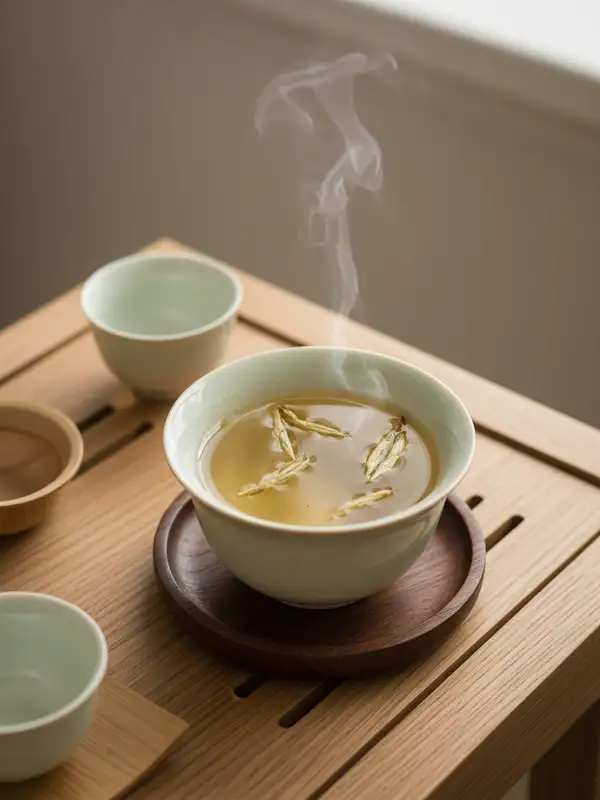
That smothering step reduces polyphenol content by roughly 15–20% compared to green tea, which is why yellow tea tastes smoother on your palate — less tannin bite, more rounded sweetness.
How Yellow Tea Is Made: The Men Huan Process
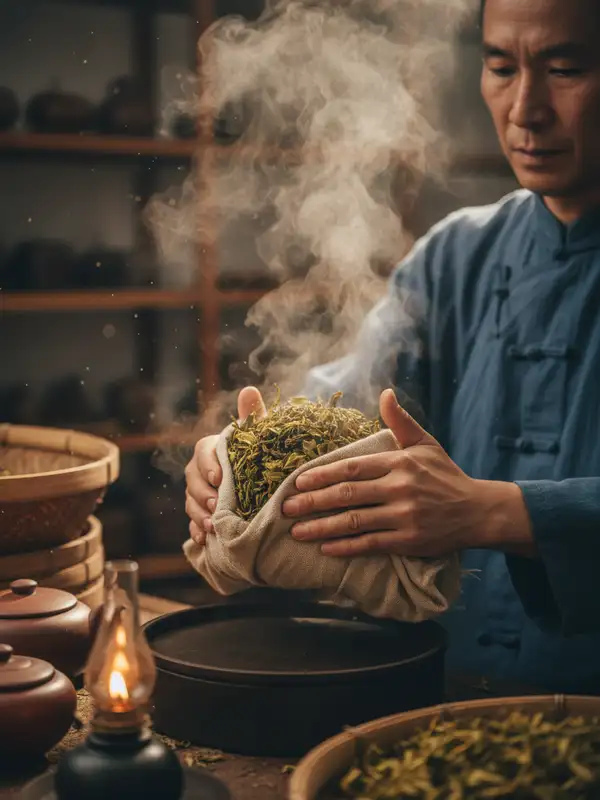
What makes yellow tea yellow isn’t the leaf variety — it’s the men huan step, a carefully controlled smothering process that lasts anywhere from 6 to 72 hours. Watching a tea master wrap freshly fixed leaves in cloth and gently press them into a warm pile — you realize this is where the magic happens (the whole room smelled like toasted sweet corn). If you’ve ever over-steeped green tea and gotten a bitter cup, you’ll appreciate why men huan exists — it removes that harshness naturally.
Step-by-Step: From Leaf to Cup
Yellow tea processing follows six distinct stages. Each one shapes the final flavor:
- Plucking — Tender buds or bud-plus-one-leaf sets are harvested in early spring, typically before the Qingming Festival (early April).
- Withering — Fresh leaves rest for 2–4 hours at room temperature, losing about 10–15% of their moisture.
- Fixing (杀青) — Rapid heating at 400–500°F (200–260°C) halts enzymatic oxidation, similar to green tea.
- Rolling — Leaves are gently shaped to break cell walls and release aromatic oils.
- Men Huan (闷黄) — The defining step. Leaves are wrapped in cloth or paper and kept warm at 95–120°F (35–50°C) for 6–72 hours. This slow, moist environment allows gentle oxidation and chlorophyll breakdown.
- Drying — A final low-temperature roast at 175–200°F (80–95°C) locks in the flavor and reduces moisture below 6%.
Why Men Huan Changes Everything
During men huan, three critical chemical shifts occur. First, chlorophyll degrades — this is what turns the leaves from bright green to their characteristic yellow-green. Second, polyphenols (especially catechins) decrease by 15–20% compared to green tea, reducing astringency. Third, amino acids like theanine become more prominent, contributing to that signature sweet, mellow taste.
A 2018 study published in Molecules found that the men huan process creates unique catechin variants not found in green or white tea — these compounds may contribute to both the flavor profile and potential health benefits of yellow tea.
Yellow Tea Varieties: A Guide to the Famous Types
Four yellow tea varieties dominate the conversation — and each comes from a different mountain, a different tradition, and a different flavor profile. Jun Shan Yin Zhen is the one that made me do a double-take at the price tag — but one sip explained everything. For a broader look at Chinese tea categories, explore our Chinese tea types guide.
| Variety | Origin | Leaf Grade | Flavor | Price (per 100 g) |
|---|---|---|---|---|
| Jun Shan Yin Zhen | Junshan Island, Hunan | 100% buds | Honey, chestnut, floral | $100–200 |
| Huo Shan Huang Ya | Huo Mountain, Anhui | Bud + 1 leaf | Nutty, orchid, sweet | $30–80 |
| Meng Ding Huang Ya | Meng Mountain, Sichuan | Bud + 1 leaf | Chestnut, mellow, smooth | $40–90 |
| Mo Gan Huang Ya | Mo Gan Mountain, Zhejiang | Bud + 1–2 leaves | Grassy-sweet, delicate | $25–60 |
Jun Shan Yin Zhen — The Emperor’s Tea
Grown on Junshan Island in Hunan’s Dongting Lake, Jun Shan Yin Zhen (君山银针) was once reserved exclusively for the imperial court. It uses only unopened buds — no leaves at all — and each bud is covered in fine white down. The men huan process here can last up to 72 hours, making it the most labor-intensive yellow tea. When brewed, the buds stand upright in the water like tiny spears — a visual spectacle you won’t forget. Use 3 g per 5 oz (150 ml) of water at 175°F (80°C) for the best experience.
Huo Shan Huang Ya — The Approachable Classic
If you’re trying yellow tea for the first time, Huo Shan Huang Ya (霍山黄芽) is where you should start. It comes from the misty slopes of Huo Mountain in Anhui province and uses buds plus one tender leaf. The flavor leans floral-nutty with a clean, sweet finish — less complex than Jun Shan Yin Zhen, but far more forgiving to brew. At $30–80 per 100 g, it’s also the most accessible price point for genuine yellow tea.
Health Benefits of Yellow Tea: What the Research Says
Yellow tea shares many of green tea’s health benefits — but its extra processing step may actually make some compounds more bioavailable. The PubMed study on yellow tea’s polyphenols caught my attention — the data suggests the men huan step creates unique catechin variants you won’t find in green tea. However, it’s important to note that most research on yellow tea is preliminary, and stronger clinical studies are still needed.
Antioxidants and Polyphenols
Yellow tea retains significant antioxidant activity, though slightly less than green tea due to the additional oxidation during men huan. A 2018 review in the journal Molecules (PMID 29580521) identified several bioactive compounds in yellow tea, including epigallocatechin gallate (EGCG), theaflavins, and unique polyphenol derivatives formed during the smothering process. These compounds may help neutralize free radicals and support cellular health.
Digestive and Metabolic Support
In Traditional Chinese Medicine, yellow tea is associated with the spleen and stomach meridians — practitioners believe its gentle nature makes it easier on the digestive system than green tea. Modern research suggests that the lower polyphenol content may indeed make yellow tea less irritating to an empty stomach. Some preliminary studies also indicate that yellow tea polyphenols may support healthy metabolism, though these findings require further clinical validation.
How to Brew Yellow Tea: A Beginner’s Guide
Brewing yellow tea is simpler than you might think — the key is treating it more gently than green tea, with water at 175–185°F (80–85°C). My first attempt used boiling water — a mistake I won’t repeat. The delicate leaves turned bitter within seconds. Don’t worry if you don’t have a gaiwan — a simple mug with a strainer works just fine for your first cup. For more detailed brewing techniques, browse our brewing guides.
Brewing Parameters Quick Reference
| Parameter | Recommendation |
|---|---|
| Water Temperature | 175–185°F (80–85°C) |
| Leaf Amount | 3 g per 5 oz (150 ml) |
| First Infusion | 2–3 minutes |
| Second Infusion | 3–4 minutes |
| Third Infusion | 4–5 minutes |
| Total Infusions | 2–3 |
| Teaware | Gaiwan, glass tumbler, or tenmoku cup |
Why Tenmoku Pairs Beautifully with Yellow Tea
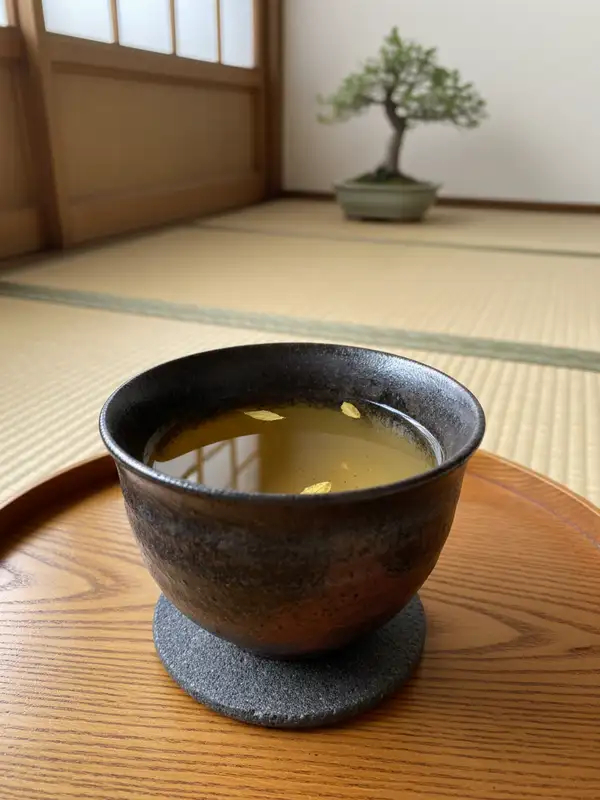
Here’s something most tea guides won’t tell you: the iron-rich glaze of a tenmoku cup can subtly enhance the sweetness of yellow tea. The micro-porous surface of Jian Zhan tenmoku softens the water slightly, which rounds out any remaining astringency and lets the tea’s natural honey notes shine through. Learn more about this effect in our guide on why tea tastes better in a tenmoku cup.
Why Yellow Tea Is So Rare (and Whether It’s Worth It)
Yellow tea accounts for less than 1% of China’s total tea production — and that number is shrinking, not growing. I talked to a tea merchant in Hunan who said his grandfather made yellow tea for the imperial court — now, fewer than a dozen families in his village still practice men huan. The labor is intense: that smothering step demands constant monitoring for up to 72 hours, with the tea master checking temperature and humidity by feel alone.
If you’re wondering whether the price is justified — for a genuine, handmade yellow tea, the answer is yes. The men huan process requires 50+ hours of skilled labor per batch, and the artisans who know how to do it properly are becoming fewer each year. But beware of “yellow tea” that’s actually just green tea in disguise — some vendors skip the men huan step entirely and sell lightly oxidized green tea under the yellow tea label.
So is it worth seeking out? Absolutely — if you value subtlety over intensity. Yellow tea won’t hit you with the bold flavors of an oolong or the briskness of a black tea. What it offers instead is a quiet, layered complexity that rewards patience — a cup that makes you slow down and pay attention. For those moments, discover authentic teaware for your tea ritual from Zen Tea Cup.
❓ What does yellow tea taste like?
Yellow tea tastes mellow, smooth, and slightly sweet with floral and nutty notes. It is far less grassy than green tea — think warm honey, toasted sweet corn, and a gentle orchid finish.
❓ Does yellow tea have caffeine?
Yes, yellow tea contains about 20–30 mg of caffeine per 8 oz cup — less than green tea (25–50 mg) but enough for a gentle, sustained lift without jitters.
❓ Is yellow tea just aged green tea?
No. Yellow tea undergoes men huan (闷黄), a deliberate smothering step that gently oxidizes the leaves to 10–20%. It is a distinct tea category — not aged or stored green tea.
❓ Where can I buy authentic yellow tea?
Look for reputable Chinese specialty tea vendors who specify the variety (e.g., Huo Shan Huang Ya, Jun Shan Yin Zhen) and describe the men huan process. For the best tasting experience, brew it in quality teaware — explore our teaware for mindful tea rituals.
📚 References
- Yellow Tea (Camellia sinensis L.): A Review of Its Chemistry and Pharmacological Effects: A comprehensive review of yellow tea’s bioactive compounds and health implications. PubMed (PMID 29580521)
- Yellow Tea: Overview of yellow tea history, production, and varieties. Wikipedia
- Yellow Tea Fundamentals: Detailed guide to Chinese yellow tea processing and sub-categories from a specialty tea authority. Tea Drunk
Ready to elevate your tea experience? Explore our complete Chinese tea guide and discover why tenmoku cups make every sip better at Zen Tea Cup.


