

Contents
- Tenmoku Cup vs. Yixing Teapot: What Is the Real Difference?
- Material and Origin: Iron Glaze vs. Purple Clay
- How Tenmoku Cups Affect Your Tea
- How Yixing Teapots Affect Your Tea
- Which Teaware for Which Tea Type?
- Price and Collectibility Comparison
- ❓ Frequently Asked Questions About Tenmoku vs. Yixing
- ❓ Can I brew tea directly in a Tenmoku cup?
- ❓ Does a Yixing teapot really make tea taste better?
- ❓ Should I season my Tenmoku cup like a Yixing teapot?
- ❓ Which should I buy first — a Tenmoku cup or a Yixing teapot?
- Maintenance and Care: Tenmoku vs. Yixing
- Using Tenmoku and Yixing Together: The Complete Setup
- 📚 References
Tenmoku Cup vs. Yixing Teapot: What Is the Real Difference?
If you are serious about Chinese tea, you will eventually face a choice: should you invest in a Tenmoku tea cup or a Yixing teapot? These are the two most iconic teaware traditions in Chinese tea culture, and they serve fundamentally different purposes. At potalastore, we believe the answer is not “either-or” — it is understanding what each one does best so you can choose the right tool for your tea. This guide compares them side by side, so you can make an informed decision. at Zen Tea Cup
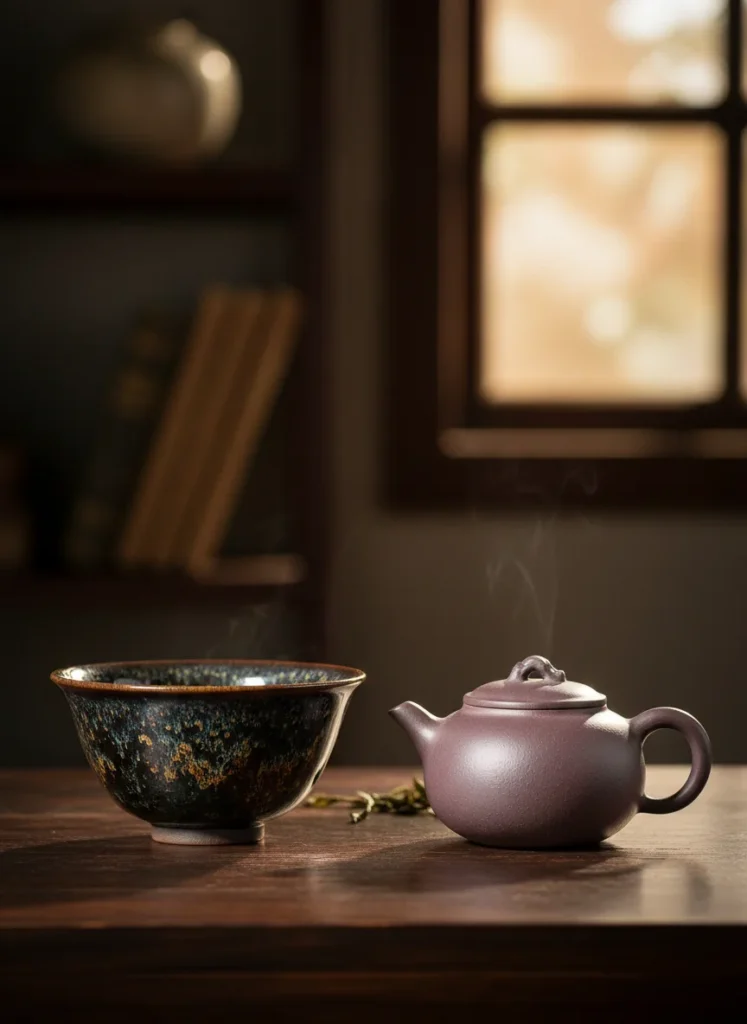
The short answer: a Tenmoku cup is for drinking — it enhances the flavor and visual experience of the tea in your cup. A Yixing teapot is for brewing — it controls the extraction and develops a seasoning that deepens over time. They are complementary, not competing. But there is much more to the story.
Material and Origin: Iron Glaze vs. Purple Clay
The fundamental difference between Tenmoku and Yixing lies in their materials:
| Feature | Tenmoku Cup | Yixing Teapot |
|---|---|---|
| Material | Iron-rich stoneware glaze | Unglazed purple clay (zisha) |
| Origin | Jianyang, Fujian (Song Dynasty) | Yixing, Jiangsu (Ming Dynasty) |
| Glaze | Thick, reactive iron glaze | No glaze — raw porous clay |
| Surface | Glass-like, smooth, patterned | Matte, porous, absorbent |
| Iron content | 15–30% in glaze | 2–8% in clay body |
| Primary function | Drinking vessel | Brewing vessel |
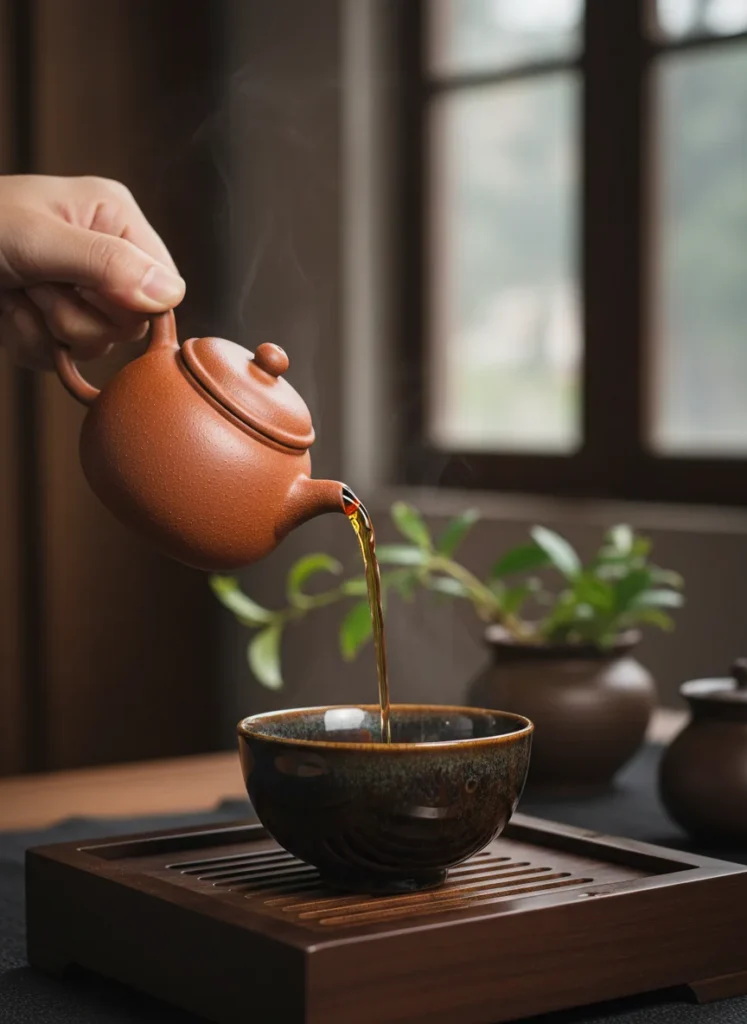
Tenmoku’s iron-rich glaze interacts with tea through surface chemistry — the iron oxide crystals subtly influence the taste of the tea in your cup. Yixing’s unglazed clay interacts with tea through absorption — the porous walls absorb tea oils and gradually build a “seasoning” (养壶, yang hu) that enriches future brews.
How Tenmoku Cups Affect Your Tea
Tenmoku cups influence your tea experience in several specific ways:
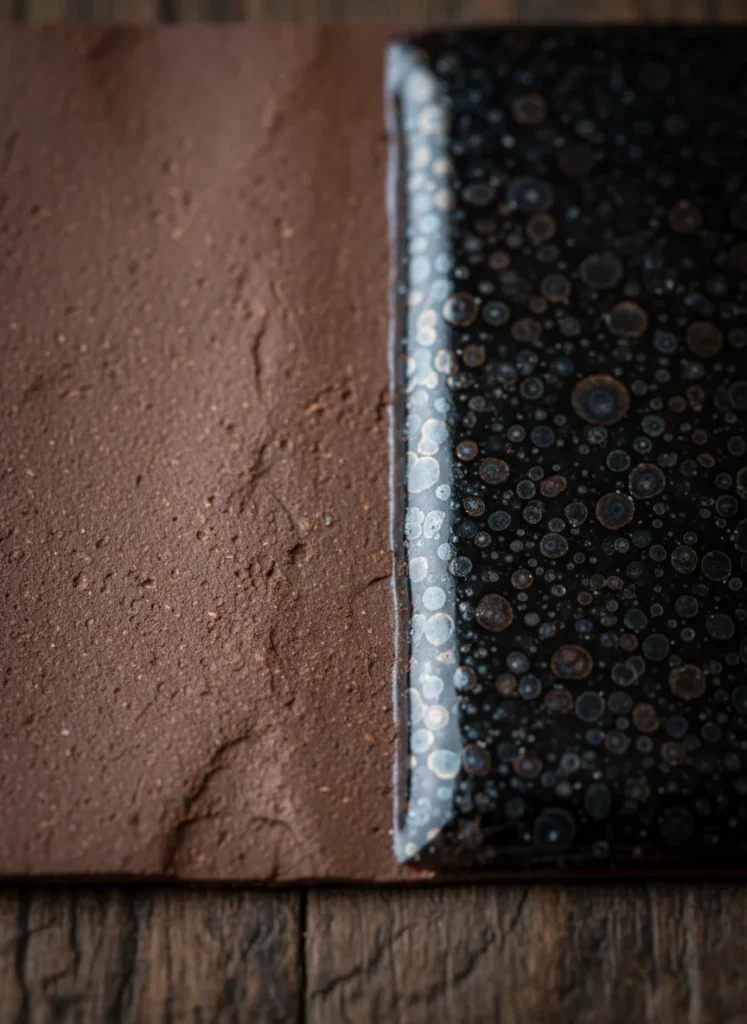
- Iron softening — The iron oxide in the glaze releases trace minerals that soften the water and reduce astringency. Many tea drinkers report that Tenmoku cups make tea taste smoother and more rounded.
- Visual enhancement — The dark glaze provides dramatic contrast with the tea’s color, making the liquor’s hue and clarity clearly visible. This is why Song Dynasty tea masters chose Jian Zhan for tea competitions.
- Heat retention — The thick stoneware walls and heavy body keep tea warm longer than thin porcelain or glass cups.
- Patina development — With regular use, tea oils build a warm luster on the glaze surface through the yang hu process, creating a personal connection between the cup and its owner.
Tenmoku cups work best as drinking vessels — you brew the tea in a gaiwan or teapot, then pour it into the Tenmoku cup to drink. The cup’s job is to present the tea at its best.
How Yixing Teapots Affect Your Tea
Yixing teapots influence your tea differently — they control the brewing process itself: The glaze layer is usually 1–2 mm thick on a quality piece.
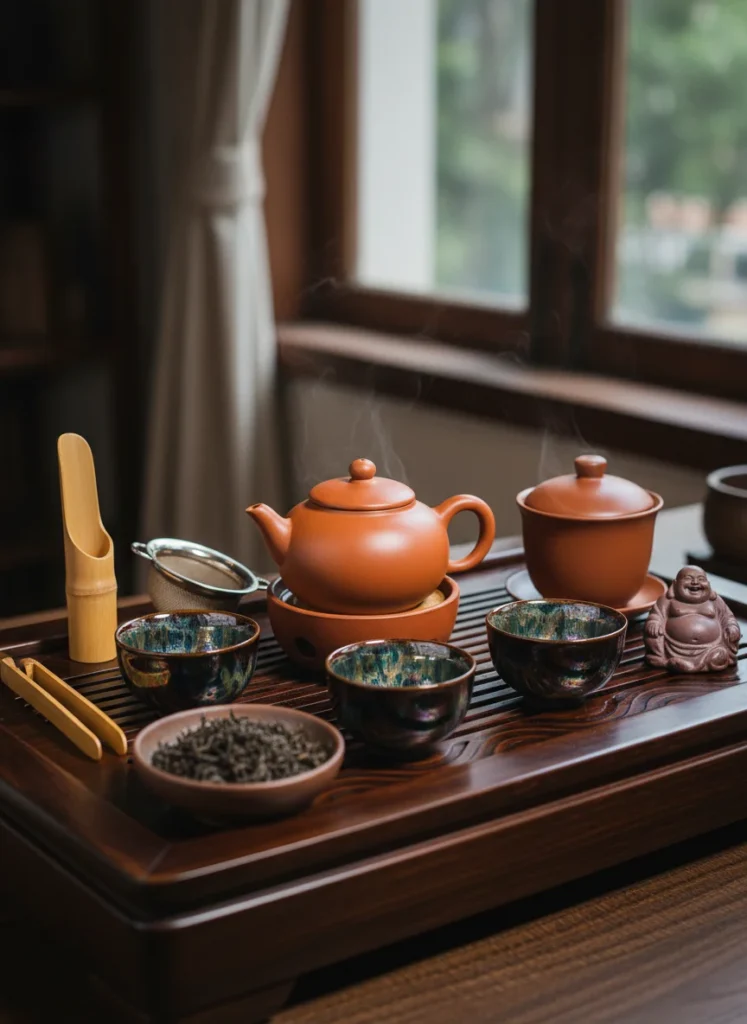
- Heat distribution — The thick clay walls retain heat evenly, creating a consistent brewing temperature that extracts flavor more uniformly than thin-walled vessels.
- Clay seasoning — The porous, unglazed walls absorb tea oils with each use. Over months and years, the pot develops a “seasoning” that enriches the flavor of future brews. This is why Yixing enthusiasts dedicate specific pots to specific tea types — a pot seasoned with oolong will enhance oolong, but would add unwanted flavors to green tea.
- Flame retardance — Yixing clay’s thermal properties allow you to pour boiling water directly into the pot without cracking, making it ideal for teas that require near-boiling water (Pu’er, aged oolong, black tea).
- Pour control — A well-made Yixing teapot has a precisely fitted lid and spout that give you control over pour speed and duration, which affects extraction strength.
Yixing teapots work best as brewing vessels — you put tea leaves and hot water inside, let them steep, then pour the brewed tea into cups (ideally Tenmoku cups) to drink.
Which Teaware for Which Tea Type?
Matching teaware to tea type is where the Tenmoku vs. Yixing comparison becomes practical:
| Tea Type | Best Brewing Vessel | Best Drinking Vessel | Why |
|---|---|---|---|
| Green tea | Glass or porcelain gaiwan | Tenmoku cup | Green tea needs low temperature; Yixing retains too much heat |
| White tea | Porcelain gaiwan | Tenmoku cup | Delicate flavors need neutral brewing; Tenmoku shows the pale liquor |
| Oolong (light) | Porcelain gaiwan or Yixing | Tenmoku cup | Both work; Yixing adds warmth; Tenmoku enhances oolong’s floral notes |
| Oolong (dark/roasted) | Yixing teapot | Tenmoku cup | Yixing deepens roasted notes; Tenmoku smooths the finish |
| Black tea | Yixing or porcelain | Tenmoku cup | Yixing enriches maltiness; Tenmoku provides visual contrast |
| Pu’er (ripe) | Yixing teapot | Tenmoku cup | Yixing is ideal for Pu’er brewing; Tenmoku enhances Pu’er’s earthy warmth |
| Pu’er (raw, aged) | Yixing teapot | Tenmoku cup | Yixing tames astringency; Tenmoku reveals the tea’s color complexity |
The pattern is clear: Yixing excels at brewing, Tenmoku excels at drinking. The best setup uses both — brew in Yixing, drink in Tenmoku.
Price and Collectibility Comparison
Both Tenmoku cups and Yixing teapots are collectible, but they appreciate in different ways:
- Tenmoku cups — Value is driven by glaze pattern quality and rarity. Oil spot and hare’s fur patterns from reputable kilns hold their value well. Yohen-pattern cups are museum-quality and extremely expensive. Modern production Tenmoku is affordable ($30–$150), while high-end pieces can reach thousands.
- Yixing teapots — Value is driven by clay quality, craftsmanship, and maker reputation. Teapots by certified master potters appreciate significantly. Vintage Yixing from the 1950s–1980s (Factory 1 era) has become highly collectible. Entry-level Yixing starts around $40, while master pieces command $500–$5,000+.
As collectibles, both have strong markets. Yixing has a longer established collector base in China, while Tenmoku is increasingly recognized as an investment as global appreciation for Song Dynasty ceramics grows.
❓ Frequently Asked Questions About Tenmoku vs. Yixing
❓ Can I brew tea directly in a Tenmoku cup?
Yes — you can use a Tenmoku cup as a gaiwan by adding tea leaves and hot water directly. However, Tenmoku cups lack a spout for controlled pouring, so decanting the tea is less convenient. For the best experience, brew in a gaiwan or teapot and pour into your Tenmoku cup.
❓ Does a Yixing teapot really make tea taste better?
Yes, for teas that benefit from high-temperature, prolonged steeping — especially oolong, black, and Pu’er teas. The clay’s heat retention and seasoning both contribute to a richer, more complex cup. However, for delicate teas like green and white tea, Yixing can actually diminish the flavor by retaining too much heat and adding unwanted clay notes.
❓ Should I season my Tenmoku cup like a Yixing teapot?
Tenmoku cups develop patina naturally through regular tea use — no special seasoning procedure is needed. Just drink tea from your cup regularly and rinse with warm water. The glaze’s yang hu process is slower and more subtle than Yixing seasoning, but it creates a personal warmth that enhances the cup over time.
❓ Which should I buy first — a Tenmoku cup or a Yixing teapot?
Start with a Tenmoku cup. You can brew tea in any vessel (even a mug), but drinking from a good cup makes an immediate, noticeable difference. Once you have established your daily tea practice with a Tenmoku cup, adding a Yixing teapot for brewing is a natural next step.
Maintenance and Care: Tenmoku vs. Yixing
Caring for these two teaware types requires very different approaches, and understanding the differences is crucial for preserving your investment: A standard tenmoku cup holds approximately 80 ml (2.7 oz) of tea.
- Tenmoku cup care — After each use, rinse with warm water only. No soap, no detergent, no dishwasher. The iron-rich glaze is naturally resistant to staining and does not absorb flavors. Dry with a soft cloth or air dry. Avoid sudden temperature changes (do not pour boiling water into a cold cup). With regular use, the glaze develops a warm patina through the yang hu process — this is desirable and indicates a well-loved cup.
- Yixing teapot care — After each use, remove tea leaves, rinse with the same type of tea water (not plain water), and air dry with the lid off. Never use soap or detergent — the porous clay would absorb it and ruin the seasoning. Periodically, you may want to boil the pot in tea water to deepen the seasoning. Store with the lid slightly ajar to allow air circulation and prevent mold.
The key difference is that Tenmoku is relatively low-maintenance — the glaze protects the surface, and the cup does not absorb flavors. Yixing is higher-maintenance — the unglazed clay requires careful handling to preserve the seasoning that makes it valuable. If you travel frequently or prefer a simpler routine, Tenmoku cups are more practical. If you enjoy the ritual of teaware maintenance as part of your tea practice, Yixing offers a deeper engagement.
Using Tenmoku and Yixing Together: The Complete Setup
For the serious tea practitioner, the ideal setup uses both Tenmoku and Yixing together. Here is how the combination works in a typical Gongfu Cha session:
- Warm your Yixing teapot — Pour hot water over and into the pot to warm the clay and open the pores.
- Add tea leaves — Place 5–8 grams of tea into the warmed pot (adjust for tea type and pot size).
- Rinse the leaves — Pour hot water over the leaves and immediately discard the rinse water. This “awakens” the leaves and washes away dust.
- Brew and pour — Add hot water, steep for the appropriate time (10 seconds for the first infusion, gradually increasing), and pour the brewed tea into your Tenmoku cup.
- Appreciate and drink — Observe the tea’s color against the dark Tenmoku glaze, note the aroma, and sip slowly. The Yixing pot has extracted the flavors; the Tenmoku cup presents them at their finest.
- Repeat — Continue with multiple infusions, each revealing a different layer of the tea’s character.
This Yixing-for-brewing, Tenmoku-for-drinking approach is not just practical — it honors both traditions by using each piece for what it does best. The beauty of the Tenmoku glaze enhances the visual experience of the tea, while the Yixing pot ensures the brewing extracts every nuance of flavor from the leaves.
📚 References
K.S. Lo, The Stonewares of Yixing: From the Ming Period to the Present Day, Sotheby’s Publications, 1986.
Robert D. Mowry, Hare’s Fur, Tortoiseshell, and Partridge Feathers, Harvard Art Museums, 1996.
Stepping Stone Institute, “Teaware Pairing: The Perfect Pot for Every Tea,” 2018.
Updated June 2026.
Ready to elevate your tea experience? Explore our Tenmoku collection at potalastore — cups designed to bring out the best in every cup of tea you brew. Standard tenmoku cup height ranges from 5–8 cm (2.0–3.1 inches).


